DO YOU KNOW YOUR FLEXIBLE SPENDING ACCOUNT (FSA) NUMBERS?


White paper with text FSA with dollars on the calculator with pen

If you haven’t checked your FSA balance recently, now may be the time to check your account. In 2018, the IRS raised the contribution limit from $2,600 in 2017 to $2,650 for 2018. FSAs are pretax monies that can save an employee up approximately 30% on their out of pocket medical expenses. Employees may use their FSA funds to cover certain qualified medical expenses that their employer’s plan does not cover, such as co-pays and deductibles. Other qualified medical expenses include contact lenses, eye exams, eyeglasses, crutches and hearing aids.

Different than a Health Savings Account, FSA’s must be used within the calendar year. In January of each year, employees must decide how many pretax monies are withheld in the form of payroll deductions. Employees must anticipate what they feel they will spend during that year that is not covered by insurance. Because many employees are concerned when judging what they may spend, they opt not to participate in FSA’s and actually leave money on the table.

Depending on your employer – they can offer employees two options to use it or lose it rule, or none at all. However, the employee must choose one of the two options. The carryover option allows an employee to transfer $500 of unused contributions from one plan year to the next. For example, if an employee has $500 of unused contributions in 2018, then he or she may carry those funds over into the 2019 plan year.

Second, with the grace period option, an employee has 2 1/2 months after the end of the plan year in which to use his or her unused contributions. For example, if an employee has unused contributions at the end of a plan year (December 31, 2018), then he or she must use those contributions by the following March 15, 2019, or risk forfeiting them.

The best solution is to know your balance and prepare to spend down those pretax dollars. Your best move is to do a good job of accurately estimating your healthcare and dependent care expenses for the year so that you don’t run into a situation where you’re struggling to deplete your account balance. But if your company offers one of the above protections, you’ll go in with less risk.

Bissell Eye Care provides comprehensive eye care for the entire family. New designer frames, contact lenses, sunglasses, and protective eyewear are items that can be used to spend down your account.

About the author: John D. Bissell, owner of Bissell Eye Care and Tri-State Low Vision Services, offers comprehensive eye examinations for the entire family, ocular disease detection and treatment, eye glasses, sun glasses, active wear, contact lenses, and low vision examinations for those with significant vision loss. He has undergone specialized training for treatment of low vision by the International Academy of Low Vision Specialists utilizing customized telescopic eyeglasses, prisms and telescopic implants for patients who qualify. The practice accepts most types of vision and health insurance plans.

NATIONAL DIABETES AWARENESS


Composite image of diabetes month against january on calendar

Do you or someone that you love suffer from diabetes? November is National Diabetes Awareness Month and we want to take the time to not only bring awareness to the effects diabetes can have on your eyes but also on the effects the disease can have on your overall health.

Over time, high blood sugar can damage the tiny blood vessels in your eyes. That can lead to a condition called diabetic retinopathy. High blood sugar can also lead to cataracts and glaucoma, which happen earlier and more often when you have diabetes. Some of the symptoms of eye damage conditions include floaters or spots in your field of vision. Many of the symptoms may be very mild at first, which is why we stress the importance of regular eye exams for diabetics, in particular, to provide early detection of treatable eye problems

While Type I Diabetes is usually discovered at a young age and requires insulin injections to maintain the body’s proper blood sugar levels, Type 2 Diabetes (which is usually controlled with diet, exercise, and oral medication) can eventually lead to insulin injection dependency. The key to helping avoid diabetes is proper exercise, diet, and weight management.

Diabetes can have negative effects on all parts of the body. It can cause problems with the circulatory system, the central nervous system, cardiovascular system, and vision.

There are several ways to help reduce the probability of developing diabetes. Nearly 80% of people who are diagnosed with Type 2 Diabetes are considered overweight. It is easy to say that weight loss is the first way to help reduce your chances of developing this disease. While many people may be overwhelmed at losing 40 to 50 pounds, take small steps. Simply losing 10 pounds can have a positive effect on your body.

By losing the extra weight, it allows your body to function more normally and reduce the stresses that the extra weight but on your body. Exercise also helps the body to function normally by helping the body to burn off the excess sugar. This reduces the strain on your body and the amount of insulin needed to help convert the sugar into energy.

By watching your diet, monitoring your weight and exercising regularly, you can help to reduce your chances of developing diabetes. Small changes in your life from what you eat to whether you take the stairs or the elevator are simple changes that you can make today to help you to live healthier and happier!

About the author: John D. Bissell, owner of Bissell Eye Care and Tri-State Low Vision Services, offers comprehensive eye examinations for the entire family, ocular disease detection and treatment, eye glasses, sun glasses, active wear, contact lenses, and low vision examinations for those with significant vision loss. He has undergone specialized training for treatment of low vision by the International Academy of Low Vision Specialists utilizing customized telescopic eyeglasses, prisms and telescopic implants for patients who qualify. The practice accepts most types of vision and health insurance plans.

HALLOWEEN COSTUME SAFETY TIPS

Although it’s been a warm October, the signs of fall are certainly around us. The leaves on the trees are turning, haunted houses are popping up. There’s a nip in the air, pumpkin patches are in full swing and children’s Halloween costumes are being planned. We wanted to offer a few tips to ensure a safe and enjoyable holiday for you and your family.

Does your costume block your vision?

Masks, wigs and eye patches may make an outfit complete, but make sure these accessories don’t significantly obstruct your field of view. Some masks are very dangerous for children because they block their side vision and can cause a trip hazard. A better, safer option is to decorate your child’s face with face paint or makeup.

Avoid over the counter decorative contact lenses.

Don’t buy or wear decorative contact lenses that have not been prescribed by an eye doctor. The decorative lenses make the wearer’s eyes appear to glow in the dark, create the illusion of vertical “cat eyes,” or change the wearer’s eye color. These lenses are particularly popular for teens.

Despite the fact that it’s illegal to sell decorative contact lenses without a valid prescription, the FDA says the lenses are sold on the Internet and in retail shops and salons. Decorative lenses from unlicensed manufacturers may be made from inferior plastic or may contain toxic dyes. In addition, untrained individuals may not follow proper hygiene in inserting or removing the devices. Eye infections related to improper wearing and handling of contact lenses can rapidly develop into corneal ulcers, which can cause permanent blindness.

Say NO to long costumes.

Long costumes can cause a trip hazard. Be sure your child’s costume ends above their ankles to avoid a trip hazard. Use well-fitting shoes or boots for safe walking. Make sure your child’s costume is flame resistant and avoid baggy, billowing skirts and cloaks that might brush against a candle-lit jack-o’-lantern or luminary.

Use FDA approved makeup.

If you decide to disguise your child with makeup instead of a mask, use hypo-allergenic options and keep it away from the eyes. Make sure that any color additives to the face paint are FDA approved (check the Summary of Additives on the FDA website). When applying makeup near or around the eye, stay away from the lid margin, or lash line—the area where you would normally apply eyeliner. If you are applying make-up very close to the eye, use only products approved for use in that area such as an eye-liner or eyeshadow. Do not use blush or lip-liner to create a “red” effect. It is a good idea to carry a damp towel or washcloth in case the makeup begins to run while trick-or-treating.

Don’t allow sharp objects to be used as props.

Some costumes don’t seem complete without swords or wands. Elementary and nursery schools are very strict in prohibiting these props for school parties. Sharp, pointed props endanger your child’s eyes as well as the eyes of other children. If your child must carry a sword, find a belt carrier or scabbard where the sword can stay safely nestled while the kids roam the neighborhood. Buy or construct only accessories made of soft or flexible materials.

Make sure costumes are reflective.

If the costume your child chooses is not made of reflective material, sew on reflective fabric strips or use stick-on strips of reflective tape. You want your child to be seen, especially crossing streets in the dark. Place reflective material on the front, back and sides of your child’s costume.

Happy haunting….be informed, be safe and have a Happy Halloween.

About the author: John D. Bissell, owner of Bissell Eye Care and Tri-State Low Vision Services, offers comprehensive eye examinations for the entire family, ocular disease detection and treatment, eye glasses, sun glasses, active wear, contact lenses, and low vision examinations for those with significant vision loss. He has undergone specialized training for treatment of low vision by the International Academy of Low Vision Specialists utilizing customized telescopic eyeglasses, prisms and telescopic implants for patients who qualify. The practice accepts most types of vision and health insurance plans.

man working on underside of car wearing safety glasses

EYE INJURY PREVENTION MONTH

man working on underside of car wearing safety glassesOctober is Eye Injury Prevention Month. Did you know that nearly 2.5 million people suffer eye injuries each year in the United States, and nearly one million people have lost some degree of vision as a result of their injury? Most injuries could have been prevented with protective eyewear.

Could your job land you in the doctor’s office or the ER with an eye injury? According to the U.S. Bureau of Labor Statistics, more than 20,000 workplace eye injuries happen each year. Injuries on the job often require one or more missed workdays for recovery. The Bureau of Labor Statistics states that nearly three out of every five workers injured were not wearing eye protection at the time of an accident. While you may believe it unnecessary to wear protective glasses at your job, consider the alternative of losing eyesight in one or both eyes.

Small business owners and independent contractors, you aren’t immune. How often do you work a “side job” without the proper eye protection? Whether you work for a large manufacturing company or are an independent business owner, you are subject to injury. For the small business owner, it could mean the loss of work, wages and career with no safety net to ensure your financial future.

To help prevent eye injuries and make your workplace safer, take steps to protect your eyesight. Follow the OSHA rules regulations and guidelines.

Eye injuries are not limited to the workplace. Think about the things you do around the house to get ready for winter. Flying debris or other small particles can be created from outside jobs such as trimming shrubs, raking leaves, mowing the lawn and cleaning up after a wind storm. These particles can get into your eyes and have the potential to scratch or damage your eye. Put on protective eyewear before you use a lawnmower, power trimmer or edger and be sure to check for rocks and stones when mowing as they can become dangerous projectiles as they shoot from these machines

Closing up swimming pools, cleaning windows and other projects around the house that involve the use of chemicals can lead to injury. Splashing chemicals can burn your eyes causing permanent damage. When using household chemicals, be sure to work in a well-ventilated area and keep the spray nozzle pointed away from you.

Flying fragments, fumes, dust particles, sparks can occur in the workshop or while doing woodworking projects. For those car buffs, battery acid sparks and debris from damaged or improperly jump-started auto batteries can severely damage your eyes. Learn the proper way to jump-start an automobile, and keep protective goggles in the trunk of your car to use for those emergencies and everyday repairs.

We recommend that every household have at least one pair of ANSI-approved protective eyewear to be worn when doing projects and activities at home to safeguard against eye injuries.

At Bissell Eye Care, we have many options for safety and sports eyewear available at both our Bakerstown and Natrona Heights locations. If you would like to make an investment in your eye health, consider purchasing a reliable pair of safety glasses! As always, UV Protection is also important for optimum ocular health. Ensuring that the exposure of the eye to harmful UV radiation is as limited as possible is equally as important as wearing protective glasses during risky activities. Sunglasses may be covered under your insurance care provider (especially if they are dispensed with your current prescription). If you have any questions or concerns or would like to schedule an appointment for an eye examination, call us today! Knowledge is power. Keep yourself safe and eyes healthy through proper eye safety protection.

About the author: John D. Bissell, owner of Bissell Eye Care and Tri-State Low Vision Services, offers comprehensive eye examinations for the entire family, ocular disease detection and treatment, eye glasses, sun glasses, active wear, contact lenses, and low vision examinations for those with significant vision loss. He has undergone specialized training for treatment of low vision by the International Academy of Low Vision Specialists utilizing customized telescopic eyeglasses, prisms and telescopic implants for patients who qualify. The practice accepts most types of vision and health insurance plans.

HEALTHY AGING AND EYE EXAMS

fruits are the main element of healthy eating

September is a perfect time to celebrate Healthy Aging Month since it is time when many people think about getting started on new tasks after the summer. As the years roll on, are you doing all you can to stay active and healthy? The choices you make today may affect the quality of your life down the road. Diet and exercise are key components to healthy aging.

Fitbits and online apps can help track healthy eating habits and steps. Have you set a new goal to walk 10,000 steps a day? Perhaps fresh vegetables and salads are becoming a staple in your refrigerator.

As we look at the components of staying healthy – we also look at regular exams. When was the last time you had a physical, dental or eye exam? By staying up to date with regular medical exams, you can be proactive in changes that may be occurring with your health.

Seeing your eye doctor is not just about needing glasses. During the exam, you are also going to be screened for other diseases… diabetes, cataracts, glaucoma and macular degeneration. After the age of 40, everyone should be tested regularly for macular degeneration, especially if there is a family history of the disease.

Did you know during a comprehensive eye exam, underlying health problems can be uncovered? These are things the doctors at Bissell Eye Care look for during your exam and may uncover a health issue you may not be aware of.

  • Diabetes affects the small capillaries in the retina of the eyes. These blood vessels may leak blood or a yellowish fluid, and this may be discovered in an eye exam.
  • Hypertension presents when blood vessels in the eye exhibit bends, kinks or tears, and this may be an indication of high blood pressure.
  • Autoimmune disorders are recognized by inflammation of the eye which may be a sign of Lupus or another autoimmune disorder.
  • High cholesterol can be found with a yellowish appearance or a yellow ring around your cornea. There also may be plaques in the blood vessels of the retina which could indicate elevated cholesterol.
  • Thyroid disease will often present as bulging eyes or protruding eyeballs.
  • Cancer can be present if the structure of your eye is unusual. Ocular melanoma can develop in the cells that make pigmentation in the eye. Your eye exam can also help detect skin cancer. Basal cell carcinomas can appear on the eyelid. In any of these cases, you would be referred to a specialist.
  • Tumors can present with a droopy eyelid or irregularly shaped pupils and could possibly indicate a neck tumor or an aneurysm (Source: Digital Journal).

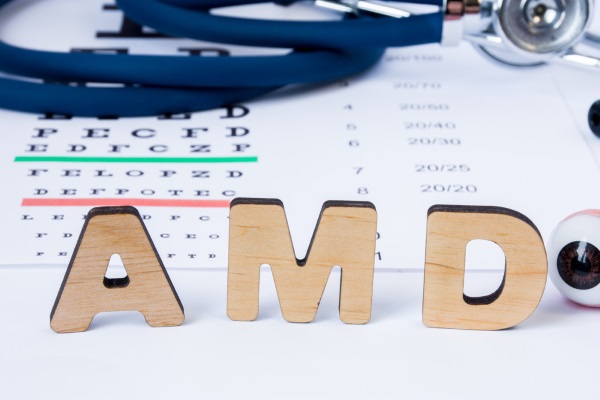
At risk factors for age-related macular degeneration (AMD) include: high blood pressure (hypertension), smoking, obesity, race and family history of (AMD). AMD is painless and can progress slowly over time or suddenly with dramatic changes in your vision. Early detection is key to slowing vision loss.

AMD — damages then destroys central vision. Central vision is your “straight-ahead”, finely detailed vision. This eye disease takes two forms, “dry” and “wet.” Most AMD cases are “dry.” The “wet” is a more damaging form of AMA that is responsible for about 90% of serious vision loss.

Cataracts are small at first and may not affect vision. But the denser they grow, the more they will affect your vision. As cataracts grow, they may hinder your ability to drive safely.

Just like having an annual physical and regular health screenings help to detect disease, the most important lesson learned is to have an annual eye exam. Early detection of eye disease is the key to healthy vision as you age. Give our offices a call at 724-443-6767 or 724-226-0444 to schedule your annual eye exam.

About the author: John D. Bissell, owner of Bissell Eye Care and Tri-State Low Vision Services, offers comprehensive eye examinations for the entire family, ocular disease detection and treatment, eye glasses, sun glasses, active wear, contact lenses, and low vision examinations for those with significant vision loss. He has undergone specialized training for treatment of low vision by the International Academy of Low Vision Specialists utilizing customized telescopic eyeglasses, prisms and telescopic implants for patients who qualify. The practice accepts most types of vision and health insurance plans.

BACK TO SCHOOL EYE EXAMS


Attentive boy is looking in special apparatus, checking his sight. Portrait

A Back to School comprehensive eye exam can be a key to your child’s success at school. Will your child be among the 86% of children that don’t have a comprehensive vision exam before returning to school or entering school/preschool for the first time?

Vacations are almost over and we’re entering the back to school mode, a time for excitement and learning. Our children receive so much information at school….are they ready to thrive in today’s fast-paced and challenging educational environment? Technology can often add additional strain to your eyes. As schools issue iPads and computers, children spend more time in front of a screen.

Although a child may have 20/20 vision, they may experience a vision problem that could impact their ability to learn. Even if there are no complaints during the summer about blurry vision or headaches, children still need to have frequent eye exams. Just like their bodies are rapidly growing, children’s eyes are changing as well.

Having a clear vision is an essential part of the school experience because so much of learning is visual. An undiagnosed eye problem could result in an academic setback in just a few short months. Some behavior problems could be linked to vision issues. These students may seem uninterested or unfocused in school when in actuality they simply cannot see clearly.

Eye issues such as strabismus (misaligned eyes), astigmatism or amblyopia (lazy eye) are also detectable through an eye exam. For some eye conditions, vision can be permanently affected if the problem is not corrected. Regular exams mean earlier diagnosis and earlier treatment.

Myopia, or nearsightedness, is a common condition in children which often develops around the age of 6 or 7. This condition results when the cornea is curved too much or when the eye is longer than normal. When light comes into the eye, it is focused in front of the retina instead of directly on the retina and the child’s vision is blurred.

Nearsightedness can worsen rapidly, especially between the ages of 11 and 13, which means that an eye prescription can change dramatically over a short period of time. Changing eyesight is not a reason for worry, and vision tends to stabilize in the later teenage years and early twenties. During the growing years, it is important to make regular eye appointments with your child’s eye doctor. Making comprehensive eye exams a part of your back-to-school tradition guarantees that your children’s eyes are examined at least once every year.

Eighty percent of all learning is performed through vision. Especially with young children, learning to read and the ability track words is the building block of their educational experience. The longer a vision problem goes undiagnosed and untreated, the more a child’s brain will learn to accommodate the vision problem. This can lead to poor academics and frustration for all concerned.

At Bissell Eye Care, we look for delayed motor development, frequent eye rubbing, excessive blinking, failure to maintain eye contact, eye tracking skills, and the inability to maintain a gaze. These types of symptoms can affect the child’s ability to concentrate and learn.

Learning is fun. Make sure your child is equipped with the right tools to succeed. Start your child on the right track to learning with clear vision. From the doctors and staff at Bissell Eye Care, wishing you the best in the upcoming school year!

About the author: John D. Bissell, owner of Bissell Eye Care and Tri-State Low Vision Services, offers comprehensive eye examinations for the entire family, ocular disease detection and treatment, eye glasses, sun glasses, active wear, contact lenses, and low vision examinations for those with significant vision loss. He has undergone specialized training for treatment of low vision by the International Academy of Low Vision Specialists utilizing customized telescopic eyeglasses, prisms and telescopic implants for patients who qualify. The practice accepts most types of vision and health insurance plans.

SAFETY TIPS FOR NIGHT DRIVING


Driving on an asphalt road towards the headlights

Have you noticed dusk starting to come earlier in the evening? Are you among those that don’t see as well when driving at night? Did you know that 9 of every 10 decisions you make behind the wheel are based on what you see?

It doesn’t matter if you’re 16 or 60. The ability to drive represents a sense of freedom for adults of all ages. But, as we get older, changes to the body and mind can make driving increasingly difficult. Night vision worsens with age due to a number of factors: pupil size, retinal changes, and cataracts.

Pupils shrink and don’t dilate as much in the dark as we age, reducing the amount of light entering the eye. Smaller pupils limit the amount of light that reaches the back of the eye called the retina. Because the retina of an 80-year-old receives far less light than the retina of a 20-year-old, it can seem like you are wearing dark sunglasses at night.

Rods and cones are contained in the retina. We depend on the cones for color vision and reading small print while the rods are critical for seeing in low light. As time goes on, we have fewer and fewer rods and they take longer to adjust to dark environments.

Cataracts are caused by a clouding of the lens in the front part of the eye. This causes the light entering your eye to be dimmed and blurred making it harder to see at night.

We can’t change the aging process so what steps can be taken to ensure safe nighttime driving?

  • Avoid driving on dark rainy nights.
  • Keep windshields clean inside and out.
  • Help drivers see you in twilight by turning your headlights on before sunset and keeping them on for an hour after sunrise.
  • Allow more time for your own journey, so you’re not driving under pressure.
  • Avoid looking directly at approaching vehicles at night, even when their lights are dimmed.
  • Have regular eye exams to check for such things as cataracts that can cause nighttime vision loss.

Avoid driving along at 50 mph, dropping to 40 mph when there’s oncoming traffic and then speeding up again. It makes it very confusing for drivers traveling behind you. It’s better to aim for a speed you can maintain such as 45 mph and sticking to it, even if there are times you could go faster.

Be proactive in taking care of your health and be safe on the road. Be honest with yourself. If a driving situation makes you uncomfortable, don’t do it. Many older drivers voluntarily begin to make changes in their driving practices. If fast-moving traffic bothers you, consider staying off freeways, highways, and find street routes instead. You may also decide to avoid driving in bad weather (rain, thunderstorms, snow, hail, ice). If you are going to a place that is unfamiliar to you, it is a good idea to plan your route before you leave so that you feel more confident and avoid getting lost.

If friends or relatives are concerned about your driving ability – it may be time to take a hard look at your safety and the safety of others.

About the author: John D. Bissell, owner of Bissell Eye Care and Tri-State Low Vision Services, offers comprehensive eye examinations for the entire family, ocular disease detection and treatment, eye glasses, sun glasses, active wear, contact lenses, and low vision examinations for those with significant vision loss. He has undergone specialized training for treatment of low vision by the International Academy of Low Vision Specialists utilizing customized telescopic eyeglasses, prisms and telescopic implants for patients who qualify. The practice accepts most types of vision and health insurance plans.

first-pair-of-glasses

GRADY GETS GLASSES

first-pair-of-glassesGrady Gets Glasses, a new program offered by Bissell Eye Care provides a book written by a retired school teacher and local author, Dede Rittman, to young children who receive their first pair of glasses. It talks about the importance of being able to see better and how glasses will help.

For parents of young children, learning your child needs glasses may be a bit overwhelming at first, but you’ll be amazed at the difference in their ability to see clearly and function better. All of the doctors at Bissell Eye Care have young children, so we are accustomed to working with kids of all ages. You may recall a while back, Dr. Long shared her own story about her son’s vision deficit.

Here are some things to consider when choosing your child’s frames. There are more and more options for glasses for young kids, but keep in mind you need to find frames that fit small faces. Different brands offer warranties, for both the frames and the lenses, so be sure to ask. There are three criteria when shopping for frames… FIT, FUNCTION, and FASHION in that order.

Fit is crucial. Glasses need to fit your child today and not size up for future growth. Glasses that fit well stay put, encouraging your child to look through the appropriate part of the lens. They are more comfortable, which encourages compliance, and honestly, they look more attractive. In small children, bigger is definitely not better when it comes to frames. Bigger frames mean bigger lenses that can cause the frames to slide down their nose. Frames that fit well don’t move even while laying down or rough play.

Function. Frame types vary, but the three basic types are wire, flexible, and plastic. The fit is a huge factor in function because glasses that fit well function well. Age and activity of the child go hand in hand when choosing a frame. If you have an infant or an active toddler that needs glasses, you will likely want something flexible and as close to indestructible as you can get, like Miraflex. An older child active in sports may also need a second pair of glasses that are sports goggles. A child who requires an exact bifocal line may do much better wearing a wire frame with nose pads because it gives you the best adjustability.

Fashion is the last on to consider. Glasses that fit and function well for your child are the most important thing, but they will still look adorable in properly fit glasses. Having concerns about your child’s appearance is expected. Be sure not to get caught up in the fashion of the frames if it is to the detriment of fit and function.

With school shopping just around the corner, make sure an eye checkup is on your TO DO list before school starts. Call our offices at 724-443-6767 or 724-226-0444 to schedule your appointment.

About the author: John D. Bissell, owner of Bissell Eye Care and Tri-State Low Vision Services, offers comprehensive eye examinations for the entire family, ocular disease detection and treatment, eye glasses, sun glasses, active wear, contact lenses, and low vision examinations for those with significant vision loss. He has undergone specialized training for treatment of low vision by the International Academy of Low Vision Specialists utilizing customized telescopic eyeglasses, prisms and telescopic implants for patients who qualify. The practice accepts most types of vision and health insurance plans.

PROGRESSIVE LENSES VERSUS BIFOCALS

As we age, the need for progressive lenses increases. Just like graying hair and wrinkles, presbyopia is an inevitable sign that you’re getting older. Perhaps it started with cheaters to read but has now progressed so that prescription eyewear is necessary.

Presbyopia is the normal, gradual loss of your eyes’ ability to focus on nearby objects. Most people will start to notice presbyopia in their mid-40s. But unlike your changing hair or skin, blurred vision is much harder to live with. Thankfully, there is an answer – progressive or bifocal eyewear. We will explore the differences.

There is a distinct line in the lens with bifocals. This means bifocals only cover two different distances. With the growth of digital devices, lenses have had to evolve to cover more of a person’s field of vision.

A progressive lens is an amazing piece of engineering, allowing multiple vision fields to be incorporated into a single lens without any clear distinction between the fields themselves. Progressive lenses go from distance to intermediate to near offering a full range of clear vision. Unlike bifocals, progressives don’t have a visible line across the lens, which can be more visually attractive. You can eliminate the need for multiple pairs of glasses (i.e. reading, computer, distance) which can impact your lifestyle and tasks of daily living.

Adjusting To Progressive Lenses

Like anything new, there is an adjustment period. But consistency in wearing your progressive eyewear is key. Put away your old glasses. No-line bifocals will slightly alter your peripheral vision due to power changes that occur at the edges of the lenses. This initial difference in your peripheral vision will probably require some slight changes in horizontal head and eye movements. Make sure to wear your glasses high on the bridge of your nose and as close to your face as possible. Sensitivity to this area of the lens will diminish with time as you become more accustomed to your new lenses.

The professionals at Bissell Eye Care will help you transition as you age gracefully. Have questions? Give our office a call at 724-443-6767 or 724-226-0444.

About the author: John D. Bissell, owner of Bissell Eye Care and Tri-State Low Vision Services, offers comprehensive eye examinations for the entire family, ocular disease detection and treatment, eye glasses, sun glasses, active wear, contact lenses, and low vision examinations for those with significant vision loss. He has undergone specialized training for treatment of low vision by the International Academy of Low Vision Specialists utilizing customized telescopic eyeglasses, prisms and telescopic implants for patients who qualify. The practice accepts most types of vision and health insurance plans.

SUMMER ~ SUNSCREEN ~ SUNGLASSES

As we roll into summer, sunscreen and sunglasses are a winning combination. Sunglasses are an easy solution that makes life more comfortable when outdoors, while also providing critical protection from the sun’s damaging ultraviolet (UV) rays. But…all sunglasses don’t provide the protection you need to protect your eyes.

Long-term exposure to UV rays can damage the eye’s surface as well as its internal structures. This damage can sometimes lead to eye conditions such as cataracts (clouding of the lens) and macular degeneration (breakdown of the macula).

Did you know that glaucoma can make eyes highly sensitive to light and glare, with some glaucoma medications exacerbating the problem even further?

A brimmed hat whenever you’re in the sun long enough to get a suntan or a sunburn, is recommended along with sunglasses to help protect your eyes from the sun. If you have blue, green, or gray eyes, you may have noticed yourself squinting into the sunlight more than your brown-eyed counterparts. Light sensitivity — typically affects people with light eyes because they have less pigmentation in multiple layers of the eye than those with darker eyes.

Here are some things to keep in mind when shopping for sunglasses:

  • Look for UV protection.
  • Don’t be deceived by color or cost. The ability to block UV light is not dependent on the darkness of the lens or the price tag. Always choose sunglasses that are labeled as blocking 99-100% of UV rays.
  • Polarized lenses block out not only direct rays from the sun but also light reflecting off surfaces such as water, snow or reflective metals. Polarization is unrelated to UV protection, so you still need to ensure UV absorption of the lenses.
  • Blue light blocking.
  • Photo Chromic lenses adjust with the light and can be a compromise from buying dark lenses allowing you to see well in different level of brightness.
  • Wrap around frames and lenses add extra coverage and help to block out the light from all angles providing the best protection for your eyes. Some studies have shown that enough UV rays enter around standard sunglass frames to reduce the protective benefits of the lenses.
  • Check lenses for quality. Look for a uniform tint, not darker in one area than in another.

Special features in sunglasses can include:

Mirror coatings. These thin layers of various metallic coatings can reduce the amount of visible light entering the eyes. They are popular in high-glare environments and when combined with the wraparound feature, they can even provide added protection to the skin surrounding the eye area. UV protection, however, is not guaranteed.

Gradient. These lenses are permanently shaded from top to bottom or from top and bottom toward the middle.

Impact resistant. While all sunglasses must meet minimum FDA standards regarding impact resistance, no lens is truly shatterproof. Plastic lenses are less likely to shatter upon impact than glass lenses. And, polycarbonate plastic, used in many sports sunglasses, is even more impact resistant than regular plastic, but scratches easily. If you buy polycarbonate lenses, look for ones with scratch-resistant coatings.

Buying a pair of sunglasses that offer little more than looks and some shade for your eyes can not only fail you at blocking out the proper amount of sunlight, but they can also cause short term and long term damage to your eyes. Bissell Eye Care carries a full line of RXable (either prescription or nonprescription) sunglasses in a variety of styles and colors.

Wear sunglasses whenever you are outdoors, whether you are working, driving, participating in sports, taking a walk, running errands or doing anything in the sun. Remember this summer as you enjoy the nice weather it is important to protect not only your skin but also your eyes. If you have any questions about proper eye protection, stop in and see us so we can help you ensure you enjoy your summer!

About the author: John D. Bissell, owner of Bissell Eye Care and Tri-State Low Vision Services, offers comprehensive eye examinations for the entire family, ocular disease detection and treatment, eye glasses, sun glasses, active wear, contact lenses, and low vision examinations for those with significant vision loss. He has undergone specialized training for treatment of low vision by the International Academy of Low Vision Specialists utilizing customized telescopic eyeglasses, prisms and telescopic implants for patients who qualify. The practice accepts most types of vision and health insurance plans.