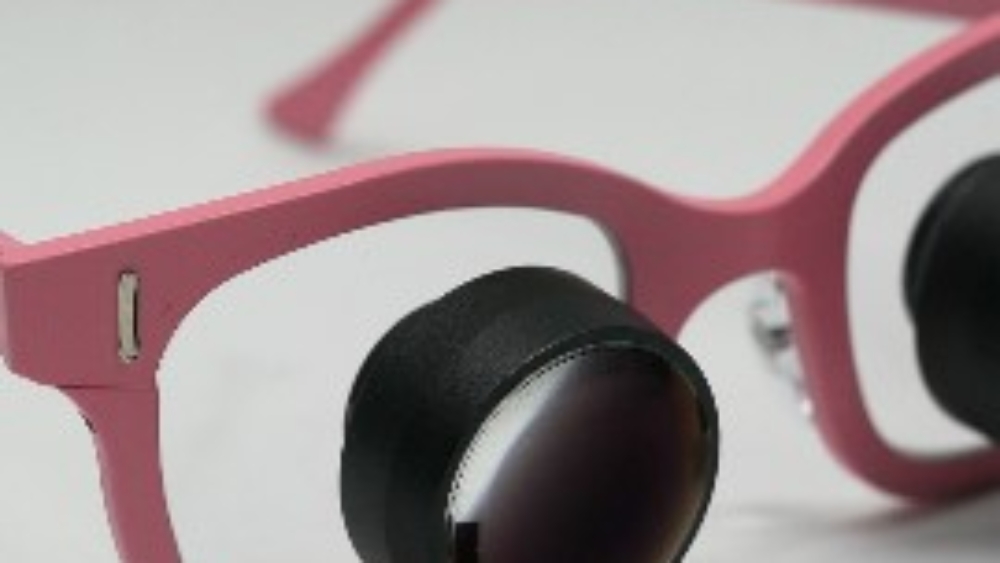
pink glasses with attached black rings that are ioptic telescopic glasses

Is it Time for Bioptic Telescopic Glasses? What You Should Know.

For individuals living with low vision due to macular degeneration, Stargardt disease, diabetic retinopathy, or other eye conditions, everyday tasks like reading street signs, watching television, or recognizing faces can become difficult—even with regular glasses. If you’ve been told “nothing more can be done,” it may be time to explore a powerful tool in the world of low vision care: bioptic telescopic glasses.

What Are Bioptic Telescopic Glasses?

Bioptic telescopic glasses are a specialized type of eyewear that combines a prescription lens with miniature telescopes mounted toward the top portion of the lens. These miniature telescopes act much like binoculars, allowing the wearer to focus on distant objects with greater clarity. Patients can look through the regular portion of the glasses for normal viewing and tilt their head slightly to engage the telescope for enhanced distance vision.

This “look down, look up” design provides a natural way for users to alternate between their regular view and the magnified view—offering functional vision support without overwhelming the eyes.

How Do They Help with Independence?

Bioptic telescopes are often used to improve vision for activities that require seeing detail at a distance—such as:

  • Driving (where legal): Recognizing street signs or traffic lights
  • Watching TV or live performances
  • Reading publications
  • Reading classroom whiteboards or presentations
  • Facial recognition in social settings
  • Navigating public spaces like airports, stores, or parking lots

For many individuals, these glasses offer a renewed sense of confidence and greater independence. With the ability to see more clearly at a distance, patients can participate more fully in daily life, travel more freely, and rely less on others for help.

Are You a Candidate?

Not everyone with low vision qualifies for bioptic telescopic glasses. The ideal candidate typically has stable vision loss, strong motivation, and the ability to learn how to use the devices properly. A thorough low vision evaluation is essential to determine candidacy.

Why Choose a Doctor Trained by IALVS?

Dr. Bissell who is specially trained by the International Academy of Low Vision Specialists (IALVS), brings advanced expertise to the table. IALVS doctors are dedicated to helping individuals with vision loss regain usable sight through customized solutions, including bioptic telescopes, E-Scoop glasses, magnification systems, and more.

IALVS-trained doctors don’t just prescribe glasses—they evaluate your lifestyle, visual goals, and functional challenges to create a personalized plan. Their focus is on helping you maintain as much independence and quality of life as possible.

Final Thoughts

If you or a loved one struggles with vision loss that isn’t corrected by regular glasses, it may be time to explore bioptic telescopic glasses. These specialized tools have helped thousands of individuals live more independently, pursue hobbies, and—in some cases—legally drive again.

Don’t give up on your vision. Schedule a consultation with Dr. Bissell, a low vision specialist trained by IALVS and see what’s possible. Call 724-443-6767 or 724-226-0444 today to learn more about low vision services.


About Bissell Eye Care: John D. Bissell, OD owns and operates Bissell Eye Care servicing Northern Pittsburgh and Alle-Kiski Valley regions. With two locations to treat patients, we offer evening appointments. Bissell Eye Care provides comprehensive eye examinations for the entire family beginning as early as 6 months, ocular disease detection and treatment, eyeglasses, sunglasses, activewear, contact lenses, and low vision examinations for those with significant vision loss. We accept most types of vision and health insurance plans. For more information, visit bisselleyecare.com or call our Bakerstown Office at 724-443-6767 or Natrona Heights office at 724-226-0444.
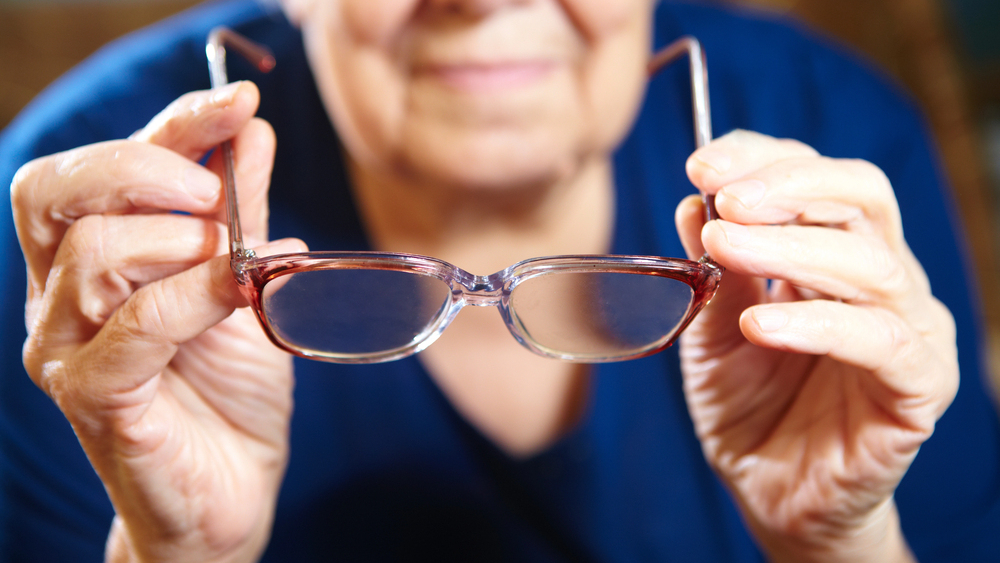
senior individual in blue shirt preparing to put on a pair of e-scoop eyewear glasses

Regaining Independence with E-Scoop Eyewear: A Game-Changer for Those with Low Vision

For individuals living with low vision, everyday tasks like reading a menu, watching TV, or recognizing faces can become daunting challenges. These struggles often lead to frustration, isolation, and a loss of independence. But there’s new hope for those seeking to reclaim their daily lives: E-Scoop® eyewear, a specialized solution designed to improve vision for people with macular degeneration and other low vision conditions.


What is E-Scoop® Eyewear?

E-Scoop glasses are uniquely designed to enhance distance vision by combining five optical elements:

  • Specific lens tint to reduce glare and enhance contrast
  • Custom lens thickness to shift the image to a healthier part of the retina
  • Magnification to make images appear larger
  • Base curve to improve light gathering
  • Prism to reposition the image away from the damaged central retina

The result? A sharper, clearer image that improves the wearer’s ability to see and interact with the world around them—often for the first time in years.

Why Specialized Training Matters

E-Scoop glasses are not available through a standard eye exam. Instead, they require precise customization by a doctor trained in low vision rehabilitation. Dr. Bissell has undergone additional training through the International Academy of Low Vision Specialists (IALVS). This elite group of optometrists is specially trained to assess, fit, and adjust low vision aids like E-Scoop glasses for maximum effectiveness.

This expertise ensures that each patient receives a thorough evaluation and a tailored solution that addresses their unique visual challenges—something traditional eyeglasses or even surgery cannot always offer.

The Value of Independence

One of the greatest challenges for individuals with low vision is the gradual erosion of independence. Driving, reading, cooking, shopping, or even watching loved ones’ expressions can become difficult or impossible. E-Scoop eyewear helps bridge that gap. By enhancing visual function, these glasses enable wearers to return to many of the activities they once enjoyed.

Whether it’s navigating the grocery store without assistance or being able to recognize road signs again, the difference E-Scoop glasses make is not just about seeing better—it’s about living better.

A Personalized Approach to Hope

If you or a loved one is living with low vision and has been told “nothing more can be done,” E-Scoop eyewear may offer a new path forward. Schedule a consultation with Dr. Bissell to find out if you’re a candidate for this life-enhancing technology.

Independence is possible. E-Scoop eyewear can help bring your world back into focus. To learn more about low vision services, call our office at 724-443-6767 or 724-226-0444.


About Bissell Eye Care: John D. Bissell, OD owns and operates Bissell Eye Care servicing Northern Pittsburgh and Alle-Kiski Valley regions. With two locations to treat patients, we offer evening appointments. Bissell Eye Care provides comprehensive eye examinations for the entire family beginning as early as 6 months, ocular disease detection and treatment, eyeglasses, sunglasses, activewear, contact lenses, and low vision examinations for those with significant vision loss. We accept most types of vision and health insurance plans. For more information, visit bisselleyecare.com or call our Bakerstown Office at 724-443-6767 or Natrona Heights office at 724-226-0444.
Depositphotos_191401424_S

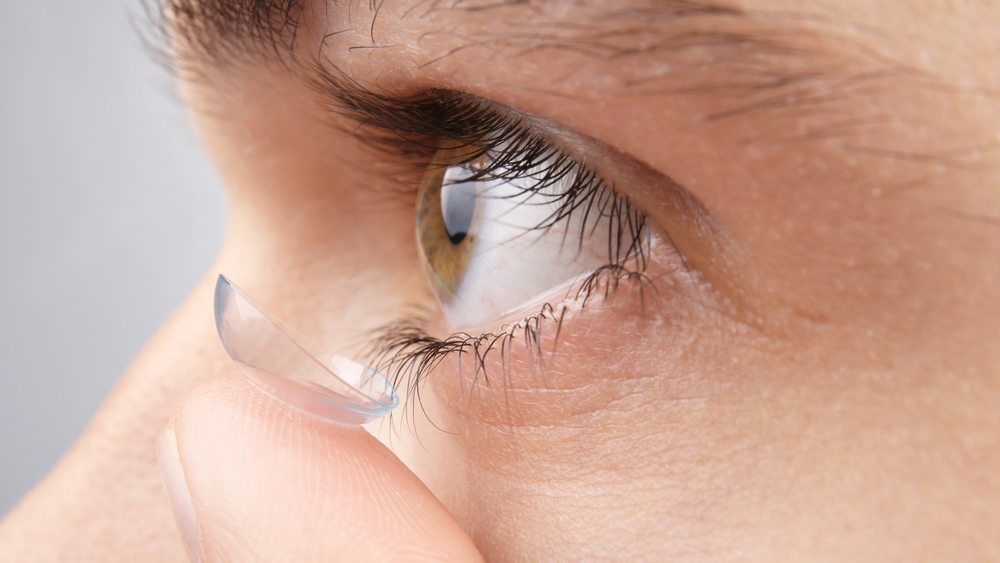
Technology Improvements for Bifocal and Multi-focal Contacts

Are you tired of always switching glasses or searching for reading glasses? Do you need to wear bifocals to see both near and far? Some people find they struggle to read newspapers, books or menus and must hold them further away to be able to see the print better. If that is the case, it may be time to look at bi-focal contacts again. Great for people with active lifestyles who do not want to be chained to their reading glasses. After age 40, it is typical to lose your ability to focus on objects up close. Tasks such as painting fine details or sewing may cause you to squint or hold the object at arm’s length.

The main vision disorder that multifocal and bifocal lenses are used for is presbyopia – a condition that happens as we age which affects our ability to focus on objects that are close. For instance, if tasks such as threading a needle or reading your favorite book have become nearly impossible without the help of reading glasses, then you are probably suffering from this condition. The doctors at Bissell Eye Care can give a proper diagnosis as well as help you find the best treatment options.

Monovision involves using single-vision lenses to put your near prescription on one eye and your distance prescription on the other. Modified monovision uses a single-vision lens on one eye and a multifocal lens on the other.

Bifocal contact lenses have been around for many years, but until recently they weren’t very popular. Older bifocal designs didn’t satisfy many people, leading to frustration among wearers and prescribers alike. Today, new technology has produced more successful designs, as well as a greater variety of designs. If one design doesn’t work for you, another might.

Bifocal and multifocal lenses come in both soft and rigid gas permeable materials. They also come in a hybrid form. This means that the contacts have the option to be used and disposed of at set times.

How Bifocal Contact Lenses Work

Bifocal contact lenses have two different prescriptions in the same lens. They are similar to bifocal glasses where the top half is used for seeing far while the bottom is used for seeing close. A segmented bifocal, and sometimes also referred to as an alternating or translating bifocal places the near vision prescription in the lower part of the lens, and the normal, distance prescription is in the rest of the lens.

Multifocal Contact Lenses Differ from Bifocal Contacts

Multifocal contacts have a range of powers in each lens and are designed two different ways.

  1. Simultaneous Vision. This option is set up so your eye looks through both near and far at the same time. Your brain adapts and allows focus on either the near or far prescription depending on the distance of the object.
  2. Alternating Vision. In the alternation set up more like a bifocal glasses design. It allows your pupil to move up or down as necessary to get the proper focus.

People who once thought they could never benefit from contact lenses now have a second chance. Remember that as you begin to rely on reading glasses for tasks of everyday living, that there are alternatives to the standard bifocal glasses. Technology continually finds new ways of improving vision now and may be the time to take a second look at contact lenses.


About Bissell Eye Care: John D. Bissell, OD owns and operates Bissell Eye Care servicing Northern Pittsburgh and Alle-Kiski Valley regions. With two locations to treat patients, we offer evening and Saturday appointments. Bissell Eye Care provides comprehensive eye examinations for the entire family beginning as early as 6 months, ocular disease detection and treatment, eyeglasses, sunglasses, activewear, contact lenses, and low vision examinations for those with significant vision loss. We accept most types of vision and health insurance plans. For more information, visit bisselleyecare.com or call our Bakerstown Office at 724-443-6767 or Natrona Heights office at 724-226-0444.

CONTACTS OR GLASSES, WHAT’S YOUR BEST FIT?

Contacts or glasses? This is a question that often presents itself after an eye exam, especially the first eye exam that determines that you need help to see clearly. While there is no scientific answer in most cases as to which option will suite you best, there are some personal factors that may cause you to lean one way or the other.

Whether you choose to wear eyeglasses or contacts mostly depends on your personality and personal preferences. Factors such as lifestyle, comfort, budget, convenience and aesthetics should play a role in your choice. When making the choice, remember that one is not necessarily better than the other, each has its own list of pros and cons.

First off we want to stress that glasses are a necessity whether you choose to have contacts or just glasses. While contact users wear their contacts majority of the time, your eye will often become tired or dry. This will cause discomfort and require you to remove your contacts and wear the glasses.

Contact lenses have many advantages over glasses. Contacts sit directly on your eye, so your vision, especially your peripheral vision, is unobstructed. You can also participate in sports and activities without the fear of your glasses falling off or getting in the way.

Listed below are some advantages and disadvantages of contact lenses.

Advantages

  • Contacts don’t get in the way when playing sports.
  • Contacts typically aren’t affected by weather conditions and won’t fog up in cold weather.
  • Contacts won’t clash with what you are wearing.

Disadvantages

  • Some people have difficulty applying contact lenses to their eye.
  • Some types of contacts require lens care and cleaning each day.
  • Contacts reduce the amount of oxygen reaching the eye and can increase dry eye symptoms.

That being said, eyeglasses also offer many benefits over contact lenses. They require little cleaning and less maintenance. You also do not need to touch your eye to wear glasses which reduces the chance of you developing an eye infection. Glasses are also cheaper than contact lenses in the long run, as they do not need to be replaced nearly as often as contacts.

Listed below are some advantages and disadvantages of glasses.

Advantages

  • Reduces the need to touch your eye, reducing the chances of infection or eye irritation.
  • Eyeglasses are cheaper over the long run and don’t need replaced unless you break them.
  • Glasses provide some protection from wind, dust and debris.

Disadvantages

  • Eyeglasses sit about a half inch from your eye, which distorts peripheral vision.
  • Frames can have constant pressure on your nose and head. This can lead to headaches.
  • Some people do mot like the way that glasses look and feel that it takes away from facial features.

Due to the advances in contact lenses, most people have the ability to wear them successfully and prefer them over glasses as a primary form of vision correction. The decision as whether to wear glasses or contacts, and when to wear them is usually a matter of personal preference. It is important to remember that if you do choose contacts, it is important to have an up to date pair of glasses to wear in case you need to stop wearing contact lenses due to irritation or infection.

About the author: John D. Bissell, owner of Bissell Eye Care and Tri-State Low Vision Services, offers comprehensive eye examinations for the entire family, ocular disease detection and treatment, eye glasses, sun glasses, active wear, contact lenses, and low vision examinations for those with significant vision loss. He has undergone specialized training for treatment of low vision by the International Academy of Low Vision Specialists utilizing customized telescopic eyeglasses, prisms and telescopic implants for patients who qualify. The practice accepts most types of vision and health insurance plans.

eyeglass frames, Bissell Eye Care

DOES THE FRAME FIT?

eyeglass frames, Bissell Eye Care
What style of eyeglass frames are best for you?

If you are like most people when needing new glasses, you have tried on frame after frame, looking for the one that fits your face just right. It can be very overwhelming as you look at the wall of frames, trying to decide which frame you like best.

There are some ways that you can easily narrow the selection from hundreds of frames down to a select few, which will help you to find a pair that compliment your facial features.

The first part of choosing a set of eyeglass frames is to consider the shape and size of your face. Every face has a shape, round, oval, square, diamond or even heart-shaped.

Determining your facial shape will help you to narrow down the types of frames will best compliment your look.

  • Round: Square or rectangular frames often tend to be wider than a round face. This can help your face to appear slimmer and longer.
  • Oval: These often have a strong bridge. Avoid frames that are overlarge and cover up more than half of your face as it can throw off the symmetry of your face.
  • Square: You want to look for frames that sit high on the bridge of your nose. Oval or round glasses will add a thinner appearance. Avoid boxy eyeglass frames which will make your face appear squarer.
  • Diamond: You want to look for frames that sweep up and or are wider than then the cheekbones. You want to find frames that will accentuate your cheek bones.
  • Heart shaped: Ideal frames are low-set templets and bottom heavy frame lines. Round eyeglasses or square eyeglasses with curved edges will help draw attention away from a broad forehead.

When looking for eyeglass frames remember that in most cases opposites attract. You want to find a balance to your face. If you find frames that are the same shape as your head they can often throw the balance off.

The next thing to consider is what type of lifestyle you lead. Are you physically active, a gamer, or looking to make a fashion statement? You need to find frames that are flexible if you are active, enhance your gaming experience if you’re a gamer, and look stylish and sophisticated if you are looking to make a fashion statement.

At Bissell Eye Care, our trained staff are always available to help you select that perfect frame that best fits your face and lifestyle.

About the author: John D. Bissell, owner of Bissell Eye Care and Tri-State Low Vision Services, offers comprehensive eye examinations for the entire family, ocular disease detection and treatment, eye glasses, sun glasses, active wear, contact lenses, and low vision examinations for those with significant vision loss. He has undergone specialized training for treatment of low vision by the International Academy of Low Vision Specialists utilizing customized telescopic eyeglasses, prisms and telescopic implants for patients who qualify. The practice accepts most types of vision and health insurance plans.

Guess Frames

TIPS ON CHOOSING EYEGLASS FRAMES

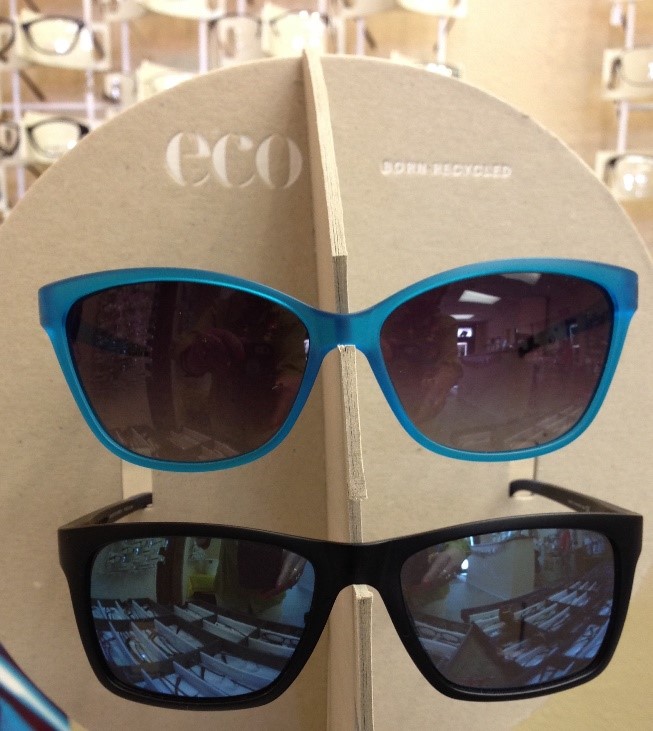
Guess FramesIt’s time to update your look here are some tips on choosing the best eyeglass frames for your facial features and body makeup.  Don’t be overwhelmed with the amount of eyeglass frames and styles to choose from.    Our technicians are trained to help you select the best fit for your face and body make up from the many brands of eye glass frames featured in our showroom.

Cosmopolitan Magazine recently highlighted how celebrities are choosing the right style to fit their facial features.  Glasses become a focal point, being one of the first things noticed about you, so it’s important to choose eyeglasses that flatter you and are consistent with the image you want to portray.

These are things we consider in helping you make your selection:

Prescription — Some prescriptions such as bifocals may require a maximum/minimum depth or thickness of glass or height.  This may eliminate some types of frames.

Body scale — choose glasses that are in keeping with your body scale and the size of your facial features. For example, if you have a small body scale then choose frames with a small to medium-thick frame.  Likewise you want to be sure if you have a rounder face, the frames don’t look too small.

Lifestyle — consider where you will wear the glasses. Will they be practical for the activity or event? For example: will they stay on for your sporting activity or should you invest in protective sportswear? If you are in outside sales and are in and out of the car multiple times a day, transition lenses may not be the best option.

Your coloring — choose glasses that are in your best color range and that will work with the clothes you intend to wear them with.

Style personality — And finally, do the glasses reflect your personality and complete the image you wish to project? For example, if you favor dramatic, statement clothes and accessories you will be best with statement eyeglasses as well. Go for bold colors, exaggerated design details and heavy-looking frames rather than frameless or light-looking glasses.

So now that we’ve got you thinking about what you may want your next pair of frames to look like, stop in, browse our showroom and see the new selections for spring fashion!

About the author:  John D.  Bissell, owner of Bissell Eye Care and Tri-State Low Vision Services, offers comprehensive eye examinations for the entire family, ocular disease detection and treatment, eye glasses, sun glasses, active wear, contact lenses, and low vision examinations for those with significant vision loss. He has undergone specialized training for treatment of low vision by the International Academy of Low Vision Specialists utilizing customized telescopic eyeglasses, prisms and telescopic implants for patients who qualify.  The practice accepts most types of vision and health insurance plans.

Diabetes and Vision Loss

Diabetes and vision loss can go hand in hand.  Vision loss is one of the most common and debilitating complications of diabetes. An annual eye exam will help in early detection of  diabetes as for many people with Type 2 Diabetes the disease goes undetected.   For those individuals who have been diagnosed as a diabetic, extra attention should be made to monitor their diabetes and have regular eye exams.

According to Medical News Today, “Diabetes describes a group of metabolic diseases in which the person has high blood glucose (blood sugar), either because insulin production is inadequate, or because the body’s cells do not respond properly to insulin, or both. Patients with high blood sugar will typically experience frequent urination they will become increasingly thirsty and hungry”.

There are three types of diabetes:

  • Type 1 Diabetes- account for approximately 10% of all diabetics and occurs when the body doesn’t produce enough insulin.  Diabetics generally develop Type 1 Diabetes before their 40th birthday.
  • Type 2 Diabetes account for approximately 90% of the remaining diabetics.  The body does not produce enough insulin for proper function, or the cells in the body do not react to insulin (insulin resistance).  Typically type 2 diabetes is a progressive disease and eventually may lead to medication dependency to control the disease.    Overweight and obese people have a much higher risk of developing type 2 diabetes compared to those with a healthy body weight.  That’s why diet and exercise play a key role in prevention.
  • Gestational Diabetes   affects females during pregnancy. Some women have very high levels of glucose in their blood, and their bodies are unable to produce enough insulin to transport all of the glucose into their cells, resulting in progressively rising levels of glucose.  Uncontrolled gestational diabetes can raise the risk of complications at childbirth.

Diabetic Eye Disease is a group of eye problems people with diabetes could face as a result of the disease, which can lead to vision loss or blindness. These include:

•  Cataract (clouding of the lens of the eye)

•  Diabetic retinopathy (the most common form of diabetic eye disease, which damages the blood vessels in the retina)

•  Glaucoma (damage to the optic nerve that affects peripheral or side vision)

People often are unaware they have diabetes but In fact, about 90% of diabetes-related blindness is preventable through early detection, timely treatment and appropriate follow-up care.  To learn more about diabetes, low vision and vision loss, visit Tri-State Low Vision Services, a division of Bissell Eye Care.

About the author:  John D.  Bissell, owner of Bissell Eye Care and Tri-State Low Vision Services, offers comprehensive eye examinations for the entire family, ocular disease detection and treatment, eye glasses, sun glasses, active wear, contact lenses, and low vision examinations for those with significant vision loss. He has undergone specialized training for treatment of low vision by the International Academy of Low Vision Specialists utilizing customized telescopic eyeglasses, prisms and telescopic implants for patients who qualify.  The practice accepts most types of vision and health insurance plans.