
THE SOLAR ECLIPSE

With the solar eclipse fast approaching, we see many news articles and TV interviews about the dangers of looking directly at the eclipse. As a child growing up, your parents more than likely than not told you to never look directly into the sun. Something that you probably ignored and still tried, just to be left seeing spots. On August 21, 2017, the United States will experience a solar eclipse and if you try to look at it, this too can leave you seeing spots; or in some cases, damage your retina.

A total solar eclipse happens when the sun is blocked from view by the moon. While it is much more common to see a partial solar eclipse, a total solar eclipse is much rarer. Here in Pennsylvania, we will see a partial eclipse, while southern states will see a full solar eclipse.

It is no surprise when we say that looking directly into the sun without proper eye protection can cause serious eye damage, even leading to vision loss. There are however safe ways to view a solar eclipse.

The safest way to look at the sun is by using solar-viewing glasses, eclipse glasses, or personal solar filters. All three of these are names for the same product. According to the safety recommendations from NASA, the lenses of these glasses are made from special filters that are hundreds of thousands of times darker than your UV protection sunglasses. The lenses on these solar-viewing glasses are so dark that you are not able to see anything other than the surface of the sun.

When you jump online to get your pair of glasses, beware, as NASA has changed the standards for glasses that are safe to use for viewing the sun. The new standard of ISO 12312-2 will ensure that you get the eye protection that you need. Some of the manufacturers that meet this standard are Rainbow Symphony, American Paper Optics, and Thousand Oaks Optical.

We want to stress that homemade filters or ordinary sunglasses, even sunglasses that are very dark, are not safe for looking at the sun, or an eclipse of the sun. If you plan on using binoculars or other magnifying devices, be sure to get the proper filter for them. Simply using solar-viewing glasses on them is not enough. The increased magnification can damage the lens of your solar-glasses and leave them less effective.

Be sure to protect your eyes on August 21, as you prepare to look at the moon as it crosses paths with the sun. While this rare occurrence is something to marvel, be sure to enjoy it with the proper eye protection so you don’t damage your eyes.

About the author: John D. Bissell, owner of Bissell Eye Care and Tri-State Low Vision Services, offers comprehensive eye examinations for the entire family, ocular disease detection and treatment, eye glasses, sun glasses, active wear, contact lenses, and low vision examinations for those with significant vision loss. He has undergone specialized training for treatment of low vision by the International Academy of Low Vision Specialists utilizing customized telescopic eyeglasses, prisms and telescopic implants for patients who qualify. The practice accepts most types of vision and health insurance plans.
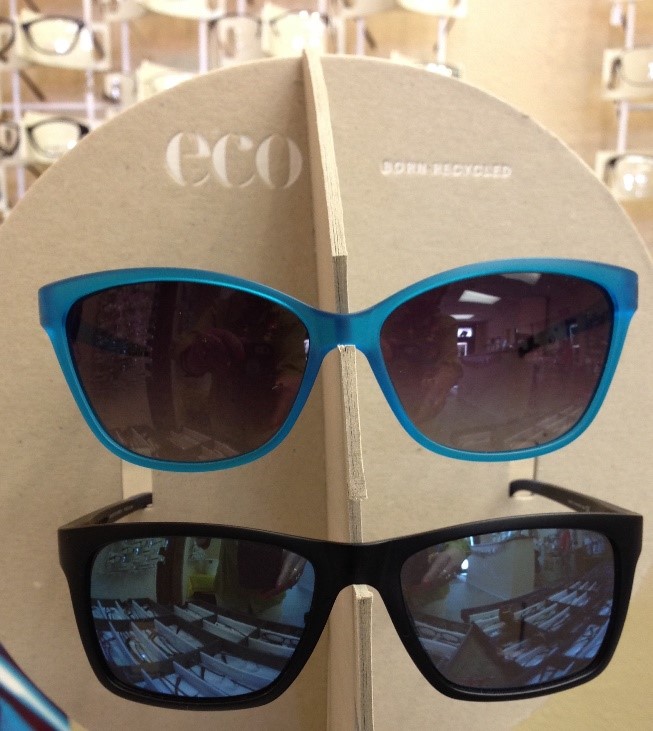
eyeglass frames, Bissell Eye Care

DOES THE FRAME FIT?

eyeglass frames, Bissell Eye Care
What style of eyeglass frames are best for you?

If you are like most people when needing new glasses, you have tried on frame after frame, looking for the one that fits your face just right. It can be very overwhelming as you look at the wall of frames, trying to decide which frame you like best.

There are some ways that you can easily narrow the selection from hundreds of frames down to a select few, which will help you to find a pair that compliment your facial features.

The first part of choosing a set of eyeglass frames is to consider the shape and size of your face. Every face has a shape, round, oval, square, diamond or even heart-shaped.

Determining your facial shape will help you to narrow down the types of frames will best compliment your look.

  • Round: Square or rectangular frames often tend to be wider than a round face. This can help your face to appear slimmer and longer.
  • Oval: These often have a strong bridge. Avoid frames that are overlarge and cover up more than half of your face as it can throw off the symmetry of your face.
  • Square: You want to look for frames that sit high on the bridge of your nose. Oval or round glasses will add a thinner appearance. Avoid boxy eyeglass frames which will make your face appear squarer.
  • Diamond: You want to look for frames that sweep up and or are wider than then the cheekbones. You want to find frames that will accentuate your cheek bones.
  • Heart shaped: Ideal frames are low-set templets and bottom heavy frame lines. Round eyeglasses or square eyeglasses with curved edges will help draw attention away from a broad forehead.

When looking for eyeglass frames remember that in most cases opposites attract. You want to find a balance to your face. If you find frames that are the same shape as your head they can often throw the balance off.

The next thing to consider is what type of lifestyle you lead. Are you physically active, a gamer, or looking to make a fashion statement? You need to find frames that are flexible if you are active, enhance your gaming experience if you’re a gamer, and look stylish and sophisticated if you are looking to make a fashion statement.

At Bissell Eye Care, our trained staff are always available to help you select that perfect frame that best fits your face and lifestyle.

About the author: John D. Bissell, owner of Bissell Eye Care and Tri-State Low Vision Services, offers comprehensive eye examinations for the entire family, ocular disease detection and treatment, eye glasses, sun glasses, active wear, contact lenses, and low vision examinations for those with significant vision loss. He has undergone specialized training for treatment of low vision by the International Academy of Low Vision Specialists utilizing customized telescopic eyeglasses, prisms and telescopic implants for patients who qualify. The practice accepts most types of vision and health insurance plans.

Eye Injuries and Snowball Fights

Avoid eye injuries from snowball fights. Pittsburgh has seen a good dose of winter already.  We’ve encountered delays and school closings due to the arctic temperatures. But those same winter conditions are ripe for eye injuries received as a result of a good snowball fight.

The fact is that children and adults will always enjoy a good romp in the snow, making snow forts, snow angels sledding and throwing snowballs. So, please play it safe and avoid eye injuries.  Never aim for the head and do not use snowballs that contain chunks of ice or other debris.

During the winter season, emergency room doctors see a number of injuries related to sports like skiing, snowboarding, snow tubing, and sledding. Regular eyeglasses and contact lenses do not offer adequate protection from sports-related eye injuries. We recommend the use of protective eye wear for winter sports, including downhill skiing, snowboarding, and snow tubing.  The lenses are made with polycarbonate lenses, so they’re impact resistant and good for all sports.

On a sunny day on the ski slopes, the snow can create sun glare that is harmful to your eyes.  In addition to tinted goggles for skiing, it’s good to have a pair of sunglasses on hand for hanging out in the lodge. Ski goggles help to protect your eyes from wind and ice particles, as well as minimize injury during a fall.

Cold-related injuries common to winter and snow sports that related to cold and wet conditions include:

•           Blisters on toes, heels and feet caused by the friction of wet socks and badly fitting footwear can cause blisters on

•           Sprains and strains and soft tissue injuries due to less elasticity in ligaments causing injuries in knees, shoulders and wrists due to falls while skiing, snowboarding or ice skating.

•           Hypothermia occurs when the body’s temperature falls below 35°C. Symptoms include: shivering, drowsiness and lack of coordination. The person may lie down to rest, lapse into unconsciousness and die if not treated quickly.

•           Frostbite – this occurs when the tissues of the skin freeze. Ice crystals in and around skin cells block the movement of blood through the fine blood vessels (capillaries), which means the skin is deprived of oxygen and nutrients and dies.  We’ve seen some of that on the news recently.

•           Sunburn – ultraviolet radiation is present, even in cold and cloudy conditions. This, and the reflections off the snow, can cause sunburn to exposed skin. What many people may think is ‘windburn’ is actually sunburn.

•           Snow blindness – this is sunburn of the cornea of the eye, caused by ultraviolet radiation. Symptoms include painful, watery eyes and temporary blurring of vision equipment.

Most cold related injuries can be prevented with planning, adequate preparation and proper equipment.

About the author:  John D.  Bissell, owner of Bissell Eye Care and Tri-State Low Vision Services, offers comprehensive eye examinations for the entire family, ocular disease detection and treatment, eye glasses, sun glasses, active wear, contact lenses, and low vision examinations for those with significant vision loss. He has undergone specialized training for treatment of low vision by the International Academy of Low Vision Specialists utilizing customized telescopic eyeglasses, prisms and telescopic implants for patients who qualify.  The practice accepts most types of vision and health insurance plans.