
Back To School Checklist


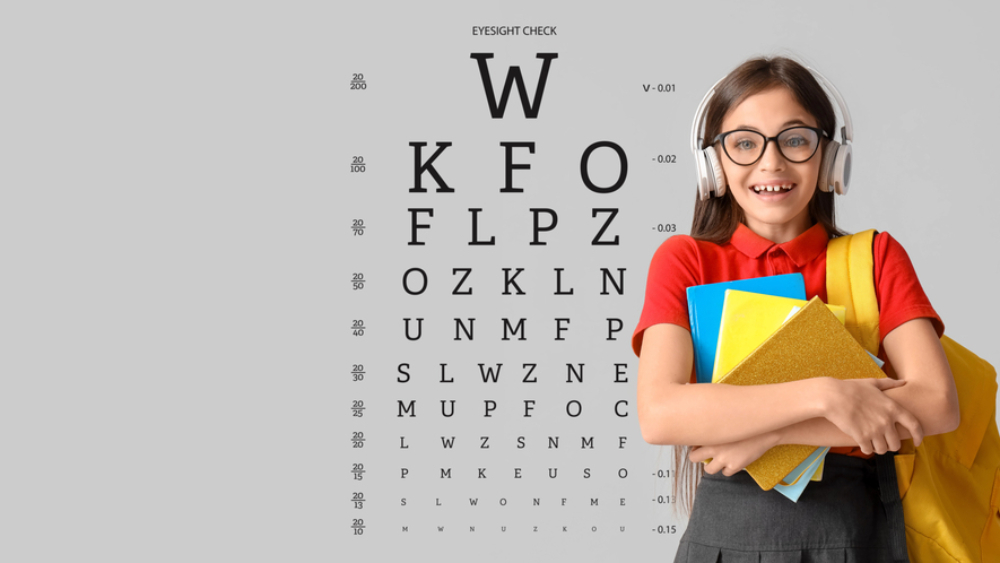
Back to school concept with school items and elements. vector banner design

Backpacks, lunch boxes, clothes shopping – it’s back to school time! When you mark off items on your ‘Back-To- School’ checklist, don’t forget to make an eye exam appointment for your child. August is National Children’s Vision Month and the perfect time to talk about the importance of providing the best vision and eye health for your kids. Whether it’s the first time attending preschool or kindergarten or your child’s high school years, it’s important to make eye exams a back-to-school tradition.

Young children with vision problems are unlikely to tell their teachers and parents because they don’t realize the source of the problem. Did you know that 1 in 4 children have an undetected vision problem?

It’s crucial, therefore, for adults to watch the children in our care for symptoms such as:

  • Poor reading comprehension
  • Slow to finish schoolwork
  • Short attention span for close work
  • Tendency to fidget and look away from work
  • Frequent headaches
  • Tendency to cover one eye
  • Frequent blinking or eye-rubbing

According to the American Optometric Association, 49% of parents have not had an eye exam on their children who are under six years of age, by an optometrist. A comprehensive eye exam is different than the eye screenings done by your pediatrician and/or school nurse. The organization also states as much as 80% of a child’s learning happens through his or her eyes. From reading, writing, to using a computer or writing on the blackboard, vision is a necessary component to excelling in school.

An undiagnosed eye problem could result in an academic setback in just a few short months. Some behavior problems could be linked to vision issues. These students may seem uninterested or unfocused in school when in actuality they simply cannot see clearly.

Without an eye exam, many children may have vision problems that remain undiagnosed, and may even be misdiagnosed as having a learning disorder. Especially with young children, learning to read and the ability to track words are the building blocks of their educational experience. The longer a vision problem goes undiagnosed and untreated, the more a child’s brain will learn to accommodate the vision problem. This can lead to poor academics and frustration for all concerned.

At Bissell Eye Care, we look for delayed motor development, frequent eye rubbing, excessive blinking, failure to maintain eye contact, eye tracking skills, and the inability to maintain a gaze. These types of symptoms can affect the child’s ability to concentrate and learn.

Learning is fun. Make sure your child is equipped with the right tools to succeed. To schedule your child’s exam contact our Bakerstown office at 724-443-6767 or the Natrona Heights Office at 724-226-0444.

About Bissell Eye Care: John D. Bissell, OD owns and operates Bissell Eye Care servicing Northern Pittsburgh and Alle-Kiski Valley regions. With two locations to treat patients, we offer evening and Saturday appointments. Bissell Eye Care provides comprehensive eye examinations for the entire family beginning as early as 6 months, ocular disease detection and treatment, eyeglasses, sunglasses, activewear, contact lenses, and low vision examinations for those with significant vision loss. We accept most types of vision and health insurance plans. For more information, visit bisselleyecare.com or call our Bakerstown Office at 724-443-6767 or Natrona Heights office at 724-226-0444.

Watery-Eyes

WATERY EYES

Watery-EyesOur bodies produce tears to keep our eyes lubricated, and to help remove any foreign bodies. But when the body produces too many tears, or tear drainage is affected, the result is excessively watery eyes. While not necessarily harmful, watery eyes can be troublesome and irritating. Thankfully, this condition can usually be treated quickly and effectively.

Watery eyes are characterized by an excess of tears, which can give the eyes a glassy look, and may result in tears running or dripping from the eyes.

Cold or windy environments are natural causes for excessive tear production. However, excessive and constant watering is not normal, and may occur for a number of reasons.

Infant Watery Eyes Causes

Watery eyes can be a symptom of numerous medical conditions. A likely cause of watery eyes in infants can be blocked tear ducts. These often resolve on their own.

Other causes of watery eyes in infants and toddlers include infections like conjunctivitis (pink eye) or the common cold. Like adults, your child may experience watery eyes from irritants or hay fever.

Your child’s watery eyes can also be a symptom of a common cold. Children are more susceptible to colds than adults because they’ve not built up immunity and often touch their eyes, nose, and mouth, causing more germs to spread. Your child may develop watery eyes along with other cold symptoms like a stuffed or runny nose and sneezing.

Conjunctivitis, also known as pink eye, may be causing the watery eyes. This can occur in children or adults at any time. Pink eye occurs when a virus or, less commonly, bacteria get into the eye. Conjunctivitis can also be caused by irritation.

Watery Eye Causes in Toddlers

Toddlers may experience watery eyes for many of the same reasons as infants. An unresolved blocked tear duct from infancy, an infection, or allergies may be causing the symptom.

Teens And Older Adults With Too Many Tears

Tear over-secretion is usually caused by irritation or inflammation of the surface of the eye. This can occur for a number of reasons, including eyelash and eyelid problems or allergies. Oddly, a dry eye problem can sometimes cause watery eyes, because the eye produces excess tears to combat the irritation and dryness.

Treatments

In the case of excessive tear production, watery eyes can often be treated very simply, with eye drops, warm compresses or sometimes medication. Treatment for tear drainage problems is usually surgical, but there’s no need to worry, as most surgical treatments are quick and highly effective.

The various causes of watery eyes in babies and toddlers require different treatments. Some require minimal action on the part of the parents, while other treatments include prescription medications or surgery.

Several conditions can cause watery eyes in infants and children. Some like blocked tear ducts or a viral infection may resolve on their own with time. Other causes may require more immediate medical treatment.

Contact our office at 724-443-6767 or 724-226-0444 with any concerns you may have regarding watery eyes or any other eye condition.

About Bissell Eye Care: John D. Bissell, OD owns and operates Bissell Eye Care servicing Northern Pittsburgh and Alle-Kiski Valley regions. With two locations to treat patients, we offer evening and Saturday appointments. Bissell Eye Care provides comprehensive eye examinations for the entire family beginning as early as 6 months, ocular disease detection and treatment, eyeglasses, sunglasses, activewear, contact lenses, and low vision examinations for those with significant vision loss. We accept most types of vision and health insurance plans. For more information, visit bisselleyecare.com or call our Bakerstown Office at 724-443-6767 or Natrona Heights office at 724-226-0444.
Ocular-Migraines

MIGRAINES AND VISION LOSS

Ocular-Migraines

If you are someone who suffers from migraine headaches, you may also be in the 20% of people who experience ocular migraines – often realized as a precursor to a migraine.

This is a visual distortion that occurs in both eyes for a short period of time and may develop as a series of bright flickering lights that will gradually obscure your vision and then go away.

Visual migraines often appear suddenly and may create the sensation of looking through a cracked window. The visual migraine aura usually moves across your field of view and disappears within 30 minutes.

The symptoms of a visual migraine typically affect both eyes and can last 30 minutes or less. A migraine headache may occur shortly after the symptoms of a visual migraine and subside or you may experience no headache at all.

Painless Ocular Migraine

In some cases, ocular migraines can occur without any accompanying headache. These typically involve a widening blurry patch in your vision that is surrounded by bright, flickering lights. This will gradually spread to cover the entire field of vision, taking between a few minutes to a half an hour before going away on its own.

The visual disruption may be the only symptom, but sometimes it’s accompanied by other sensory, speech, or motor problems. If you’re doing an activity or driving when an ocular migraine occurs, stop what you are doing. If one starts coming on while you’re driving, pull over until it passes, and it may be best to lie down and relax. While these ocular migraines are usually harmless, it’s a good idea to schedule an eye exam to be sure there aren’t any underlying issues with your vision.

Migraine Aura

Migraine auras include a variety of sensations that are often visual. Auras may also include other sensations, such as numbness, that precede or accompany a migraine. A migraine aura can sometimes occur without a headache.

Visual symptoms don’t last long. A migraine aura involving your vision will affect both eyes, and you may see:

  • Flashes of light
  • Zigzagging patterns
  • Blind spots
  • Shimmering spots or stars

Common migraine “triggers” that can cause a person to have a migraine attack (including ocular and visual migraines) include certain foods, such as aged cheeses, caffeinated drinks, red wine, smoked meats, and chocolate. Food additives, such as monosodium glutamate (MSG), and artificial sweeteners also can trigger migraines in some people. Other triggers can include stress, smoking, and oral contraceptives.

Retinal Migraine

The most dangerous form of ocular migraine is a retinal migraine. Like an aura accompanying a migraine, a retinal migraine will usually occur before a bad headache sets in, but the difference is that the visual distortions are only in a single eye.

A retinal migraine — unlike a migraine aura — will affect only one eye, not both. But usually, loss of vision in one eye isn’t related to migraine. It’s generally caused by some other more serious condition.

Retinal migraines are the rarest form of ocular migraine, but if you’ve experienced them, you should definitely see a doctor, because they are usually caused by a more serious condition.

If you’re experiencing a blind spot or other visual disturbance and you’re not sure if it’s an ocular migraine or a visual migraine, then cover one eye at a time. If the visual disturbance is occurring in just one eye, it’s likely that it’s an ocular migraine. If it affects both eyes, it’s probably a visual migraine.

But don’t take chances. If you suddenly experience any sort of blind spot in your field of vision, call our office at 724-443-6767 or 724-226-0444 immediately to determine if it’s harmless or possibly a sign of something more serious, such as a retinal detachment.

About Bissell Eye Care: John D. Bissell, OD owns and operates Bissell Eye Care servicing Northern Pittsburgh and Alle-Kiski Valley regions. With two locations to treat patients, we offer evening and Saturday appointments. Bissell Eye Care provides comprehensive eye examinations for the entire family beginning as early as 6 months, ocular disease detection and treatment, eyeglasses, sunglasses, activewear, contact lenses, and low vision examinations for those with significant vision loss. We accept most types of vision and health insurance plans. For more information, visit bisselleyecare.com or call our Bakerstown Office at 724-443-6767 or Natrona Heights office at 724-226-0444.
MILITARY RECOGNITION AND FOURTH OF JULY CELEBRATIONS!

We’d like to take a moment and recognize our service men and women, as well as their families, for the sacrifices they’ve made in protecting our freedom.

As we celebrate the 4th of July, families are planning their picnics, vacations and fireworks celebrations. When you begin your search for fireworks, you look for the best deals, the most spectacular displays, and the biggest bang for your buck. Many people tend to overlook safety, which can result in your holiday being much less spectacular than expected.

According to the U.S. Consumer Product Safety Commission’s most recent annual fireworks injury report, fireworks caused eight deaths and nearly 13,000 injuries in 2017. Two-thirds of the fireworks injuries treated in emergency rooms happened between mid-June and mid-July.

Children and young adults are frequent victims. Children age 15 and under accounted for 36% of the total injuries, according to the commission’s report. And half of the injuries requiring an emergency room visit were to people age 20 or younger. As fun as they seem for kids, sparklers can be dangerous as they burn at more than 2,000 degrees Fahrenheit. Sparklers were responsible for 1,200 of the injuries in the latest report.

Some of the most commonly experienced eye injuries from fireworks are: burns, lacerations, abrasions, retinal detachment ruptured eyeballs and optic nerve damage. An important misconception is that once the firework explodes it is no longer dangerous. However, the sparks that produce the amazing glow often burn at temperatures over 1000 degrees and fireworks release shrapnel as they explode.

As you prepare to celebrate and light off your own fireworks or watch a spectacular show put on by professionals.

Here are some tips to help keep you and your loved ones safe this year:

  • Contact your local fire department if a firework does not explode to properly handle it.
  • Never let children play with fireworks. Even sparklers can be very dangerous to young children.
  • ALWAYS wear approved protective eyewear if you plan on detonating fireworks.
  • Abide by ALL safety barricades and give yourself extra room well behind them at least 500-1000 feet away!
  • Leave the building and launching of professional grade fireworks to the professionals.

If you are injured from fireworks be sure to seek medical attention immediately. Be sure to follow these safety tips to help prevent making the injury worse.

  • Do not remove any objects that are stuck in or protruding from your eye.
  • Do not rinse or add a solution to your eye.
  • Do not rub your eyes.
  • If any foreign objects enter the eye do not take any pain killers that will cause your blood to thin such as aspirin or ibuprofen.

Remember this year as you venture out to celebrate our nation’s freedom and independence that it’s important to respect fireworks. They are not a toy and can cause serious damage to not only your eyes but also to other parts of your body. Have a safe and happy holiday.

About Bissell Eye Care: John D. Bissell, OD owns and operates Bissell Eye Care servicing Northern Pittsburgh and Alle-Kiski Valley regions. With two locations to treat patients, we offer evening and Saturday appointments. Bissell Eye Care provides comprehensive eye examinations for the entire family beginning as early as 6 months, ocular disease detection and treatment, eyeglasses, sunglasses, activewear, contact lenses, and low vision examinations for those with significant vision loss. We accept most types of vision and health insurance plans. For more information, visit bisselleyecare.com or call our Bakerstown Office at 724-443-6767 or Natrona Heights office at 724-226-0444.
THE LINK BETWEEN SUNGLASSES AND CATARACTS

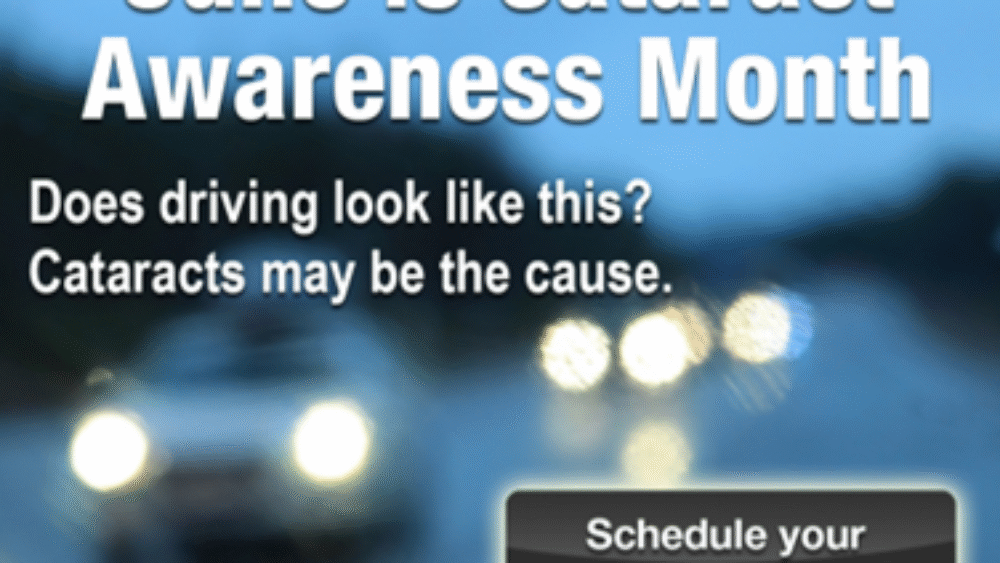
June is National Cataract Awareness Month, and UV rays are a significant risk factor for the eye disorder. The proper sunglasses can help protect you. As we get older, our eyes undergo physiological changes that can cause vision problems.

Ultraviolet light from the sun carries two types of radiation, UVA, and UVB rays. Ultraviolet radiation from the sun can cause cumulative damage to your eyes as you age, but you can protect your vision by wearing sunglasses every day.

Since UV light carries more energy than visible light, it can do greater damage to our eyes. As we age, the damage simply has more time to accumulate: a cataract, (cloudiness of the lens) for example, is believed to be caused by many years of exposure to bright sunlight. Choose sunglasses with 100% UV blockage. Since you can’t tell by looking at the glasses the UV blockage – darker tint is not an indication, you should always look at the label.

Sunglasses help to protect your eyes against UVB rays that cause cataracts. A cataract is the clouding of the normally clear lens of your eye. Seeing with cataracts is like looking through a frosty or fogged window. Cataract sufferers may also experience sensitivity to light, see “halos” around lights, notice fading or yellowing colors or have double vision in one eye.

Tips for Choosing the Best Sunglasses

According to the American Academy of Ophthalmology (AAO), the best sunglasses offer:

  • 100% UV protection
  • High optical quality (lenses are free of manufacturing defects like bubbles or waves that could bother your eyes
  • Scratch-resistant lenses
  • A larger frame offers more coverage of eye area

Most cataracts develop slowly and don’t disturb your eyesight early on. But with time, cataracts will eventually interfere with your vision and your eye doctor will help you decide if surgery is right for you.

Protection from the ultraviolet rays from the sun can occur by wearing sunglasses and a wide-brimmed hat. These two things can significantly reduce eye exposure to UVB radiation. Although cataracts are not completely preventable, their occurrence can be delayed. Smoking, avoiding excess amounts of alcohol, eating plenty of fresh fruits and vegetables may delay the formation of cataracts.

When to see a doctor…Make an appointment for an eye exam if you notice any changes in your vision such as double vision or blurriness, see your doctor right away. Talk with your eye doctor about whether surgery is right for you.

About Bissell Eye Care: John D. Bissell, OD owns and operates Bissell Eye Care servicing Northern Pittsburgh and Alle-Kiski Valley regions. With two locations to treat patients, we offer evening and Saturday appointments. Bissell Eye Care provides comprehensive eye examinations for the entire family beginning as early as 6 months, ocular disease detection and treatment, eyeglasses, sunglasses, activewear, contact lenses, and low vision examinations for those with significant vision loss. We accept most types of vision and health insurance plans. For more information, visit bisselleyecare.com or call our Bakerstown Office at 724-443-6767 or Natrona Heights office at 724-226-0444.

EYE SAFETY TIPS FOR SWIMMERS

Memorial Day marks the start of the public pool season. Community pools open for business and we want to offer some tips to keep you and your family safe this season. All kids love a day at the pool, but the combination of intense sun and pool chemicals can wreak havoc on the eyes. There are some things you can do to make pool days pain-free for your family.

Ever had red, bloodshot eyes after a day swimming in a public pool? Exposure to the sun and pool chemicals can irritate your eye’s cornea and cause the eyes to become dry. Increased exposure to this fun in the sun may cause your eyes to become irritated. If you’re prone to getting red eyes from swimming, you should always wear goggles in the pool.

Here are some pool safety tips to keep your family healthy this summer.

  • Purchase swim goggles with UV protection so when in the pool, the eyes will be protected from the sun’s harmful rays. Adjust goggles to make them watertight.
  • Sunglasses rule when out of the water. Always wear sunglasses to shield eyes from dangerous UV rays. Eyes can get sunburned from the reflective pool.
  • Rinse chemicals from sensitive eyes with fresh tap water. Saline drops can come in handy for this task and can easily be put in pool bags.
  • Avoid swimming with contact lenses as bacteria can collect on lenses and lead to infection.

If your child experiences extreme eye irritation, blurry vision or eye pain after a day at the pool, we recommend you contact Bissell Eye Care to avoid damage or infection.

About the author: John D. Bissell, owner of Bissell Eye Care and Tri-State Low Vision Services, offers comprehensive eye examinations for the entire family, ocular disease detection and treatment, eye glasses, sun glasses, active wear, contact lenses, and low vision examinations for those with significant vision loss. He has undergone specialized training for treatment of low vision by the International Academy of Low Vision Specialists utilizing customized telescopic eyeglasses, prisms and telescopic implants for patients who qualify. The practice accepts most types of vision and health insurance plans.

SPRING CLEANUP AND EYE PROTECTION


Gardener strimming and strimmer

It’s grass mowing, yard cleanup time of year. The leaves are out, flower beds are starting to show their color and you’re getting ready for summer entertaining. It’s important to be proactive about eye protection as you mow, trim, use weed whackers and hedge trimmers. The speed involved while using machinery can cause the unpredictable trajectory of clippings and debris.

While many people routinely don gardening gloves, sun hats, and mud boots, the eyes are often left exposed to everything from prickly branches to flinging rocks. All those powerful yard tools are great at cutting grass and leaves – but they’re also great at kicking up dirt, stones, dust, wood chips, and more. Your eyelids and eyelashes help keep some of the debris and dust out. Unfortunately, we see it all too often and it’s all too easy for something small to fly up and hit your eye when you least expect it!

Safety glasses provide a solid barrier to keep those flying stones and little bits of wood from striking your eye. They’re designed to cover more area around the eye including around the sides if you use a wrap-around style. Better than ordinary glasses, this type of safety glasses help minimize the possibility of something slipping under or around them.

Injuries from these flying objects run from small but painful scratches on the cornea to bits of dirt or wood actually getting stuck in your eye. As you can imagine, not only is this painful, it could impair your eyesight. The foreign objects have to be removed and your eye treated to prevent infections and repair damage.

The American Academy of Ophthalmology offers the following tips for common yard-work eye issues:

  • If sand or small debris gets in the eye, use an eyewash to flush the eye. Don’t rub the eye. If the debris doesn’t come out, lightly bandage the eye and see your eye doctor.
  • For blows to the eye, gently apply small cold compresses to reduce pain and swelling. Don’t apply any pressure. Seek emergency medical care if there is pain, reduced vision or discoloration, such as a black eye.
  • For cuts or punctures to the eye, bandage the eye without applying any pressure and seek emergency medical care immediately. Don’t attempt to wash the eye or remove any object stuck in the eye.

The eyes can be damaged by sun exposure too, not just chemicals, dust or objects, so make sure to wear UV protecting sunglasses while outdoors. Whether you are a professional landscaper or you mow your own lawn, don’t forget to protect your eyes while performing yardwork this spring and summer!

About the author: John D. Bissell, owner of Bissell Eye Care and Tri-State Low Vision Services, offers comprehensive eye examinations for the entire family, ocular disease detection and treatment, eye glasses, sun glasses, active wear, contact lenses, and low vision examinations for those with significant vision loss. He has undergone specialized training for treatment of low vision by the International Academy of Low Vision Specialists utilizing customized telescopic eyeglasses, prisms and telescopic implants for patients who qualify. The practice accepts most types of vision and health insurance plans.

TIPS ON CHOOSING EYEWEAR FRAMES


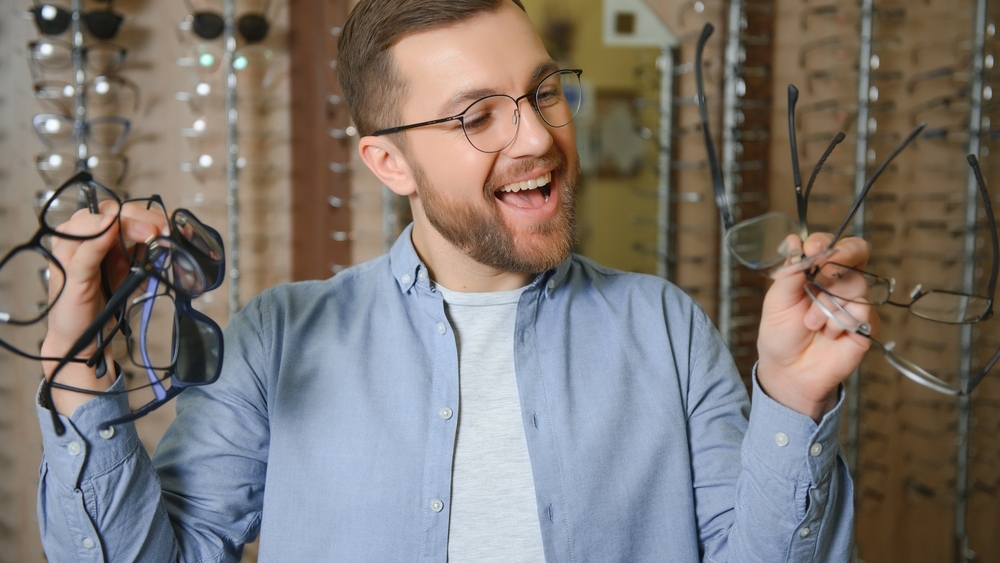
In Optics Shop. Portrait of male client holding and wearing different spectacles, choosing and trying on new glasses at optical store. Man picking frame for vision correction, closeup.

Bissell Eye Care prides itself on carrying unique brands of eyewear. You won’t find many of our frames at some of the big box stores. What that means is you also won’t see yourself coming and going on the street with the same eyewear frames. Our staff are trained to help you choose the best frame for your face shape, skin tone, and style. Use the following tips to find the frames that work best for you.

Your face shape will help you determine which frames enhance your look.

Round Face

  • If you have a round face, look for eyeglass frames that are square or rectangular. These shapes tend to be wider than a round face and can enhance your face by making it appear slimmer and longer, adding balance to your round features.
  • Avoid rimless frames, round frames. Small frames will accentuate the roundness, making your round face look even rounder.

Oval Face

  • If you have an oval face, frames that look best have a strong bridge, are wider than the broadest part of the face and are geometric in shape.
  • Avoid eyeglasses that are overlarge and cover up more than half of your face. This frame style will throw off the natural balance and symmetry of the oval face.

Square Face

  • Eyeglasses for a square face soften the angularity and sit high on the bridge of the nose. Oval or round eyeglasses will balance and add a thinner appearance to the angles of a square face.
  • Avoid angular and boxy eyeglass frames. They will sharpen and draw attention to your angular features, making a square face appear bulky.

Diamond Face

  • Diamond face shapes play up a narrow forehead and chin with eyeglass frames what sweep up or are wider than the cheekbones, such as cat-eye glasses and oval frames. These frames will accentuate your cheekbones and delicate features.
  • Avoid boxy and narrow frames that will accentuate the width of your cheeks, drawing attention to your narrow features rather than enhancing them.

Heart-Shaped Face

  • Heart-Shaped face looks the best with frames that balance the width of the forehead with the narrowness of the chin. Eyeglasses with low-set temples and bottom heavy frame lines will add width to that narrower part of your face. Round eyeglasses or square eyeglasses with curved edges will help draw attention away from a broad, high forehead.
  • Avoid any style or color of frames that draw attention to the forehead. This includes frames with decorative temples or embellished tops.

When it comes to face shape, select eyeglasses that contrast from your facial contours and bring symmetry and balance to your prominent features.

Skin Tone and Eye Frame Colors

Just as the shape of your face helps determine which frames look best, so does your skin tone. More important than hair color and more decisive than eye color, skin tone sets the tone for high fashion frames. Select a shade closest to your skin tone:

  • Warm Skin Tone: If you have a yellow, bronze or golden cast to your skin, you have a warm complexion. Stay away from contrasting colors such as pastels. White and black frames are not flattering either. Instead, the best frame colors for you are a light tortoise, brown shades, gold or honey, beige, and olive green.
  • Cool Skin Tone: If your skin has pink or blue undertones, you have a cool complexion. Avoid colors that wash you out and instead reach for frames that are silver, black, dark tortoise, pink, purple, blue, mauve and gray.

Lifestyle Matters

There are eyeglass frames for every way of life! Think about the activities you will do while wearing your eyeglasses. If you’re active, perhaps you want to choose frames which can twist and bend without breaking. Need gaming glasses? Gamers can choose from a wide selection of stylish frames that enhance the gaming experience. When impressing the big wigs at the office, you can accessorize your business savvy with sensible style.

The frames you wear can say a lot about your personality. You can have a pair of glasses that showcase your fun-loving side on the weekends and a pair that emphasizes your get down to business tone during the week.

At Bissell Eye Care – we have you covered. We carry a vast selection of designer eyewear to fit your facial shape, skin tone, and life style.

About the author: John D. Bissell, owner of Bissell Eye Care and Tri-State Low Vision Services, offers comprehensive eye examinations for the entire family, ocular disease detection and treatment, eye glasses, sun glasses, active wear, contact lenses, and low vision examinations for those with significant vision loss. He has undergone specialized training for treatment of low vision by the International Academy of Low Vision Specialists utilizing customized telescopic eyeglasses, prisms and telescopic implants for patients who qualify. The practice accepts most types of vision and health insurance plans.

SPRING ALLERGIES AND PINK EYE

With the warm weather finally arriving, we’re beginning to see signs of spring. Have your eyes started to water? Are your eyes red? Do you feel your nose starting to get stuffed up again? It’s that time of the year, the time when the weather gets warmer, you want to get outside, and all the plants and trees start to bloom. As spring approaches, learn how to help prevent symptoms and avoid eye infections.

Among eye infections associated with allergies, pink eye is one the most common. Pink eye is an inflammation of the thin, clear covering of the white of the eye and the inside of the eyelids. While this part of the eye is clear it contains small blood vessels. When an infection occurs, these blood vessels dilate, giving the eye the red color. It is more frequently experienced with people who are in close proximity to others such as students, school workers, daycare workers and medical professionals.

Types of Pink Eye

  • Allergic: This form of pink eye may be associated with pollen but can also be flared up by dust or pet dander
  • Bacterial: Bacterial pink eye is caused by bacteria entering the eye. It can cause serious damage to the eye if left untreated.
  • Viral: Caused by a virus similar to the common cold. This is the most contagious form but will usually clear up on its own in a few days without medical treatment.

Treatments

  • Allergic: Allergy medications can often help to prevent or shorten the duration of the infection. It is a common practice to start the medication prior to allergy season or known flare ups.
  • Bacterial: An optometrist appointment is necessary and they will prescribe eye drops.
  • Viral: This form will run its course over several days requiring no medical treatment. Using a cold wet compress will help relieve some of the symptoms. Do not share this compress as the viral form is the most contagious.

As we approach spring and allergy season, follow these tips to help prevent eye infections.

Prevention

  • Avoid sharing items such as washcloths, tissues, or towels.
  • Avoid rubbing or touching your eyes after covering your mouth to cough or sneeze.
  • Never share contact lenses with anyone.
  • If you experience seasonal allergies consult your doctor on how to minimize symptoms.
  • Remove contacts before using a hot tub, being in water, and even showering.
  • Wash hands frequently, especially in areas of high public traffic (schools, daycares, public places).

If you do experience an infection don’t hesitate to contact the doctors at Bissell Eye Care to confirm if you will need medication to help combat the infection and prevent future eye damage.

About the author: John D. Bissell, owner of Bissell Eye Care and Tri-State Low Vision Services, offers comprehensive eye examinations for the entire family, ocular disease detection and treatment, eye glasses, sun glasses, active wear, contact lenses, and low vision examinations for those with significant vision loss. He has undergone specialized training for treatment of low vision by the International Academy of Low Vision Specialists utilizing customized telescopic eyeglasses, prisms and telescopic implants for patients who qualify. The practice accepts most types of vision and health insurance plans.

IS IT TOO EARLY FOR YOUR CHILD’S FIRST EYE EXAM?

You may notice many preschools are starting to advertise registration for the 2019-2020 school year. Something to consider before your child enters preschool is an eye exam. Did you know that Bissell Eye Care provides comprehensive eye examinations for children as young as 6 months of age? For children under the age of one, we do not charge for the examination.

According to the American Optometric Association (AOA), “infants should have their first comprehensive eye exam at 6 months of age. Experts say 5 -10 % of preschoolers and 25 % of school-aged children have vision problems.

Preschoolers depend on their vision to learn tasks that will prepare them for school. During this time in their lives, they are developing the visually-guided eye-hand-body coordination, fine motor skills and visual perceptual abilities necessary to learn to read and write.

Early identification of a child’s vision problem is crucial because, if left untreated, some childhood vision problems can cause permanent vision loss. Children then should have additional eye exams at age 3, and just before they enter the first grade – at about age 5 or 6.”

The AOA estimates one in four school-aged kids have undetected vision problems that critically impact their visual perceptual skills:

  • RECOGNITION – knowing the difference between letters like ‘b’ and ‘d’
  • COMPREHENSION – ‘picturing’ what’s happening in a story they’re reading
  • RETENTION – remembering and recalling details about what they’ve just read

Here are some tips for eye exams for young children.

  • Schedule the appointment during a time when your child is alert and happy, taking into account napping and eating times.
  • A case history will be conducted to determine birth history, birth weight, medical issues, and any allergies.
  • Be sure to note any delayed motor development, failure to maintain eye contact, poor eye tracking, frequent eye rubbing or blinking.

Making a child comfortable with puppets and the use of our “Special Lights” allow us to have fun with children as we look for the following things:

  • How the eye tracks and turns
  • High Refractive Error – meaning significant far or nearsightedness
  • Overall Eye Health

For young children who can’t read letters yet, no worries, we use of shapes and colors. No matter what age, regular eye exams are important. Prepare your child for success as they enter preschool and beyond. To learn more, give our offices a call at 724-443-6767 or 724-226-0444.

About the author: John D. Bissell, owner of Bissell Eye Care and Tri-State Low Vision Services, offers comprehensive eye examinations for the entire family, ocular disease detection and treatment, eye glasses, sun glasses, active wear, contact lenses, and low vision examinations for those with significant vision loss. He has undergone specialized training for treatment of low vision by the International Academy of Low Vision Specialists utilizing customized telescopic eyeglasses, prisms and telescopic implants for patients who qualify. The practice accepts most types of vision and health insurance plans.