
Depositphotos_32774193_S

Back To School Eye Exams

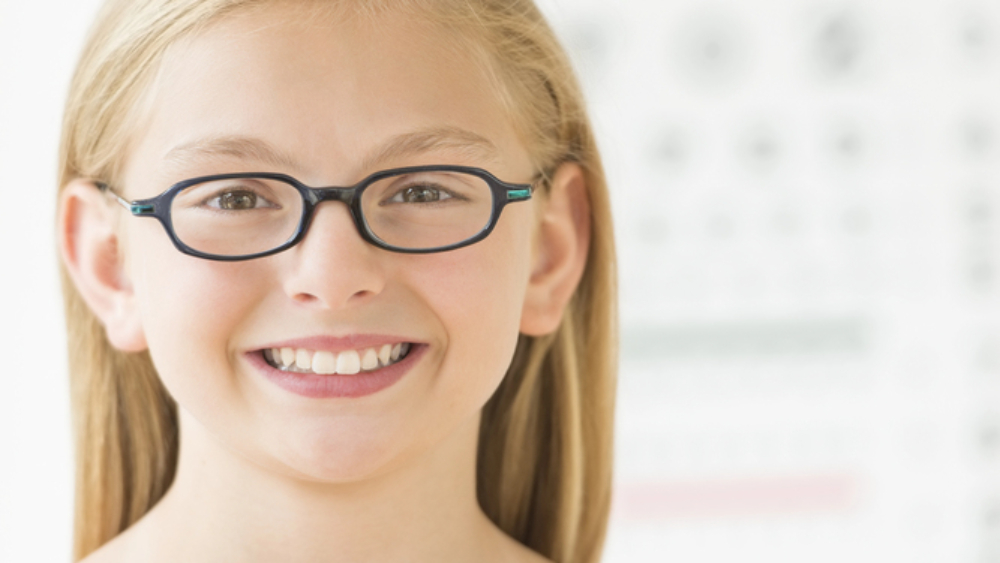
For parents of school age children, that Staples commercial of “it’s the most wonderful time of the year back to school sale” comes to mind. As your child prepares for another year, it’s a great time to schedule their annual eye exams.

August is children’s eye health and safety month. As a good rule of thumb, you should have your child’s eyes examined by an eye care professional in their first year of life as an infantSEE exam and then they should have regular eye exams starting around preschool age (three) before the start of each school year. If your child struggles to see, it may inhibit their ability to learn as they head back to school this year. If your child struggles to see, it may inhibit their ability to learn as they head back to school this year.

Through a comprehensive eye exam, the doctors at Bissell Eye Care can help to ensure your child is seeing clearly.

These exams look into the back of the eye for overall eye health but are also able to detect things such as:

  • Ptosis (drooping of the eyelid)
  • Color deficiency (color blindness)
  • Amblyopia (lazy eye)
  • Strabismus (cross eyes)

Early detection of vision problems can make a big difference when it comes to your child’s ability to learn. If they aren’t able to clearly see, they will struggle to learn as many people learn by sight.

During last year’s remote and hybrid learning, parents had many things on the plates from juggling work and home life to homeschooling their kids. More frequent digital learning is bound to cause eye strain and some children may not have the opportunity to receive the vision screenings they usually receive in school – often creating a referral point for a comprehensive eye exam. This year it’s more important than ever to have an annual eye exam.

Keeping your children’s eyes safe is another part of maintaining healthy vision. With fall sports practices underway, it’s important to ensure your child has the appropriate eye production. Did you know there are 42,000 sports related eye injuries that occur each year and those eye injuries are the leading cause of vision loss in children? If you have questions as to the proper type of protective eyewear your children should have, please give our office a call at 724-443-6767 or 724-226-0444.

Give your kids the best chance of success this year by scheduling a comprehensive eye exam. Make sure that your children can see clearly. Protecting their ability to see will help them to have the best chance of success as they head back to school this year! As we round the corner toward the end of August, the staff at Bissell Eye Care wish you a safe and productive school year.


About Bissell Eye Care: John D. Bissell, OD owns and operates Bissell Eye Care servicing Northern Pittsburgh and Alle-Kiski Valley regions. With two locations to treat patients, we offer evening and Saturday appointments. Bissell Eye Care provides comprehensive eye examinations for the entire family beginning as early as 6 months, ocular disease detection and treatment, eyeglasses, sunglasses, activewear, contact lenses, and low vision examinations for those with significant vision loss. We accept most types of vision and health insurance plans. For more information, visit bisselleyecare.com or call our Bakerstown Office at 724-443-6767 or Natrona Heights office at 724-226-0444.
Mom with daughter in ophthalmology clinic

What to Expect at My Child’s First Eye Exam

American Optometric Association (AOA), states “infants should have their first comprehensive eye exam at 6 months of age.” Did you know that Bissell Eye Care provides eye examinations for free to children as young as 6 months up to one year old? As children enter preschool around 3 years of age they should be rechecked and then again right before kindergarten. Experts say 5 -10 % of preschoolers and 25 % of school-aged children have vision problems.

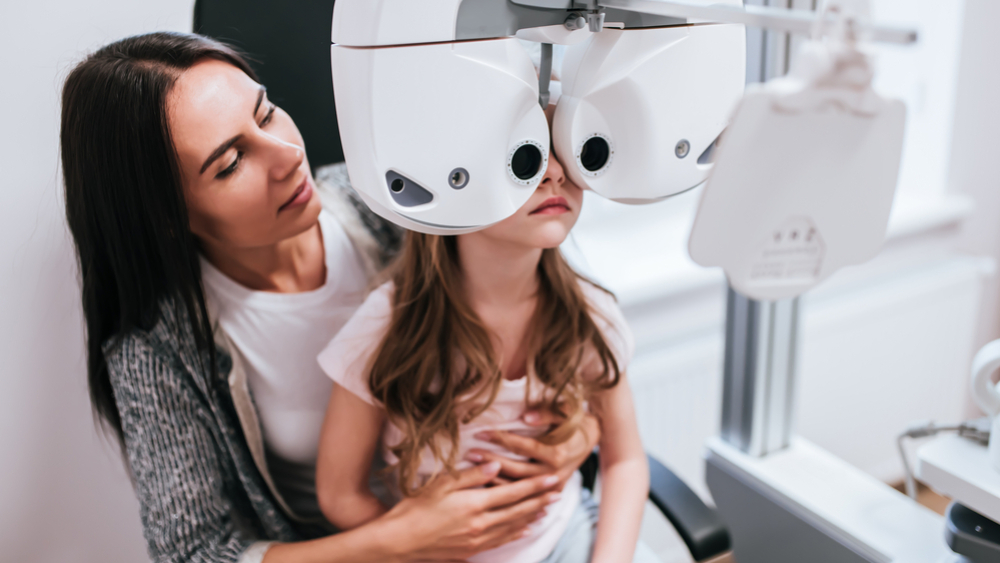
During a child’s eye exam, we will perform three assessments, including a vision test, pupil test, and eye movement test. You’ll be asked about your family’s medical history, your child’s medical history, developmental observations and any vision problems that you might be observing with your child.

We encourage you to stay with your child through the entire examination. Infants and small children sit on a parent’s lap during the exam. Older children are encouraged to sit in the exam chair by themselves.
Eye drops are used to dilate the pupils, which gives the optometrists a better view of the structures inside the eye, such as the retina, optic nerve, and blood vessels. The drops take about 30 to 45 minutes to become fully effective.

The Bissell Eye Care optometrists will carefully observe each eye as your child follows lights or toys. This gives a very good estimate of a child’s visual function. Children do not need to be able to talk or read to get an accurate eyeglass prescription. Children who talk but cannot read or count may be asked to identify pictures of common objects.

Once the dilation drops kick in, the doctor will use a retinoscope, a handheld polarized light, and lenses to read each of the eye’s red reflex. This allows the doctor to get an accurate eyeglasses prescription without feedback from the patient, allowing nonverbal or young children to get glasses.

These same eye drops also cause a temporary weakness of the eyes’ focusing muscles. This allows us to determine if your child has a focusing or refractive error that requires glasses. Refractive errors include:

  • Nearsightedness (myopia)
  • Farsightedness (hyperopia)
  • Distorted vision (astigmatism)

You may notice many preschools are starting to advertise registration for the 2020-2021 school year. Young children depend on their vision to learn tasks that will prepare them for school. During this time in their lives, they are developing the visually-guided eye-hand-body coordination, fine motor skills and visual perceptual abilities necessary to learn to read and write.

Early identification of a child’s vision problem is crucial because, if left untreated, some childhood vision problems can cause permanent vision loss. The AOA estimates one in four school-aged kids have undetected vision problems that critically impact their visual perceptual skills -better known – as the 3 R’s:

  • RECOGNITION — knowing the difference between letters like ‘b’ and ‘d’
  • COMPREHENSION — ‘picturing’ what’s happening in a story they’re reading
  • RETENTION – remembering and recalling details about what they’ve just read

Here are some tips for eye exams for young children:

Schedule the appointment during a time when your child is alert and happy taking into account napping and eating times.
A case history will be conducted to determine birth history, birth weight, medical issues, and any allergies
Be sure to note any delayed motor development, failure to maintain eye contact, poor eye tracking, frequent eye rubbing or blinking.

Prepare your child for success as they enter preschool and beyond. To schedule your child’s eye exam, give our offices a call at 724-443-6767 or 724-226-0444.

About Bissell Eye Care: John D. Bissell, OD owns and operates Bissell Eye Care servicing Northern Pittsburgh and Alle-Kiski Valley regions. With two locations to treat patients, we offer evening and Saturday appointments. Bissell Eye Care provides comprehensive eye examinations for the entire family beginning as early as 6 months, ocular disease detection and treatment, eyeglasses, sunglasses, activewear, contact lenses, and low vision examinations for those with significant vision loss. We accept most types of vision and health insurance plans. For more information, visit bisselleyecare.com or call our Bakerstown Office at 724-443-6767 or Natrona Heights office at 724-226-0444.

4 TIPS TO SPOT VISION PROBLEMS IN KIDS

As we march into spring, many families are participating in kindergarten or preschool orientation. Young children are excited about taking the next step in school, but one of the most important yet overlooked necessities in their success is healthy vision.

If your child has been in preschool, chances are they may have had a vision screening. These are performed in most preschool and elementary schools. Many vision screenings test only for distance visual acuity. While the ability to see clearly in the distance is important, it does not indicate how well the eyes focus up close or work together. A screening does not give any information about the health of your child’s eyes. That’s why it’s important to have an annual comprehensive eye exam by an optometrist or ophthalmologist.

As older school aged children near the last half of the school year, standardized testing and spring exams are coming into play. Eye strain and/or vision problems may manifest themselves and as parents, you may notice a change in your child’s demeanor.

A child’s eyes and vision grow from year-to-year and as they progress through school, the demands of learning require visual work involving reading, writing, computers and the ability to see chalkboards/smartboards. If their eyes aren’t up to the task, a child may feel tired, have trouble concentrating, and have problems in school.

Particularly in young children, it’s difficult for them to tell you they are having difficulty seeing something. But sometimes parents will notice signs that their child may have a vision problem. For instance, your child may squint, or hold reading material very close to their face.

Here are four signs that could point to possible vision problems in kids.

  1. Short attention span. Does your child seem to quickly lose interest in games, projects or activities that require using their eyes for an extended period of time?
  2. Losing their place when reading. For young children sometimes allowing a finger to follow the words will help train their eyes. Do you notice as your child reads (aloud or silently), they may have difficulty seeing to keep track of where they are on the page? It may also take them a long time to read a page.
  3. Avoiding reading and other close activities. Do you see a push back when your child is reading? Because of difficulty in seeing, they may choose to avoid reading, drawing, playing games or doing other projects that require focusing up close.
  4. Turning their head to the side. Does your child seem to tip their head or turn their head sideways to look at something in front of them? They can see better, but this may be a sign of an astigmatism or a refractive error.

Success in school is closely tied to eye health. That’s why it is so important for kids to have a comprehensive annual eye exam with an optometrist or ophthalmologist who is properly trained to assess vision in school-aged children. The earlier a vision problem is found and treated, the better off your child will be—in and out of school. As you register your child for the next school year, be sure to put a comprehensive eye exam on your check off list. For questions regarding eye health contact our office at 724-443-6767 or 724-226-0444.

About the author: John D. Bissell, owner of Bissell Eye Care and Tri-State Low Vision Services, offers comprehensive eye examinations for the entire family, ocular disease detection and treatment, eye glasses, sun glasses, active wear, contact lenses, and low vision examinations for those with significant vision loss. He has undergone specialized training for treatment of low vision by the International Academy of Low Vision Specialists utilizing customized telescopic eyeglasses, prisms and telescopic implants for patients who qualify. The practice accepts most types of vision and health insurance plans.

A Little Boy With His Hands Over His Eyes Sitting In Front Of His Computer

WARNING SIGNS OF VISION PROBLEMS IN YOUNG CHILDREN

A Little Boy With His Hands Over His Eyes Sitting In Front Of His Computer

With most schools being back in session, it is safe to say another summer has come and gone. September brings about the onslaught of a busy school schedule – homework, extracurricular activities and fall sports.

Studies have shown that seeing clearly has been directly linked to successful learning of children, especially at a young age. Visual learning is critical in early childhood education, where the foundation of educational building blocks occur. Having a yearly eye exam by an optometrist offers parents the peace of mind, knowing they have equipped their child with the best tools to be successful in school!

Older children and adults are able to notice when vision may change. Letters and words go from crystal clear, to slightly blurry, to not able to clearly see the chalk board (or white board) anymore. As your kids grow and move from elementary school, to middle and high school, it becomes easier for them to notice a difference their vision.

If your children are in preschool, kindergarten or elementary school, it may be more difficult for them to notice changes in vision, and communicate that to you. For this reason it is especially important for you to watch for the signs that they are struggling to see.

Some things to look for in young children are:

  • Saying their eyes are tired.
  • Seem to see better during the day than at night.
  • Clumsy, knocking things over of tripping often (while this may just also be the awkward growing stage it may be linked to their inability to see clearly).
  • Holding objects close to their face in order to see.
  • Excess rubbing of their eyes.
  • Tilting or turning their head.
  • Covering one eye when looking at things close up.
  • Misaligned eyes or squinting.
  • • Complaining of headaches.

As parents, we try to do everything we can to help our children be as successful as possible. By looking for signs such as these, you can be proactive in providing them the best opportunity to experience the love of learning.

Yearly eye exams starting as early as preschool could help to make a difference and provide a clear future for your children, and also help in the detection of early stages of eye diseases. Early detection is key in being able to treat and manage eye diseases!

About the author: John D. Bissell, owner of Bissell Eye Care and Tri-State Low Vision Services, offers comprehensive eye examinations for the entire family, ocular disease detection and treatment, eye glasses, sun glasses, active wear, contact lenses, and low vision examinations for those with significant vision loss. He has undergone specialized training for treatment of low vision by the International Academy of Low Vision Specialists utilizing customized telescopic eyeglasses, prisms and telescopic implants for patients who qualify. The practice accepts most types of vision and health insurance plans.