
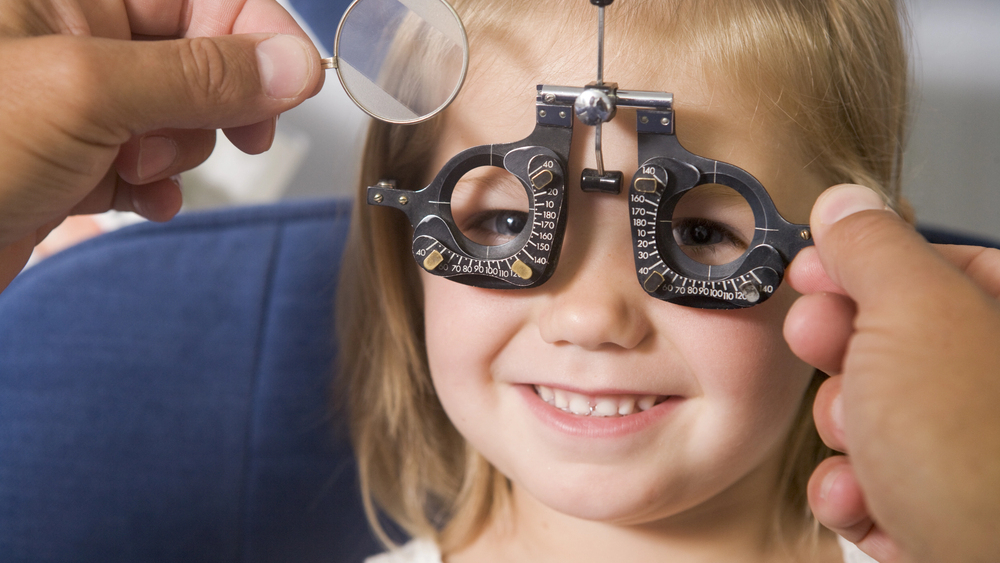
preschool-eye-exam

Why Your Preschooler Should Have an Annual Eye Exam

As parents prepare their children for preschool, they often focus on choosing the right classroom, teachers, and learning environment. One important step that is sometimes overlooked is making sure your child’s vision is ready for school. A comprehensive eye exam before and during the preschool years can help identify vision problems early and ensure your child is set up for success in the classroom.

Vision plays a major role in how young children learn and interact with the world around them. According to the American Optometric Association, “Vision screenings are a limited process and can’t be used to diagnose an eye or vision problem, but rather may indicate a potential need for further evaluation. They may miss as many as 60% of children with vision problems. Even if a vision screening does not identify a possible vision problem, a child may still have one.” Because many vision issues are not obvious, children may not realize they are seeing differently than others.

Vision Plays a Key Role in Early Learning

During preschool years, children develop critical visual skills that help them learn and grow. In fact, experts estimate that up to 80% of learning in a child’s early years is visual.

Preschoolers rely on their vision to develop:

  • Eye-hand coordination
  • Fine motor skills used for drawing and writing
  • Visual tracking and focusing skills
  • Visual perception needed for reading readiness

If a child cannot see clearly or struggles with how their eyes work together, it may lead to difficulties with reading, concentration, coordination, and even social interactions.

Research also shows:

  • 60% of children with reading difficulties have an undiagnosed vision problem.
  • Children with untreated vision issues are three times more likely to fall behind in school.

Identifying and treating these problems early can make a significant difference in your child’s confidence and academic success.

Vision Screenings vs. Comprehensive Eye Exams

Many preschools perform basic vision screenings as part of their enrollment process. While these screenings can be helpful, they are not a substitute for a comprehensive eye exam.

A basic screening usually checks visual clarity using an eye chart. This can detect issues like nearsightedness or farsightedness but may miss other common problems.

A comprehensive eye exam evaluates much more, including:

  • Visual acuity (how clearly your child sees)
  • Eye movement and tracking
  • How the eyes work together (binocular vision)
  • Focusing ability
  • Color vision
  • Overall eye health and internal eye structures

These detailed tests allow eye doctors to detect vision issues that screenings may overlook.

Making Eye Exams Comfortable and Fun for Children

At Bissell Eye Care, we understand that young children may feel nervous during their first eye exam. That’s why our exams are designed to be engaging and comfortable.

For children who are not yet reading letters, we use shapes and colors instead of traditional eye charts. We also use fun tools like puppets and special lights to keep children relaxed while we check their vision.

During the exam, we evaluate:

  • How the eyes track and move together
  • Signs of significant nearsightedness or farsightedness
  • Overall eye health and development

Our goal is to make the experience positive while ensuring your child’s vision is developing properly.

Set Your Child Up for Success

Regular eye exams are an important part of preparing your child for preschool and beyond. Detecting vision problems early allows for timely treatment and helps ensure your child has the visual skills needed to learn, play, and grow with confidence.

To learn more or schedule your child’s eye exam, contact Bissell Eye Care at 724-443-6767 or 724-226-0444.

You can also follow us on Facebook at facebook.com/BissellEyes for more helpful eye care tips and updates.


About Bissell Eye Care: John D. Bissell, OD, is the owner of Bissell Eye Care, proudly serving the Northern Pittsburgh and Alle-Kiski Valley regions. Dr. Bissell has received advanced training through the International Academy of Low Vision Specialists, enabling him to help patients living with vision impairment and low vision challenges. With two convenient office locations and evening appointments available, Bissell Eye Care offers comprehensive eye exams for the entire family—starting as young as six months. Our services include ocular disease detection and treatment, prescription eyeglasses and sunglasses, specialty activewear eyewear, contact lenses, and dedicated low vision evaluations for those with significant vision impairment and vision loss. We accept most vision and health insurance plans. To learn more, visit bisselleyecare.com or call our Bakerstown office at 724-443-6767 or our Natrona Heights office at 724-226-0444.
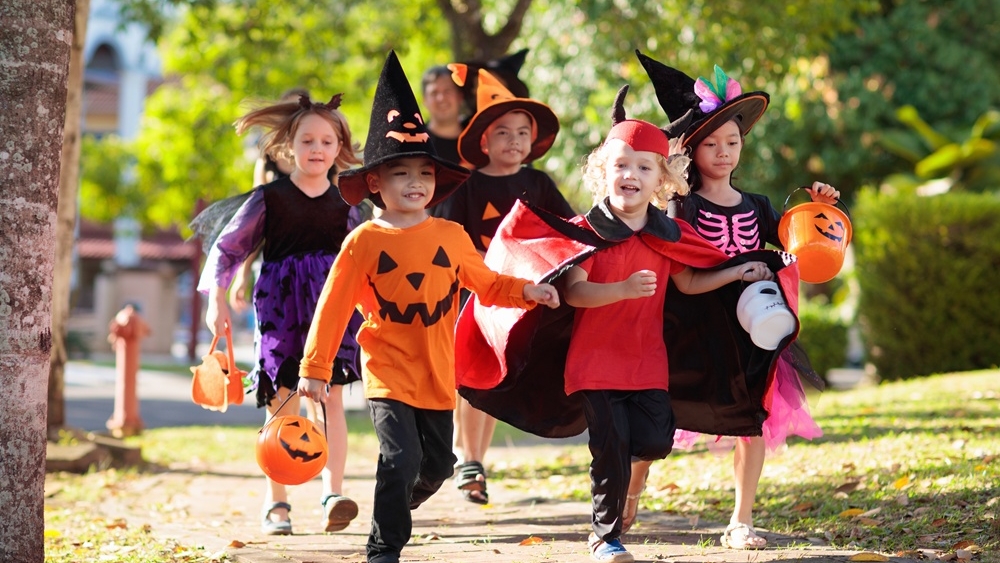
Child in Halloween costume. Mixed race Asian and Caucasian kids and parents trick or treat on street. Little boy and girl with pumpkin lantern and candy bucket. Baby in witch hat. Autumn holiday fun.

Keep Your Eyes Boo-tiful: Halloween Safety

Halloween Eye Safety Tips: Protecting Your Vision While Having Fun

Halloween is a favorite time of year for kids and adults alike—costumes, candy, and spooky fun. But while you’re picking out the perfect costume, it’s important to keep eye safety in mind. As optometrists, we want families to enjoy the holiday without accidents or eye injuries. Here are some Halloween safety tips for costumes, masks, and decorative contact lenses to help protect your vision this season.

Choose Masks Kids Can See Out Of Clearly

Masks are a popular part of many Halloween costumes, but they can sometimes block vision. Poorly fitted masks may limit peripheral vision, making it harder for kids to see cars, steps, or other trick-or-treaters.

  • Look for masks with large eye openings.
  • Test your child’s mask in a well-lit room before Halloween night.
  • If vision is restricted, consider face paint instead of a full mask.

Avoid Non-Prescription Decorative Contact Lenses

Decorative or “cosmetic” contact lenses—like cat eyes, vampire red, or all-white sclera lenses—may seem like the perfect accessory to a spooky costume. However, non-prescription contact lenses sold without an eye exam can be dangerous.

  • Ill-fitting lenses can cause scratches, infections, or even vision loss.
  • Only purchase costume contact lenses from a licensed eye doctor with a valid prescription.
  • Never share contact lenses, even decorative ones.

If your teen is interested in wearing Halloween contact lenses, schedule an eye exam to ensure they are fitted safely.

Watch Out for Sharp Objects in Costumes

Costume swords, wands, pitchforks, or other props with sharp ends can easily poke an eye if someone trips or bumps into another trick-or-treater. To reduce risk:

  • Choose props made of soft, flexible materials.
  • Avoid overly long items that can drag or swing around.
  • Remind kids not to run while holding costume accessories.

Prevent Trip Hazards in Costumes

Long costumes and flowing capes may look dramatic but can be hazardous. Children may trip and fall, increasing the risk of eye injuries or facial trauma.

  • Hem costumes to ankle length or shorter.
  • Avoid shoes that are too big for walking safely.
  • Make sure costumes are free of dangling parts that could catch on decorations.

Halloween is a time for fun, creativity, and family memories. By following these Halloween eye safety tips, you can keep vision clear and protected while enjoying the holiday.

If you have questions about decorative contact lenses or want to schedule an eye exam before Halloween, our office is here to help. Protecting your vision is no trick—it’s a treat you’ll enjoy for years to come.


About Bissell Eye Care: John D. Bissell, OD, is the owner of Bissell Eye Care, proudly serving the Northern Pittsburgh and Alle-Kiski Valley regions. Dr. Bissell has received advanced training through the International Academy of Low Vision Specialists, enabling him to help patients living with vision impairment and low vision challenges. With two convenient office locations and evening appointments available, Bissell Eye Care offers comprehensive eye exams for the entire family—starting as young as six months. Our services include ocular disease detection and treatment, prescription eyeglasses and sunglasses, specialty activewear eyewear, contact lenses, and dedicated low vision evaluations for those with significant vision impairment and vision loss. We accept most vision and health insurance plans. To learn more, visit bisselleyecare.com or call our Bakerstown office at 724-443-6767 or our Natrona Heights office at 724-226-0444.
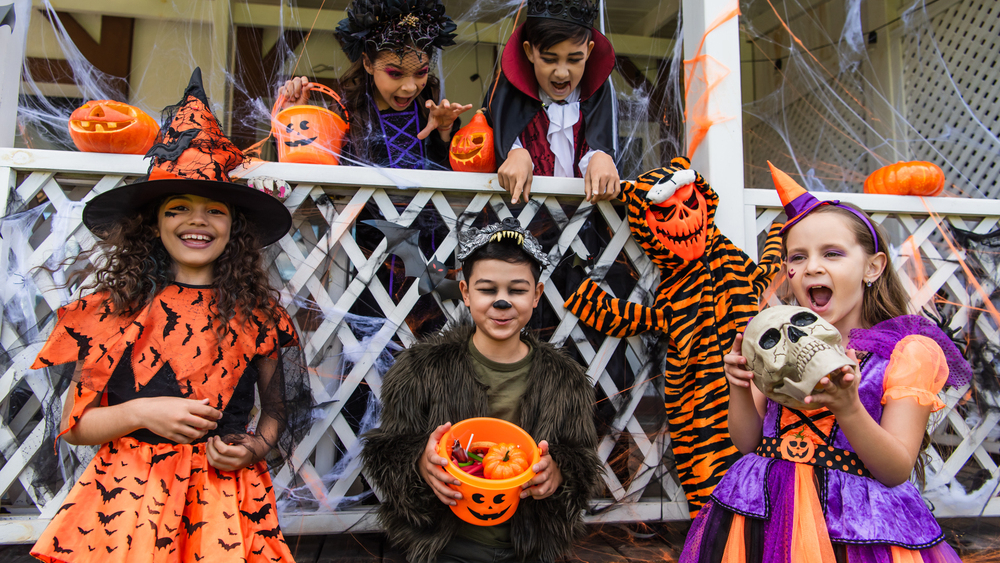
A group of young children in Halloween costumes on a front porch, representing how to protect your vision this Halloween

Spooky Season Safety: How to Protect Your Vision This Halloween

Halloween is a time for fun costumes, creative decorations, and plenty of spooky adventures. But while you’re planning your costume and gearing up for trick-or-treating, it’s important to remember that certain elements of Halloween fun can pose risks to your vision. The doctors at Bissell Eye Care want to help you enjoy the holiday while staying safe. Let’s talk about how to protect your eyes from costume-related hazards, including masks, trip hazards, and non-prescription decorative contacts.

Masks and Obstructed Vision

Wearing a mask is a quick way to transform into your favorite spooky character, but some masks can block your field of vision, making it difficult to see clearly. This is especially dangerous when walking in dimly lit areas or navigating stairs and uneven surfaces.

  • Opt for face paint or makeup rather than full-face masks to maintain clear vision.
  • If a mask is essential for your costume, make sure the eye holes are large enough for an unobstructed view.
  • Avoid wearing masks while walking long distances or in unfamiliar areas.

Trip Hazards in Dark Costumes

Black capes, long dresses, and flowing fabrics are common for Halloween costumes, but they can also become trip hazards, especially in low light. The combination of dark streets, reduced visibility, and flowing costumes can lead to accidents that harm not just your body but your eyes as well.

  • Hem long costumes to avoid tripping.
  • Carry a flashlight or use reflective tape on your costume for better visibility.
  • Make sure shoes are secure and comfortable for walking.

Decorative Contacts: The Hidden Danger

Decorative or “cosmetic” contact lenses can be a fun way to enhance your Halloween look, but using non-prescription lenses is dangerous. Non-prescription lenses may not fit properly, leading to corneal abrasions, infections, and even vision loss.

  • Only purchase decorative lenses from reputable sources with a prescription.
  • Never share contact lenses with others.
  • Always follow proper contact lens hygiene: clean your lenses, store them correctly, and never wear them for longer than directed.

Glow Sticks

Glow sticks offer several key benefits for safety on Halloween, especially when trick-or-treating in low-light conditions. Here’s why they are a smart choice:

  • Increased Visibility – Glow sticks emit a bright, noticeable light that helps make you more visible to drivers and others in the dark. This is especially important for children walking along streets, as they may be harder to spot in dimly lit areas.
  • No Need for Batteries – Unlike flashlights, glow sticks don’t require batteries, so you don’t have to worry about them losing power during the night. Once activated, they provide several hours of continuous light.
  • Hands-Free Safety -Glow sticks are lightweight and can easily be worn as necklaces, bracelets, or attached to costumes, leaving hands free for holding bags, candy, or guiding younger children.
  • Non-Heat Emitting – Since glow sticks don’t generate heat, they are safer to carry around, particularly for children, as there’s no risk of burns or fires compared to candles or open flames.
  • Cost-Effective – Glow sticks are inexpensive, making them an affordable safety option for Halloween, especially if you need multiple lights for a group.

General Safety Tips for Halloween

In addition to costume-related hazards, keep these general eye safety tips in mind:

  • Beware of sharp costume props like wands or swords that could accidentally poke someone in the eye.
  • Use hypoallergenic makeup and avoid applying it too close to your eyes. Be sure to remove it before bed to prevent irritation or infection.

Halloween is a time to get creative and enjoy some spooky fun, but it’s important to keep your safety and vision a top priority. By using glow sticks, trick-or-treaters and party-goers can enhance their safety in a fun, colorful way while staying visible in the dark. The staff at Bissell Eye Care wish you a safe and frightfully fun Halloween night.


About Bissell Eye Care: John D. Bissell, OD owns and operates Bissell Eye Care servicing Northern Pittsburgh and Alle-Kiski Valley regions. With two locations to treat patients, we offer evening appointments. Bissell Eye Care provides comprehensive eye examinations for the entire family beginning as early as 6 months, ocular disease detection and treatment, eyeglasses, sunglasses, activewear, contact lenses, and low vision examinations for those with significant vision loss. We accept most types of vision and health insurance plans. For more information, visit bisselleyecare.com or call our Bakerstown Office at 724-443-6767 or Natrona Heights office at 724-226-0444.
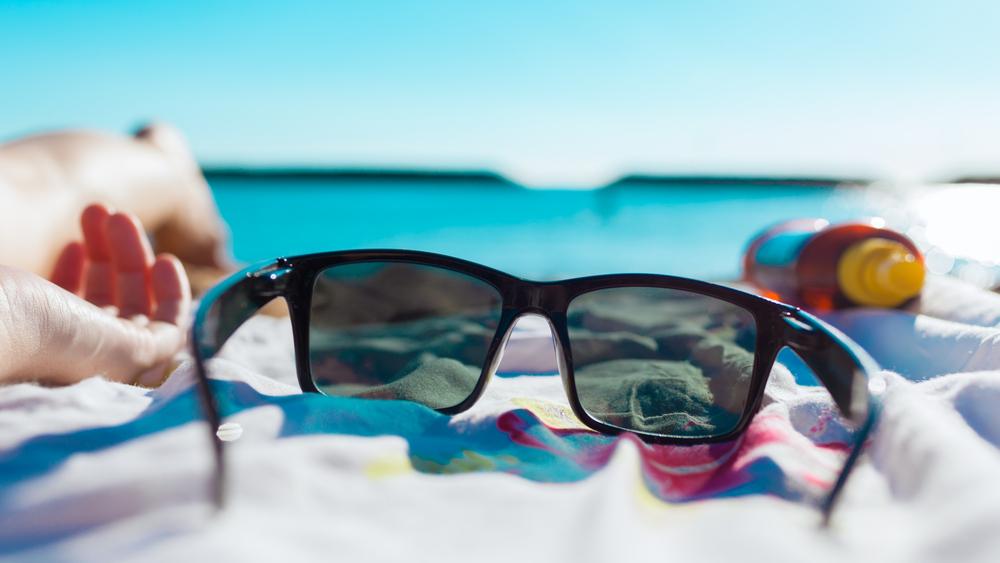
dark summer sunglasses on bright summer day on beach towel with blue water in the background

Summer, Sunglasses & Sunscreen

It seems like June and summer hit all at once. As we enjoy the outdoor activities of summer, sunscreen and sunglasses are a winning combination. Sunglasses are an easy solution that makes life more comfortable when outdoors, while also providing critical protection from the sun’s damaging ultraviolet (UV) rays.  But…all sunglasses don’t provide the protection you need to protect your eyes. UV sunglasses play a crucial role in protecting our eyes from the harmful effects of ultraviolet (UV) rays.

Importance of UV Sunglasses:

UV rays, particularly UVA and UVB, can cause significant damage to our eyes. Prolonged exposure to UV radiation can lead to various eye conditions, including cataracts, macular degeneration, and photokeratitis (sunburn of the cornea). Wearing UV sunglasses helps minimize the risk of these problems and ensures long-term eye health.

Effect of UV Rays on Cataracts:

Cataracts occur when the lens of the eye becomes clouded, resulting in blurry vision. UV radiation is a known risk factor for cataracts. The lens of the eye is highly sensitive to UV rays, and prolonged exposure can accelerate the formation and progression of cataracts. Wearing UV-protective sunglasses helps reduce the cumulative exposure to UV radiation and lowers the risk of cataract development.

How to Choose Sunglasses:

When choosing sunglasses for UV protection, consider the following factors:

  • UV Protection: Look for sunglasses that provide 100% UV protection or block both UVA and UVB rays. The label should indicate this feature.
  • Lens Quality: Opt for sunglasses with high-quality lenses that offer clear and undistorted vision.
  • Lens Color: While lens color doesn’t necessarily indicate UV protection, gray, green, and brown lenses are good choices as they reduce brightness without altering colors.
  • Polarized Lenses: Polarized sunglasses can help reduce glare, improving visual comfort, especially in outdoor activities near water or snow.
  • Fit and Coverage: Select sunglasses that fit well and provide adequate coverage, ensuring that UV rays don’t reach your eyes from the sides or top.

Sunglasses and Kids:

  • Protecting children’s eyes from UV rays is equally important. Here are some considerations:
  • Look for sunglasses specifically designed for children, as they are more likely to fit properly.
  • Choose sunglasses that offer 100% UV protection.
  • Opt for shatterproof lenses, as children are generally more active and prone to accidents.
  • Consider wraparound styles or sunglasses with side shields to provide better coverage.
  • Encourage children to wear sunglasses, especially during peak UV exposure times, such as midday.

Remember, in addition to wearing sunglasses, it’s essential to practice other sun safety measures, such as wearing a wide-brimmed hat and applying sunscreen around the eyes, for comprehensive eye protection during the summer or when exposed to strong sunlight.  Time to hit the pool and enjoy the summer.  If you have any questions on the best sunglasses for you or your family, call Bissell Eye Care at (724) 444-6767 or 724-226-0444.


About Bissell Eye Care: John D. Bissell, OD owns and operates Bissell Eye Care servicing Northern Pittsburgh and Alle-Kiski Valley regions. With two locations to treat patients, we offer evening and Saturday appointments. Bissell Eye Care provides comprehensive eye examinations for the entire family beginning as early as 6 months, ocular disease detection and treatment, eyeglasses, sunglasses, activewear, contact lenses, and low vision examinations for those with significant vision loss. We accept most types of vision and health insurance plans. For more information, visit bisselleyecare.com or call our Bakerstown Office at 724-443-6767 or Natrona Heights office at 724-226-0444.
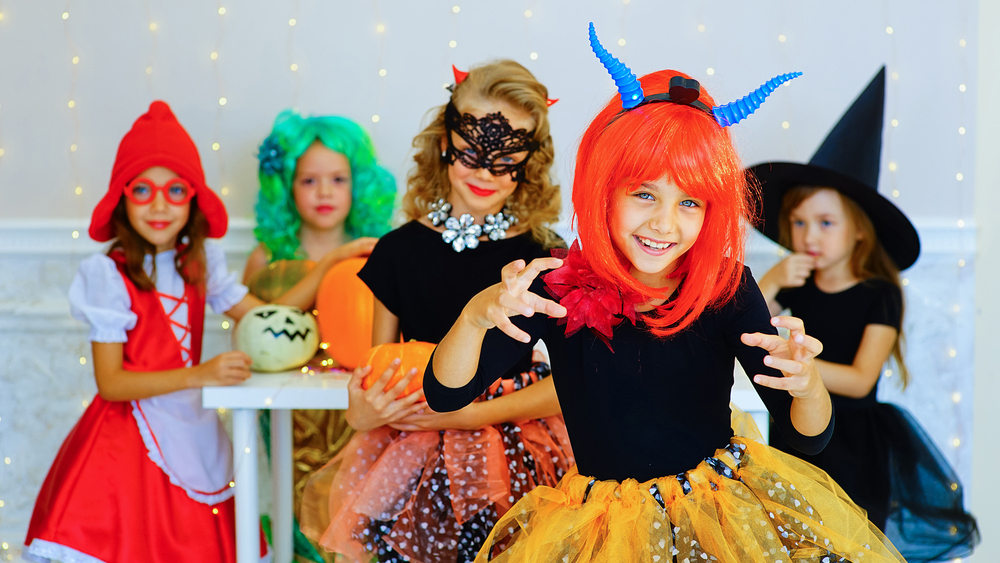
Happy group of children in costumes during Halloween party - eye safety for kids

Have A Ghoulish Halloween

Although it has been a warm October, the signs of fall are here and Halloween celebrations are certainly around us. The leaves on the trees are turning and haunted houses are popping up. There is a nip in the air, pumpkin patches are in full swing and Halloween costumes are being planned. Trick-or-Treating can be a fun time for children and families and there are a few tips we would like to share to keep everyone safe. Regardless if you are planning your own costume for an adult party or a fun night out with the kids, consider these recommendations.

KEEP A CLEAR LINE OF VISION 

Does your costume or its accessories obstruct your view? Masks, wigs, and eye patches may make an outfit complete, but make sure your child can see. Some masks are very dangerous because they block your side vision and can cause a trip hazard. You might want to consider face paint or makeup for that Halloween effect.

FDA APPROVED MAKEUP

If you decide to use makeup instead of a mask, use hypo-allergenic options and keep makeup away from the eyes. Make sure that any color additives to the face paints are FDA approved (check the Summary of Additives on the FDA website). When applying makeup near or around the eye, stay away from the lid margin, or lash line—the area where you would normally apply eyeliner. If you are applying make-up very close to the eye, use only products approved for use in that area such as an eye-liner or eyeshadow. Do not use blush or lip-liner to create a “red” effect.  It is a good idea to carry a damp towel or washcloth in case the makeup begins to run while trick-or-treating.

Use a makeup remover or cotton ball with baby oil for safe removal after a night of fun.

DECORATIVE CONTACT LENSES CAN BE DANGEROUS

Decorative lenses that appear to glow in the dark or create the illusion of “cat eyes” are popular with teens. Buying the decorative contact lenses from a source other than an eye doctor can open the door to health issues.

Did you know according to the FDA that it is illegal to sell decorative contact lenses without a valid prescription? This would include the lenses that are sold on the internet, in retail shops and salons. Decorative lenses from unlicensed manufacturers may be made from inferior plastic or may contain toxic dyes. Untrained individuals may not follow proper hygiene while inserting or removing the devices. Eye infections related to improper wearing and handling of contact lenses can rapidly develop into infection and corneal ulcers, which can cause permanent blindness.

TRIP HAZARDS WITH LONG COSTUMES

Dark streets, porch steps and uneven ground are challenging especially for young children. Be sure the costume ends well above the ankles to avoid a trip hazard. Use well-fitting shoes or boots for safe walking. Make sure the costume is flame resistant and avoid baggy, billowing skirts and cloaks that might brush against a candle-lit jack-o’-lantern or luminary.

SHARP OBJECTS TO BE USED AS PROPS CAN BE DANGEROUS

Some costumes do not seem complete without swords or wands. Sharp, pointed props endanger your eyes as well as the eyes of others. If your child must carry a sword, find a belt carrier or scabbard where the sword can stay safely nestled while the kids roam the neighborhood. Buy or construct only accessories made of soft or flexible materials.

REFLECTIVE COSTUMES ARE A MUST

See and be seen! Give trick-or-treaters flashlights to find their way in the dark. There are several glow-in-the-dark devices children can wear such as necklaces or glow sticks. If the costume your child chooses is not made of reflective material, sew on reflective fabric strips or use stick-on strips of reflective tape. You want your child to be seen, especially crossing streets in the dark. Place reflective material on the front, back, and sides of your child’s costume.

Happy haunting….be informed, be safe and have a Happy Halloween.


About Bissell Eye Care: John D. Bissell, OD owns and operates Bissell Eye Care servicing Northern Pittsburgh and Alle-Kiski Valley regions. With two locations to treat patients, we offer evening and Saturday appointments. Bissell Eye Care provides comprehensive eye examinations for the entire family beginning as early as 6 months, ocular disease detection and treatment, eyeglasses, sunglasses, activewear, contact lenses, and low vision examinations for those with significant vision loss. We accept most types of vision and health insurance plans. For more information, visit bisselleyecare.com or call our Bakerstown Office at 724-443-6767 or Natrona Heights office at 724-226-0444.

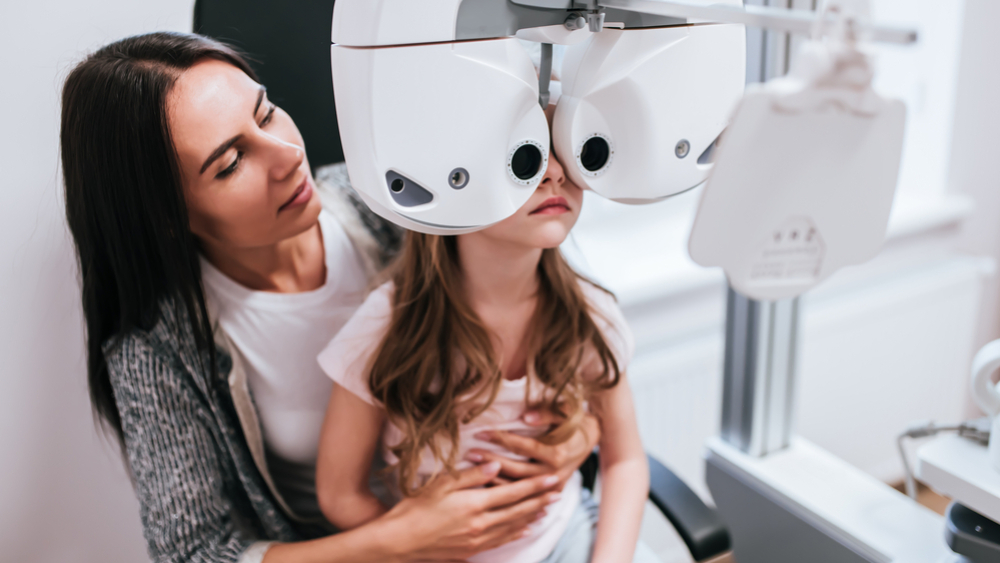
Mom with daughter in ophthalmology clinic

What to Expect at My Child’s First Eye Exam

American Optometric Association (AOA), states “infants should have their first comprehensive eye exam at 6 months of age.” Did you know that Bissell Eye Care provides eye examinations for free to children as young as 6 months up to one year old? As children enter preschool around 3 years of age they should be rechecked and then again right before kindergarten. Experts say 5 -10 % of preschoolers and 25 % of school-aged children have vision problems.

During a child’s eye exam, we will perform three assessments, including a vision test, pupil test, and eye movement test. You’ll be asked about your family’s medical history, your child’s medical history, developmental observations and any vision problems that you might be observing with your child.

We encourage you to stay with your child through the entire examination. Infants and small children sit on a parent’s lap during the exam. Older children are encouraged to sit in the exam chair by themselves.
Eye drops are used to dilate the pupils, which gives the optometrists a better view of the structures inside the eye, such as the retina, optic nerve, and blood vessels. The drops take about 30 to 45 minutes to become fully effective.

The Bissell Eye Care optometrists will carefully observe each eye as your child follows lights or toys. This gives a very good estimate of a child’s visual function. Children do not need to be able to talk or read to get an accurate eyeglass prescription. Children who talk but cannot read or count may be asked to identify pictures of common objects.

Once the dilation drops kick in, the doctor will use a retinoscope, a handheld polarized light, and lenses to read each of the eye’s red reflex. This allows the doctor to get an accurate eyeglasses prescription without feedback from the patient, allowing nonverbal or young children to get glasses.

These same eye drops also cause a temporary weakness of the eyes’ focusing muscles. This allows us to determine if your child has a focusing or refractive error that requires glasses. Refractive errors include:

  • Nearsightedness (myopia)
  • Farsightedness (hyperopia)
  • Distorted vision (astigmatism)

You may notice many preschools are starting to advertise registration for the 2020-2021 school year. Young children depend on their vision to learn tasks that will prepare them for school. During this time in their lives, they are developing the visually-guided eye-hand-body coordination, fine motor skills and visual perceptual abilities necessary to learn to read and write.

Early identification of a child’s vision problem is crucial because, if left untreated, some childhood vision problems can cause permanent vision loss. The AOA estimates one in four school-aged kids have undetected vision problems that critically impact their visual perceptual skills -better known – as the 3 R’s:

  • RECOGNITION — knowing the difference between letters like ‘b’ and ‘d’
  • COMPREHENSION — ‘picturing’ what’s happening in a story they’re reading
  • RETENTION – remembering and recalling details about what they’ve just read

Here are some tips for eye exams for young children:

Schedule the appointment during a time when your child is alert and happy taking into account napping and eating times.
A case history will be conducted to determine birth history, birth weight, medical issues, and any allergies
Be sure to note any delayed motor development, failure to maintain eye contact, poor eye tracking, frequent eye rubbing or blinking.

Prepare your child for success as they enter preschool and beyond. To schedule your child’s eye exam, give our offices a call at 724-443-6767 or 724-226-0444.

About Bissell Eye Care: John D. Bissell, OD owns and operates Bissell Eye Care servicing Northern Pittsburgh and Alle-Kiski Valley regions. With two locations to treat patients, we offer evening and Saturday appointments. Bissell Eye Care provides comprehensive eye examinations for the entire family beginning as early as 6 months, ocular disease detection and treatment, eyeglasses, sunglasses, activewear, contact lenses, and low vision examinations for those with significant vision loss. We accept most types of vision and health insurance plans. For more information, visit bisselleyecare.com or call our Bakerstown Office at 724-443-6767 or Natrona Heights office at 724-226-0444.

4 TIPS TO SPOT VISION PROBLEMS IN KIDS

As we march into spring, many families are participating in kindergarten or preschool orientation. Young children are excited about taking the next step in school, but one of the most important yet overlooked necessities in their success is healthy vision.

If your child has been in preschool, chances are they may have had a vision screening. These are performed in most preschool and elementary schools. Many vision screenings test only for distance visual acuity. While the ability to see clearly in the distance is important, it does not indicate how well the eyes focus up close or work together. A screening does not give any information about the health of your child’s eyes. That’s why it’s important to have an annual comprehensive eye exam by an optometrist or ophthalmologist.

As older school aged children near the last half of the school year, standardized testing and spring exams are coming into play. Eye strain and/or vision problems may manifest themselves and as parents, you may notice a change in your child’s demeanor.

A child’s eyes and vision grow from year-to-year and as they progress through school, the demands of learning require visual work involving reading, writing, computers and the ability to see chalkboards/smartboards. If their eyes aren’t up to the task, a child may feel tired, have trouble concentrating, and have problems in school.

Particularly in young children, it’s difficult for them to tell you they are having difficulty seeing something. But sometimes parents will notice signs that their child may have a vision problem. For instance, your child may squint, or hold reading material very close to their face.

Here are four signs that could point to possible vision problems in kids.

  1. Short attention span. Does your child seem to quickly lose interest in games, projects or activities that require using their eyes for an extended period of time?
  2. Losing their place when reading. For young children sometimes allowing a finger to follow the words will help train their eyes. Do you notice as your child reads (aloud or silently), they may have difficulty seeing to keep track of where they are on the page? It may also take them a long time to read a page.
  3. Avoiding reading and other close activities. Do you see a push back when your child is reading? Because of difficulty in seeing, they may choose to avoid reading, drawing, playing games or doing other projects that require focusing up close.
  4. Turning their head to the side. Does your child seem to tip their head or turn their head sideways to look at something in front of them? They can see better, but this may be a sign of an astigmatism or a refractive error.

Success in school is closely tied to eye health. That’s why it is so important for kids to have a comprehensive annual eye exam with an optometrist or ophthalmologist who is properly trained to assess vision in school-aged children. The earlier a vision problem is found and treated, the better off your child will be—in and out of school. As you register your child for the next school year, be sure to put a comprehensive eye exam on your check off list. For questions regarding eye health contact our office at 724-443-6767 or 724-226-0444.

About the author: John D. Bissell, owner of Bissell Eye Care and Tri-State Low Vision Services, offers comprehensive eye examinations for the entire family, ocular disease detection and treatment, eye glasses, sun glasses, active wear, contact lenses, and low vision examinations for those with significant vision loss. He has undergone specialized training for treatment of low vision by the International Academy of Low Vision Specialists utilizing customized telescopic eyeglasses, prisms and telescopic implants for patients who qualify. The practice accepts most types of vision and health insurance plans.

ALL ABOUT EYES FOR KIDS

Did you know that your eye works like a camera that transmits pictures to the brain? Your brain processes what you are seeing. The light passes through the lens of your eye and is recorded in the retina in the back of your eye.

Your retina has two cells called rods and cones. The rods see black and white and the cones see color. They work together to turn the pictures you see with your eyes into electronic messages for the brain. Sometimes people can’t see all the colors and that is called color blindness. There is a blind spot on your retina which is not sensitive to light because there are no rods or cones there. It is the spot where the optic nerve is joined on to the retina. The optic nerve carries the electronical messages to the brain.
Dr. Cheri Wiggs has a fun video that explains to kids how their eyes work. Answering questions like, “Why is it harder to see colors at night?” or “What happens with your eyes when you go to sleep?”

Ask a Scientist: Eyes at Night video produced by National Eye Institute, NIH

Eyebrows and eyelashes help to keep the dust sweat from getting into your eyes. Tear glands located in the upper eye help to keep your eye clean and moist.

Our eyes are very important and we need to take care of them. Staring at a computer screen too long without a break can cause your eyes to become dry and sore. Be sure to take breaks often to give your eyes a rest.

Many of you play sports. Protective eye wear should be part of your uniform when you suit up. These glasses will help to prevent permanent injury should you get hit in the face with a baseball, hockey puck, soft ball or soccer ball.

Having an annual eye exam will alert your parents to any changes in your eyesight that may affect your ability to play sports or do well in school. If you begin to experience headaches or can’t see the board as clearly, tell your parents. Your eyes are important so we need to do everything possible to take care of them.

About the author: John D. Bissell, owner of Bissell Eye Care and Tri-State Low Vision Services, offers comprehensive eye examinations for the entire family, ocular disease detection and treatment, eye glasses, sun glasses, active wear, contact lenses, and low vision examinations for those with significant vision loss. He has undergone specialized training for treatment of low vision by the International Academy of Low Vision Specialists utilizing customized telescopic eyeglasses, prisms and telescopic implants for patients who qualify. The practice accepts most types of vision and health insurance plans.