
October Is Eye Injury Prevention Month

Skilled carpenter cutting a piece of wood in his woodwork workshop, using a circular saw, and wearing safety googles and earmuffs, with other machinery in the background

October is Eye Injury Prevention Month. Did you know that nearly 2.5 million people suffer eye injuries each year in the United States, and nearly one million people have lost some degree of vision as a result of their injury? Do you always wear protective eyewear when performing home repairs or maintenance?

According to the fifth-annual Eye Injury Snapshot conducted by the American Academy of Ophthalmology and the American Society of Ocular Trauma found that:

  • Most people believe that eye injuries are most common on the job — especially in factories and on construction sites. But in fact, nearly half of all eye injuries occurred in the home.
  • Home repairs, yard work, cleaning, and cooking caused more than 40 percent of eye injuries.
  • More than a third of those injuries in the home happened in the kitchen, bedroom, bathroom, living or family room.
  • More than 40 percent of eye injuries every year are related to sports or recreational activities.
  • More than 78 percent of people were not wearing eyewear at the time of injury. Only 5.3 percent of those who were wearing eyewear

Most injuries could have been prevented by wearing protective eyewear.

Could your job land you in the doctor’s office or the ER with an eye injury? According to the U.S. Bureau of Labor Statistics, more than 20,000 workplace eye injuries happen each year. Injuries on the job often require one or more missed workdays for recovery. The Bureau of Labor Statistics states that nearly three out of every five workers injured were not wearing eye protection at the time of an accident. While you may believe it unnecessary to wear protective glasses at your job, consider the alternative of losing eyesight in one or both eyes.

Small business owners and independent contractors, you aren’t immune. How often do you work a “side job” without the proper eye protection? Whether you work for a large manufacturing company or are an independent business owner, you are subject to injury. Are you willing to take a risk as it could mean the loss of work, wages and career with no safety net to ensure your financial future?

To help prevent eye injuries and make your workplace safer and take steps to protect your eyesight. Follow the OSHA rules regulations and guidelines.

Eye injuries are not limited to the workplace. Think about the things you do around the house to get ready for winter. Flying debris or other small particles can be created from outside jobs such as trimming shrubs, raking leaves, mowing the lawn and cleaning up after a wind storm. These particles can get into your eyes and have the potential to scratch or damage your eye. Put on protective eyewear before you use a lawnmower, power trimmer or edger and be sure to check for rocks and stones when mowing as they can become dangerous projectiles as they shoot from these machines.

When we think of fall cleanup –many things can occur around the house to get your home ready for winter. Closing up swimming pools, cleaning windows and gutters, as well as other projects around the house that involve the use of chemicals can lead to injury. Splashing chemicals can burn your eyes causing permanent damage. When using household chemicals, be sure to work in a well-ventilated area and keep the spray nozzle pointed away from you. Read the labels of chemicals and cleaners carefully, and don’t mix products.

Flying fragments, fumes, dust particles, sparks can occur in the workshop or while doing woodworking projects. For those car buffs, battery acid sparks and debris from damaged or improperly jump-started auto batteries can severely damage your eyes. Learn the proper way to jump-start an automobile, and keep protective goggles in the trunk of your car to use for those emergencies and every day repairs.
We recommend that every household have at least one pair of ANSI-approved protective eyewear to be worn when doing projects and activities at home to safeguard against eye injuries.

At Bissell Eye Care, we have many options for safety and sports eyewear available both our Bakerstown and Natrona Heights locations. If you would like to invest in your eye health, consider purchasing a reliable pair of safety glasses! As always, UV Protection is also important for optimum ocular health. Ensuring that the exposure of the eye to harmful UV radiation is as limited as possible is equally as important as wearing protective glasses during risky activities. Sunglasses may be covered under your insurance care provider (especially if they are dispensed with your current prescription).

If you have any questions or concerns or would like to schedule an appointment for an eye examination, call us today! Knowledge is power, keep yourself safe and eyes healthy through proper eye safety protection.

About Bissell Eye Care: John D. Bissell, OD owns and operates Bissell Eye Care servicing Northern Pittsburgh and Alle-Kiski Valley regions. With two locations to treat patients, we offer evening and Saturday appointments. Bissell Eye Care provides comprehensive eye examinations for the entire family beginning as early as 6 months, ocular disease detection and treatment, eyeglasses, sunglasses, activewear, contact lenses, and low vision examinations for those with significant vision loss. We accept most types of vision and health insurance plans. For more information, visit bisselleyecare.com or call our Bakerstown Office at 724-443-6767 or Natrona Heights office at 724-226-0444.

MILITARY RECOGNITION AND FOURTH OF JULY CELEBRATIONS!

We’d like to take a moment and recognize our service men and women, as well as their families, for the sacrifices they’ve made in protecting our freedom.

As we celebrate the 4th of July, families are planning their picnics, vacations and fireworks celebrations. When you begin your search for fireworks, you look for the best deals, the most spectacular displays, and the biggest bang for your buck. Many people tend to overlook safety, which can result in your holiday being much less spectacular than expected.

According to the U.S. Consumer Product Safety Commission’s most recent annual fireworks injury report, fireworks caused eight deaths and nearly 13,000 injuries in 2017. Two-thirds of the fireworks injuries treated in emergency rooms happened between mid-June and mid-July.

Children and young adults are frequent victims. Children age 15 and under accounted for 36% of the total injuries, according to the commission’s report. And half of the injuries requiring an emergency room visit were to people age 20 or younger. As fun as they seem for kids, sparklers can be dangerous as they burn at more than 2,000 degrees Fahrenheit. Sparklers were responsible for 1,200 of the injuries in the latest report.

Some of the most commonly experienced eye injuries from fireworks are: burns, lacerations, abrasions, retinal detachment ruptured eyeballs and optic nerve damage. An important misconception is that once the firework explodes it is no longer dangerous. However, the sparks that produce the amazing glow often burn at temperatures over 1000 degrees and fireworks release shrapnel as they explode.

As you prepare to celebrate and light off your own fireworks or watch a spectacular show put on by professionals.

Here are some tips to help keep you and your loved ones safe this year:

  • Contact your local fire department if a firework does not explode to properly handle it.
  • Never let children play with fireworks. Even sparklers can be very dangerous to young children.
  • ALWAYS wear approved protective eyewear if you plan on detonating fireworks.
  • Abide by ALL safety barricades and give yourself extra room well behind them at least 500-1000 feet away!
  • Leave the building and launching of professional grade fireworks to the professionals.

If you are injured from fireworks be sure to seek medical attention immediately. Be sure to follow these safety tips to help prevent making the injury worse.

  • Do not remove any objects that are stuck in or protruding from your eye.
  • Do not rinse or add a solution to your eye.
  • Do not rub your eyes.
  • If any foreign objects enter the eye do not take any pain killers that will cause your blood to thin such as aspirin or ibuprofen.

Remember this year as you venture out to celebrate our nation’s freedom and independence that it’s important to respect fireworks. They are not a toy and can cause serious damage to not only your eyes but also to other parts of your body. Have a safe and happy holiday.

About Bissell Eye Care: John D. Bissell, OD owns and operates Bissell Eye Care servicing Northern Pittsburgh and Alle-Kiski Valley regions. With two locations to treat patients, we offer evening and Saturday appointments. Bissell Eye Care provides comprehensive eye examinations for the entire family beginning as early as 6 months, ocular disease detection and treatment, eyeglasses, sunglasses, activewear, contact lenses, and low vision examinations for those with significant vision loss. We accept most types of vision and health insurance plans. For more information, visit bisselleyecare.com or call our Bakerstown Office at 724-443-6767 or Natrona Heights office at 724-226-0444.
Eye-Protection-In-Sports

PLAY BALL AND GEAR UP!

Eye-Protection-In-SportsSpring arrives this month and that means spring sports are lining up into full gear. According to the to Prevent Blindness organization, “every 13 minutes, an emergency room treats a sports-related eye injury. And, 43 percent of sports-related eye injuries are to children ages 14 and younger.”

By using the right protective eye gear, the good news is that ninety percent of these eye injuries can be prevented. Know that regular glasses don’t provide enough protection. Use batting helmets with polycarbonate face shields for youth baseball.

For the Pittsburgh Pirates, and many of the high school baseball and softball teams, spring training has already begun. Baseball is the sport most frequently associated with eye injuries among five to 14-year-old athletes, yet statistics show that 90 percent of sports-related eye injuries are preventable.

By wearing protective eyewear, a young person can avoid or reduce the impact of a serious injury. Without protective gear, a fast-moving baseball can injure the bones around the eye or even the eyeball itself, causing temporary or permanent vision problems; other players’ hands or gloves can scratch the eye, causing damage to the eye’s surface; and a misguided bat can cause head injuries leading to vision problems.

Protective eyewear like sports goggles can be either prescription or non-prescription. Sports goggles should be made of non-breakable materials. Helmets or headgear can also play an important role in protecting eyesight and preventing head injuries. In order to be assured that your eyes are protected, it is important that any eye guard or sports protective eyewear are labeled as ASTM F803 approved. This eyewear is performance tested to give you the highest levels of protection.

If an eye injury occurs while playing a spring sport, young people should be seen by their eye doctor or primary care provider as soon as the injury occurs. If not properly treated, vision problems can persist and lead to lifelong difficulty playing sports, driving or even maintaining certain jobs.

Poor depth-perception or other vision problems could present in the following ways:

  • Always swinging the bat too early or too late
  • Missing often while trying to catch the ball
  • Squinting to see the ball or other players

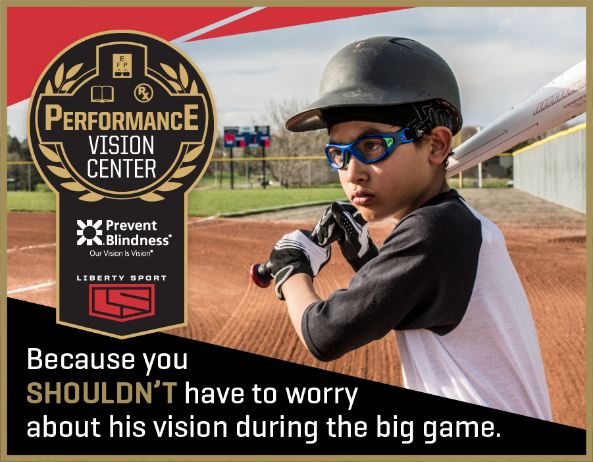
Bissell Eye Care is a recognized Performance Vision Center by the Prevent Blindness organization. Our staff will help you select the right type of eye gear for the sport you are playing. Whatever your game, whatever your age, when playing any type of sports, you need to protect your eyes!

About the author: John D. Bissell, owner of Bissell Eye Care and Tri-State Low Vision Services, offers comprehensive eye examinations for the entire family, ocular disease detection and treatment, eye glasses, sun glasses, active wear, contact lenses, and low vision examinations for those with significant vision loss. He has undergone specialized training for treatment of low vision by the International Academy of Low Vision Specialists utilizing customized telescopic eyeglasses, prisms and telescopic implants for patients who qualify. The practice accepts most types of vision and health insurance plans.

man working on underside of car wearing safety glasses

EYE INJURY PREVENTION MONTH

man working on underside of car wearing safety glassesOctober is Eye Injury Prevention Month. Did you know that nearly 2.5 million people suffer eye injuries each year in the United States, and nearly one million people have lost some degree of vision as a result of their injury? Most injuries could have been prevented with protective eyewear.

Could your job land you in the doctor’s office or the ER with an eye injury? According to the U.S. Bureau of Labor Statistics, more than 20,000 workplace eye injuries happen each year. Injuries on the job often require one or more missed workdays for recovery. The Bureau of Labor Statistics states that nearly three out of every five workers injured were not wearing eye protection at the time of an accident. While you may believe it unnecessary to wear protective glasses at your job, consider the alternative of losing eyesight in one or both eyes.

Small business owners and independent contractors, you aren’t immune. How often do you work a “side job” without the proper eye protection? Whether you work for a large manufacturing company or are an independent business owner, you are subject to injury. For the small business owner, it could mean the loss of work, wages and career with no safety net to ensure your financial future.

To help prevent eye injuries and make your workplace safer, take steps to protect your eyesight. Follow the OSHA rules regulations and guidelines.

Eye injuries are not limited to the workplace. Think about the things you do around the house to get ready for winter. Flying debris or other small particles can be created from outside jobs such as trimming shrubs, raking leaves, mowing the lawn and cleaning up after a wind storm. These particles can get into your eyes and have the potential to scratch or damage your eye. Put on protective eyewear before you use a lawnmower, power trimmer or edger and be sure to check for rocks and stones when mowing as they can become dangerous projectiles as they shoot from these machines

Closing up swimming pools, cleaning windows and other projects around the house that involve the use of chemicals can lead to injury. Splashing chemicals can burn your eyes causing permanent damage. When using household chemicals, be sure to work in a well-ventilated area and keep the spray nozzle pointed away from you.

Flying fragments, fumes, dust particles, sparks can occur in the workshop or while doing woodworking projects. For those car buffs, battery acid sparks and debris from damaged or improperly jump-started auto batteries can severely damage your eyes. Learn the proper way to jump-start an automobile, and keep protective goggles in the trunk of your car to use for those emergencies and everyday repairs.

We recommend that every household have at least one pair of ANSI-approved protective eyewear to be worn when doing projects and activities at home to safeguard against eye injuries.

At Bissell Eye Care, we have many options for safety and sports eyewear available at both our Bakerstown and Natrona Heights locations. If you would like to make an investment in your eye health, consider purchasing a reliable pair of safety glasses! As always, UV Protection is also important for optimum ocular health. Ensuring that the exposure of the eye to harmful UV radiation is as limited as possible is equally as important as wearing protective glasses during risky activities. Sunglasses may be covered under your insurance care provider (especially if they are dispensed with your current prescription). If you have any questions or concerns or would like to schedule an appointment for an eye examination, call us today! Knowledge is power. Keep yourself safe and eyes healthy through proper eye safety protection.

About the author: John D. Bissell, owner of Bissell Eye Care and Tri-State Low Vision Services, offers comprehensive eye examinations for the entire family, ocular disease detection and treatment, eye glasses, sun glasses, active wear, contact lenses, and low vision examinations for those with significant vision loss. He has undergone specialized training for treatment of low vision by the International Academy of Low Vision Specialists utilizing customized telescopic eyeglasses, prisms and telescopic implants for patients who qualify. The practice accepts most types of vision and health insurance plans.

FIREWORKS EYE SAFETY MONTH

June is often the time when many families plan their Independence Day or the Fourth of July, celebrations. Each year, thousands of people are injured by fireworks in June and July and almost half of those injured are children and teenagers. Over a thousand of those are eye injuries.

Whether you are watching a professional fireworks show or just lighting sparklers at your backyard barbeque with family, there are certain precautions you can take to prevent eye injury or at least decrease the risk. Even when using sparklers, make sure that your kids are supervised. They should also keep the sparklers at arm’s length and never swing them around or run with them.

Fireworks can cause devastating and life-changing injuries. Simple ways to protect yourself and your children include staying at least 500 feet away from fireworks, allowing trained professionals to light fireworks and not allowing children to handle any fireworks. If you find unexploded fireworks, call your police or fire department to dispose of them. Do not touch them or try to light them.

If you suffer an injury due to fireworks, especially to your eyes, seek help immediately.

  • Do not rub the eyes
  • Do not rinse the eyes
  • Do not apply pressure
  • Do not put on ointments or take any blood thinning pain medication

The safest way to watch fireworks is for you to let somebody else light off the fireworks. When we say someone else, we mean a professional – as in – go to a fireworks show. If you have any questions or need information on eye injury following an accident, call Bissell Eye Care at (724) 444-6767 or 724-226-0444.

Remember 4th of July is about enjoying our freedom. Be sure to thank a Veteran for their sacrifice and service. Wishing you and your family a happy and safe summer.

About the author: John D. Bissell, owner of Bissell Eye Care and Tri-State Low Vision Services, offers comprehensive eye examinations for the entire family, ocular disease detection and treatment, eye glasses, sun glasses, active wear, contact lenses, and low vision examinations for those with significant vision loss. He has undergone specialized training for treatment of low vision by the International Academy of Low Vision Specialists utilizing customized telescopic eyeglasses, prisms and telescopic implants for patients who qualify. The practice accepts most types of vision and health insurance plans.

Eye-Safety-in-Sports

WATCH THE BALL

Eye-Safety-in-SportsWith the school buses back on the road, it is easy to see that school is back in session. If your children are like many, this also means that fall sports have started back up again. Players suit up with the proper uniform, but having the right eyewear will also help your kids keep their eye on the ball, resulting in a great fall sports season.

From soccer, football, lacrosse, fall baseball and other contact sports, each year 42,000 athletes suffer eye injuries that result in a visit to their eye doctor or emergency room. Many of these injuries are preventable with the proper eye protection.

Many eye injuries from contact sports occur when impact from a ball or another player can lead to several different types of injuries. The injuries most commonly seen are corneal abrasions, fracturing of the orbital bone (eye socket), or swollen and detached retinas.

While eye injuries are more common in contact sports, they are not limited to these activities. Many students suffer damage to their eyes from not having the proper eye protection from the sun. Activities such as marching band, cheerleading, or even running cross country, tend to have the students outside in the sun for prolonged periods of time. The UV rays of the sun can sun burn an eye much like it can skin. This can result in a range of problems from discomfort and dry eye, to permanent loss of sight in extreme cases.

Now the good news! In most cases, the proper eye protection can prevent your children from having to endure these injuries. Spectators should also take precautions, especially with using sunglasses with UV protection.

Polycarbonate safety goggles offer great protection from injuries in sports such as basketball, racquetball, tennis and soccer. When looking for goggles, be sure they fit properly and that they are labeled ASTM F803 approved. These are the goggles that have been tested and are approved for impact sports.

If your child plays hockey or baseball, a helmet with a protective face shield will offer the most protection from a wild pitch, a flying puck or even a stick. Make sure the helmet fits properly and does not move around on their head or fall off. It is also important to have the shield fit snugly to your child’s face and chin.

For activities such as marching band, cheerleading, or cross country, be sure that your children are sporting a pair of sunglasses that have UV protection. Because these activities are not considered high impact contact sports, regular sunglasses with UV protection will help to prevent damage from the sun.

As your kids suit up this fall, be sure that their uniform includes the proper eye protection. Wishing you all a successful fall sporting season!

About the author: John D. Bissell, owner of Bissell Eye Care and Tri-State Low Vision Services, offers comprehensive eye examinations for the entire family, ocular disease detection and treatment, eye glasses, sun glasses, active wear, contact lenses, and low vision examinations for those with significant vision loss. He has undergone specialized training for treatment of low vision by the International Academy of Low Vision Specialists utilizing customized telescopic eyeglasses, prisms and telescopic implants for patients who qualify. The practice accepts most types of vision and health insurance plans.

THE SOLAR ECLIPSE

With the solar eclipse fast approaching, we see many news articles and TV interviews about the dangers of looking directly at the eclipse. As a child growing up, your parents more than likely than not told you to never look directly into the sun. Something that you probably ignored and still tried, just to be left seeing spots. On August 21, 2017, the United States will experience a solar eclipse and if you try to look at it, this too can leave you seeing spots; or in some cases, damage your retina.

A total solar eclipse happens when the sun is blocked from view by the moon. While it is much more common to see a partial solar eclipse, a total solar eclipse is much rarer. Here in Pennsylvania, we will see a partial eclipse, while southern states will see a full solar eclipse.

It is no surprise when we say that looking directly into the sun without proper eye protection can cause serious eye damage, even leading to vision loss. There are however safe ways to view a solar eclipse.

The safest way to look at the sun is by using solar-viewing glasses, eclipse glasses, or personal solar filters. All three of these are names for the same product. According to the safety recommendations from NASA, the lenses of these glasses are made from special filters that are hundreds of thousands of times darker than your UV protection sunglasses. The lenses on these solar-viewing glasses are so dark that you are not able to see anything other than the surface of the sun.

When you jump online to get your pair of glasses, beware, as NASA has changed the standards for glasses that are safe to use for viewing the sun. The new standard of ISO 12312-2 will ensure that you get the eye protection that you need. Some of the manufacturers that meet this standard are Rainbow Symphony, American Paper Optics, and Thousand Oaks Optical.

We want to stress that homemade filters or ordinary sunglasses, even sunglasses that are very dark, are not safe for looking at the sun, or an eclipse of the sun. If you plan on using binoculars or other magnifying devices, be sure to get the proper filter for them. Simply using solar-viewing glasses on them is not enough. The increased magnification can damage the lens of your solar-glasses and leave them less effective.

Be sure to protect your eyes on August 21, as you prepare to look at the moon as it crosses paths with the sun. While this rare occurrence is something to marvel, be sure to enjoy it with the proper eye protection so you don’t damage your eyes.

About the author: John D. Bissell, owner of Bissell Eye Care and Tri-State Low Vision Services, offers comprehensive eye examinations for the entire family, ocular disease detection and treatment, eye glasses, sun glasses, active wear, contact lenses, and low vision examinations for those with significant vision loss. He has undergone specialized training for treatment of low vision by the International Academy of Low Vision Specialists utilizing customized telescopic eyeglasses, prisms and telescopic implants for patients who qualify. The practice accepts most types of vision and health insurance plans.

HALLOWEEN COSTUME TIPS

As the leaves start to turn and the days get shorter, it becomes time to finalize your costume for Halloween. Are you ready for some Halloween parties? Costumes have gotten more complex as the years have gone by. There are a few things to keep in mind this year as you put the final touches on your costume.

Decorative or cosmetic contact lenses were introduced to the market a few years back and have gained popularity. While many people look at them as a prop or something that will simply change your eye color, remember that contact lenses are considered a medical device requiring a prescription. Places that sell decorative lenses without a prescription may give you few or no instructions on how to clean and care for your lenses. Failure to use the proper solution to keep contact lenses clean and moist can lead to infections. If you do choose to use them it is best to consult your eye doctor and even stop in for a quick visit and be sure that they fit properly.

Make up can be another unthought-of hazard to your eyes. Halloween is the one time of year where people can really become creative with makeup. Often when people put their Halloween face on, you are getting closer to your eyes than you normally would. While many people may not realize the danger to this, cosmetic makeup that is meant for the eye is tested and FDA approved. These types of makeup are less likely to injure the eye if it is accidently exposed. If you are planning using facial makeup be sure that it is hypoallergenic and safe to use near your eyes before you apply!

If using some type of mask, make sure you or your children are able to clearly see. Obstructive views can cause a trip hazard for young and old alike. Be sure that you costume allows you to adequately see, with large enough eye holes. Use approved makeup and contacts to create the best costume this year. Wishing you a safe and Happy Halloween!

About the author: John D. Bissell, owner of Bissell Eye Care and Tri-State Low Vision Services, offers comprehensive eye examinations for the entire family, ocular disease detection and treatment, eye glasses, sun glasses, active wear, contact lenses, and low vision examinations for those with significant vision loss. He has undergone specialized training for treatment of low vision by the International Academy of Low Vision Specialists utilizing customized telescopic eyeglasses, prisms and telescopic implants for patients who qualify. The practice accepts most types of vision and health insurance plans.

FALL IS IN THE AIR

Are you enjoying the change in color on the landscape? Fall is certainly upon us as we see the leaves turning color and falling from the trees. It’s the time of year where fall cleanup will soon be in full swing. With the temperature dropping and the leaves changing color, they are falling to the ground covering your yard in what seems like a never ending task of clean up.

As you step outside with your rake or leaf blower, be sure to use the proper eye and ear protection to help keep you safe. Dead leaves tend to break apart as your rake them up or use your leave blower to corral them into a pile. Having proper eye safety can help prevent pieces of these leaves from being blown into your eyes. October is eye safety awareness month. Every year, 2.5 million eye injuries occur, and almost half of those injuries take place in the home.

While using a rake can seem harmless, when working outside moving large amounts of leaves, sticks, and other debris from your yard, you run the risk of having a foreign object enter your eye. I’m sure as a child you remember raking a giant pile of leaves and then jumping into them. Your kids will find the same joy that you did when you were younger. Perhaps you ended up with pieces of leaves in your eyes as you jumped into that massive pile. If your children are having fun with piles of leaves and get something in their eyes, be sure to flush with water to clean the eye.

If you’re using a leaf blower you may feel as though there is no danger, that all of the leaves are being blown away from you. Your eyes and ears are at danger of permanent damage when using a leaf blower if proper protection is not worn. Like any engine, leaf blowers, even electric ones, emit sound. This sound can be harmful to your ears and can cause hearing loss. A good sign of needing hearing protection is if you hear ringing, or feel uncomfortableness during or after the use of power tools. Next is to be sure to have eye protection. Even sunglasses are a good source of protection when using a leaf blower. As you blow the leaves, they get thrown up into the air where the wind can grab them and pull them back toward you. This can cause dirt and dust particles that have also been picked up to be blown back toward you. If they get into your eyes you can experience discomfort and may also scratch your cornea.

When using chemicals to clean stains before winter sets in, be sure to wear eye protection. Fully read labels on all chemical products. Never mix chemicals like bleach, detergents and cleansers together. Use cleaners and chemicals in well-ventilated areas, and wear safety goggles to avoid chemical splashes.

Remember this year as you step outdoors that even a simple pair of sunglasses can help to protect your vision. If you intend on using power tools to help clear the yard of those pesky leaves, add ear protection while using power tools along with the eye protection. Happy raking!

About the author: John D. Bissell, owner of Bissell Eye Care and Tri-State Low Vision Services, offers comprehensive eye examinations for the entire family, ocular disease detection and treatment, eye glasses, sun glasses, active wear, contact lenses, and low vision examinations for those with significant vision loss. He has undergone specialized training for treatment of low vision by the International Academy of Low Vision Specialists utilizing customized telescopic eyeglasses, prisms and telescopic implants for patients who qualify. The practice accepts most types of vision and health insurance plans.

SUMMERTIME FUN

Towel, swim suit, flip flops, a cooler full of drinks, a bag of snacks, and sunscreen are common items to grab as you run out the door to the neighborhood pool, waterpark, or beach. With the sun blazing down there is nothing better than taking a dip in the water to cool off while you kick back and relax and enjoy the summer. Did you notice the one important item left of this list? Your sunglasses.
Eye care is essential as you head out this summer to take that dip and cool off in the summer sun. The Ultra Violet rays of the sun, or UV rays, can harm more than burning your skin. UV rays can also have a negative effect on your eyes. By wearing the proper eye protection, you can help reduce the short term and long term effects of UV exposure to your eyes.

The short term exposure to high amounts of UV rays can be similar to your skin becoming sunburned. This is referred to as photo keratitis, and is considered a sunburn of the eye. Photo keratitis can be painful and is usually accompanied with symptoms such as, red eyes, the feeling of foreign object in your eyes, gritty feeling in the eyes, excessive tearing and sensitivity to light. These symptoms are usually temporary and rarely result in permanent damage.

Long term effects of high exposure to UV rays can include a greater risk of developing cataracts or developing macular degeneration in the later years of life. Wearing a hat with a wider brim and proper sunglasses can help to reduce your exposure to these damage causing rays of the sun.

With sunglasses coming in all shapes and sizes, it is important to insure that your sunglasses have the following features to help block out the most UV rays possible:

  • Screen out 75-90 percent of visible light.
  • Block out 99-100 percent of UV-A and UV-B radiation.
  • Have gray lenses to aid in proper color recognition.

If you spend a large amount of time outdoors consider wrap around style of glasses. This style blocks out the most light possible granting the most protection. Also, if you are involved in outdoor work or sports, be sure to have sunglasses that are impact resistant to prevent eye injuries from broken glasses entering the eye.

Remember as you grab your outdoor gear and get ready to hit up the pool, beach or spend time outdoors, to grab your sunglasses and eye protection. Don’t forget…the kids need sunglasses too. Prevention is the easiest way to help ensure that your vision lasts well into the future, keeping your head up and you moving forward.

About the author: John D. Bissell, owner of Bissell Eye Care and Tri-State Low Vision Services, offers comprehensive eye examinations for the entire family, ocular disease detection and treatment, eye glasses, sun glasses, active wear, contact lenses, and low vision examinations for those with significant vision loss. He has undergone specialized training for treatment of low vision by the International Academy of Low Vision Specialists utilizing customized telescopic eyeglasses, prisms and telescopic implants for patients who qualify. The practice accepts most types of vision and health insurance plans.