farsightedness in babies, Bissell Eye Care

A MOTHER’S STORY

farsightedness in babies, Bissell Eye Care When you first hold your newborn and have counted 10 fingers and 10 toes, there is a sigh of relief that you delivered a healthy baby who will progress in development and growth. Dr. Nicole Long-Fratangelo, one of our optometrists at Bissell Eye Care’s Natrona Heights location, recently had her second child and shares her story with new parents.

In her own words…..

Everything was perfect. Alessio was born a healthy, beautiful baby boy. He was gaining weight and thriving. It was an exciting time for our family, we had just bought a new house and were in the process of moving. Alessio was three months old and while I was packing up my optometry equipment I decided to take a quick look at his eyes. My older, two year old son, Enzio, already had a full exam when he was six months old. However since I had my scope out I took a quick peek at both boys’ eyes and noticed that Alessio’s eyes had an abnormal reflex. A red reflex appears as the light bounces off the retina, and an eye doctor can use a special scope to read the prescription. I wasn’t too worried since a baby’s eyes can change a lot in the first few months after birth. I decided I would take him to the office for a full exam in a few weeks once things settled down a bit.

farsightedness in babies, Bissell Eye Care

In the time between our move and his full exam I started to notice that Alessio wasn’t developing his fine motor skills as quickly as our first child. When I voiced my concerns, I was told, “All kids develop differently.” But I still worried. Alessio did not seem to grab for things and was often looking down at his legs and feet. He was not sitting straight or lifting his head up to look around like our first son, and something just seemed off.

At Alessio’s 4 month visit with his pediatrician, I shared my concern. Alessio’s eyes were straight and he showed no obvious signs of a vision disorder that the pediatrician could see. Many eye diseases, including high farsightedness, are often difficult to detect without a thorough eye exam. I told my pediatrician that I would be giving him an exam that included dilation.

You might wonder why dilate, particularly an infant? This allowed me to look into the back of his eyes and it was at that time I realized Alessio had an extremely high farsighted prescription. I was so upset, I examined him three times that day. Additionally, I took him to a pediatric ophthalmologist to confirm my findings – which they did. I have seen and confidently diagnosed children with this same issue but I could not believe that my perfect baby had spent the first four months of his life with very poor vision. Sometimes, it is good to just be a mom instead of your child’s doctor and mom. Even though I knew the answer, I needed to hear that I was doing the right thing.

farsightedness in babies, Bissell Eye Care
Click on the image to watch me try on my new glasses!

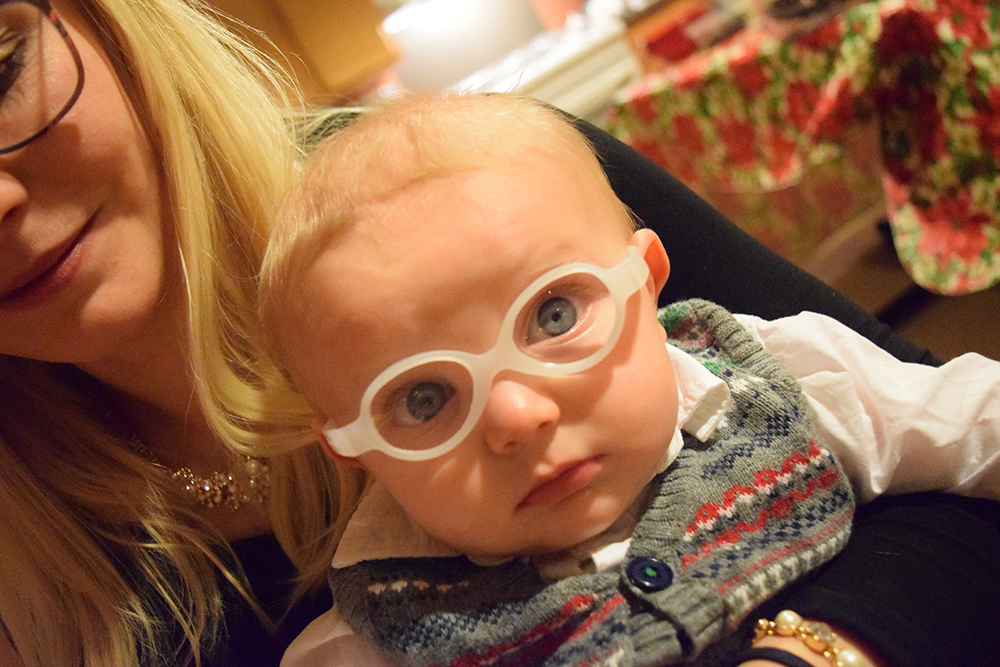
Alessio was fit with special glasses for babies and young children. Miraflex frames are soft glasses that flex and will not break. Bill at MB Optical did an amazing job getting his glasses made quickly and despite the high prescription, the lenses look amazing. I shared a video on our social media page of the first time Alessio wore his glasses. As his mom, I cannot begin to tell you what it felt like for him to see me and my husband clearly for the first time in his life. I was concerned that he would not leave the glasses on, but he loves his new glasses and exploring his new clear world.

Vision is essential in the proper development of a child. Because I was concerned that he may be behind developmentally, I contacted a therapist from the Infants and Toddler Alliance to evaluate Alessio’s development. Prior to getting his glasses, he was behind in language (babbling and imitation of facial movements that make sounds) and fine motor skills development. In the 3 weeks since he first got his glasses, he had a huge development boom and caught up with his fine motor skills. It is amazing every day to see him making huge strides in his development as he is discovering the things in the world that he was unable to see before. The therapist felt certain that his language development will come along as well.

Why am I sharing my story? Too often these vision issues are overlooked and not discovered until the child is in school. As a result, they are stuck playing catch up to their peers. At our practice, we educate all parents of new babies to have their child’s vision checked by an eye care professional before the age of one. Typically 6 months is a good rule of thumb. However if you suspect a problem, you can have your child examined earlier than 6 months.

Bissell Eye Care participates in InfantSEE®, a public health program, managed by Optometry Cares®. This program ensures that eye and vision care become an essential part of infant wellness care to improve a child’s quality of life. Under this program, participating optometrists provide a comprehensive infant eye assessment between 6 and 12 months of age as a no-cost public service. We check for excessive or unequal amounts of nearsightedness, farsightedness, or astigmatism, eye movement ability and eye health problems.

What’s in store for Alessio? He will always be in glasses, but through early detection, he now has the chance see clearly and develop normally. Alessio is fortunate because I am an optometrist, a mommy, and I followed both my professional training and instincts that something was not right.

My message to all parents, make an infant eye exam a part of your well baby check up!

About the author: John D. Bissell, owner of Bissell Eye Care and Tri-State Low Vision Services, offers comprehensive eye examinations for the entire family, ocular disease detection and treatment, eye glasses, sun glasses, active wear, contact lenses, and low vision examinations for those with significant vision loss. He has undergone specialized training for treatment of low vision by the International Academy of Low Vision Specialists utilizing customized telescopic eyeglasses, prisms and telescopic implants for patients who qualify. The practice accepts most types of vision and health insurance plans.
BACK TO SCHOOL

It’s getting to be that time of year. Have you been bombarded with all of the health forms and documents that need filled out for your little one to either go back to school, or to start a new adventure in attending school for the first time? With all of the hustle and bustle in buying new clothes, school supplies, getting immunizations, and reviewing schedules, something as simple as your child’s eyesight can be overlooked.

Children often start their first few years of school without having an eye exam by an optometrist. While you can tell when your child is sick it is nearly impossible to determine when there is a problem that could be affecting their vision.

With August being Children’s Eye Health and Safety Month, we want to remind parents the importance of scheduling routine eye exams for children starting at the age of three. There is no better time to schedule your child’s checkup than before they start back to school and after school schedules and activities become hectic.

There are some signs to watch for that could indicate your child is having trouble seeing:

  • Wandering or crossed eyes.
  • Squinting or turning their head in an unusual manner while watching TV.
  • Disinterest in reading or focusing on things in the distance.
  • Or if there is a family history of childhood vision problems.

By having routine eye visits, eye doctors can monitor your child’s vision and eye health. This will help to detect any problems with your children’s eyes that could affect their vision long term. If their vision deteriorates, you may also see a decline in your child’s grades as struggling to see may set them at a disadvantage when it comes to watching and understanding what is being taught.

We want to stress the importance of eye safety. As school starts back, fall sports are in full swing. With high school sports become faster paced and highly competitive, more injuries are occurring. Eye injuries are often top of the list. By having your children wear the proper eye protection you can help reduce the chances of sustaining an eye injury, an injury that could leave them with a permanent vision loss.

Remember, as fall approaches it is important to have a regular eye exam done for children three and older and to have your children use the proper, approved eye protection as they participate in fall sports.

About the author: John D. Bissell, owner of Bissell Eye Care and Tri-State Low Vision Services, offers comprehensive eye examinations for the entire family, ocular disease detection and treatment, eye glasses, sun glasses, active wear, contact lenses, and low vision examinations for those with significant vision loss. He has undergone specialized training for treatment of low vision by the International Academy of Low Vision Specialists utilizing customized telescopic eyeglasses, prisms and telescopic implants for patients who qualify. The practice accepts most types of vision and health insurance plans.
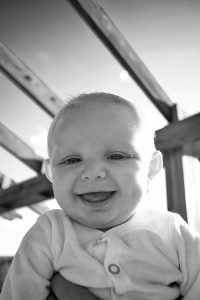
children's eye exam

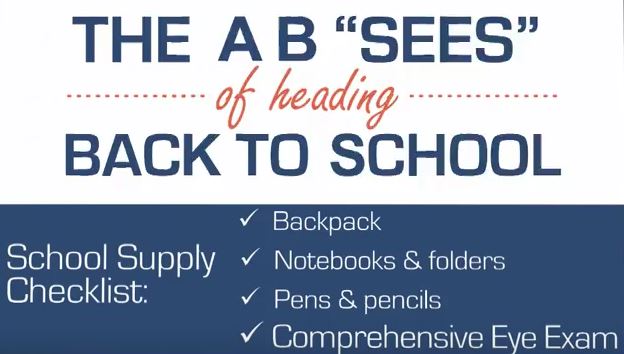
THE AB – ‘SEES’ OF BACK TO SCHOOL

children's eye exam
Children’s eye exams before the start of school can make a difference all year long!

It’s been a great summer, but kids and parents are gearing up for a new school year.  Whether it’s the first time attending preschool or kindergarten, it’s important to make Eye Exams a Back-to-School Tradition.

According to the American Optometric Association, 49% of parents have not had an eye exam on their children who are under six years of age, by an optometrist.  A comprehensive eye exam is different that the eye screenings done by your pediatrician and/or school nurse.

Although a child may have 20/20 vision, they may experience a vision problem that could impact their ability to learn.  Even if there are no complaints over the summer about blurry vision or headaches, children still need to have frequent eye exams. Just like their bodies are rapidly growing, children’s eyes are changing, as well.

Having clear vision is an essential part of the school experience, because so much of learning is visual. An undiagnosed eye problem could result in an academic setback in just a few short months. Some behavior problems could be linked to vision issues.  These students may seem uninterested or unfocused in school when in actuality they simply cannot see clearly.

Eye issues such as strabismus (misaligned eyes), astigmatism or amblyopia (lazy eye) are also detectable through an eye exam. For some eye conditions, vision can be permanently affected if the problem is not corrected. Regular exams mean earlier diagnosis and earlier treatment.

Myopia, or nearsightedness, is a common condition in children, which often develops around the age of 6 or 7. This condition results when the cornea is curved too much or when the eye is longer than normal. When light comes into the eye, it is focused in front of the retina instead of directly on the retina and the child’s vision is blurred.

Nearsightedness can worsen rapidly, especially between the ages of 11 and 13, which means that an eye prescription can change dramatically over a short period of time. Changing eyesight is not a reason for worry, and vision tends to stabilize in the later teenage years and early twenties. During the growing years, it is important to make regular eye appointments with your child’s eye doctor. Making comprehensive eye exams a part of your back-to-school tradition guarantees that your children’s eyes are examined at least once every year.

Even a small change in vision can cause eye strain, headaches or blurred vision, which can be very distracting while in school. Staying consistent with eye exams will help your children to have clear vision and be able to concentrate and perform to the best of their ability.  Start your child on the right track to learning with clear vision.  From the doctors and staff at Bissell Eye Care, we wish you the best in the upcoming school year!

About the author: John D. Bissell, owner of Bissell Eye Care and Tri-State Low Vision Services, offers comprehensive eye examinations for the entire family, ocular disease detection and treatment, eye glasses, sun glasses, active wear, contact lenses, and low vision examinations for those with significant vision loss. He has undergone specialized training for treatment of low vision by the International Academy of Low Vision Specialists utilizing customized telescopic eyeglasses, prisms and telescopic implants for patients who qualify. The practice accepts most types of vision and health insurance plans.
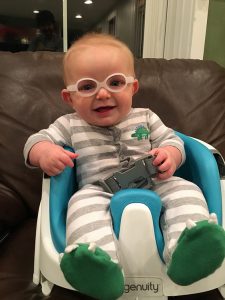
THROUGH A CHILD’S EYES

Being a parent myself I understand the joy of seeing your child grow and having all of their firsts.  Their first crawl, walk, words, real food etc.  For Baby Piper’s parents, having had their child fit for glasses allows her to see them clearly for the first time.  They will always remember the way their child’s face lit up as she saw them clearly for the first time EVER!

As parents we want the best for our children.  We record every moment we can and cherish the memories we will make with them.  With all of these memories and “firsts” many parents find it difficult to take their children for routine eye exams until their children are in grade school.  Being proactive can help your child see better which can lead to better overall development and growth.

There are over 23 million children who experience vision problems.  As a parents you know how important it is to have routine doctor’s appointments as your child grows to ensure proper health and development.  Eye doctor’s appointments are often over looked leaving over 86% of children not have their first eye exam until they enter the first grade.  Taking into account that 10% of children between ages 0 and 4 have vision problems this leaves many children with difficulty seeing throughout the early years of their lives.

Another benefit to routine eye doctor’s appointments as your children grow up is that 7-12% of children have eye problems that can lead to permanent loss of vision if not detected early.  Did you know that 95% of those problems are completely correctable with early detection?

Remember as your experience all of your “firsts” with your young ones that you remember the importance of eye health.  Having a yearly checkup can change the way that your child looks at the world and can help them to see their “firsts” as clearly as you do!

About the author: John D. Bissell, owner of Bissell Eye Care and Tri-State Low Vision Services, offers comprehensive eye examinations for the entire family, ocular disease detection and treatment, eye glasses, sun glasses, active wear, contact lenses, and low vision examinations for those with significant vision loss. He has undergone specialized training for treatment of low vision by the International Academy of Low Vision Specialists utilizing customized telescopic eyeglasses, prisms and telescopic implants for patients who qualify. The practice accepts most types of vision and health insurance plans.

ARE YOUR CHILD’S EYES READY FOR SCHOOL?

health care, medicine, people, eyesight and technology concept – optometrist with trial frame checking girl patient vision at eye clinic or optics store

A Back to School comprehensive eye exam can be a key to your child’s success at school. Will your child be among the 86% of children that don’t have a comprehensive vision exam before returning to school or entering school/preschool for the first time?

We’re entering the back to school mode, a time for excitement and learning. Our children receive so much information at school….are they ready to thrive in today’s fast paced and challenging educational environment?

Students with poor vision are often misdiagnosed as learning impaired, having attention deficient disorder, or are just plain left behind from their peer group. These kids don’t know that they can’t see what their friend sees, because they don’t know what normal vision is like. Without healthy vision, children may struggle not only at school, but also socially.

Don’t wait until kindergarten to schedule your child’s exam. Children as young as 3 years old should have a comprehensive eye exam prior to starting preschool. Think about what your child learns at preschool, colors, numbers and social skills. Yet, if your child can’t see well, or has other vision issues, they miss out on the foundation building blocks of recognizing shapes and letters, as well as social interaction.

Vision is a dominant process in a child’s growth, development and daily performance. Your child interacts with computers, iPods, educational TV, reading books – they all require vision. Reports have shown that 60% of students classified with a learning disability really have undetected vision issues.

There is a difference between a vision screening done at school or the pediatrician’s office and a comprehensive eye exam done by an eye care professional. Two studies published by the American Academy of Ophthalmology found that 40 to 67% of children who fail a vision screening do not receive the recommended follow-up care by an eye doctor.

One reason for this lack of compliance is poor communication with parents who may or may not be present at the screening. One study found that two months later, 50% of parents were unaware their child had failed a vision screening.

Comprehensive vision examinations can only be conducted by an eye care professional with the specialized training needed to make a definitive diagnosis and prescribe treatment. Keep in mind that a vision screening, while a useful tool, is a limited process and cannot be used to diagnose an eye or vision problem, but rather to indicate a potential need for further evaluation. The best way to make sure your child has the visual skills he or she needs to excel in and outside the classroom is to schedule routine comprehensive eye exams with an eye doctor

About Bissell Eye Care: John D. Bissell, OD owns and operates Bissell Eye Care servicing Northern Pittsburgh and Alle-Kiski Valley regions. With two locations to treat patients, we offer evening and Saturday appointments. Bissell Eye Care provide comprehensive eye examinations for the entire family beginning as early as 6 months, ocular disease detection and treatment, eye glasses, sun glasses, active wear, contact lenses, and low vision examinations for those with significant vision loss. We accept most types of vision and health insurance plans. For more information, visit bisselleyecare.com or call 724-443-6767.

WHEN IS TOO EARLY FOR A CHILD’S FIRST EYE EXAM?

Did you know that Bissell Eye Care provides eye examinations for children as young as 6 months of age? For children under the age of one we do not charge for the examination.

According to the American Optometric Association (AOA), “infants should have their first comprehensive eye at 6 months of age. Experts say 5 -10 % of preschoolers and 25 % of school-aged children have vision problems.  Early identification of a child’s vision problem is crucial because, if left untreated, some childhood vision problems can cause permanent vision loss. Children then should have additional eye exams at age 3, and just before they enter the first grade — at about age 5 or 6.”

Here are some tips for eye exams for young children.

  • Schedule the appointment during a time when your child is alert and happy taking into account napping and eating times.
  • A case history will be conducted to determine birth history, birth weight, medical issues and any allergies.
  • Be sure to note any delayed motor development, failure to maintain eye contact, poor eye tracking, frequent eye rubbing or blinking.

Making a child comfortable with puppets and the use of our “Special Lights” allow us to have fun with children as we look for the following things:

  • How the eye tracks and turns
  • High Refractive Error – meaning significant far or near sightedness
  • Overall Eye Health

For young children who can’t read letters yet, we use of shapes and colors.  No matter what age, regular eye exams are important.  Don’t let your children fall behind in preschool or school as a result of a vision problem.

About the author:  John D.  Bissell, owner of Bissell Eye Care and Tri-State Low Vision Services, offers comprehensive eye examinations for the entire family, ocular disease detection and treatment, eye glasses, sun glasses, active wear, contact lenses, and low vision examinations for those with significant vision loss. He has undergone specialized training for treatment of low vision by the International Academy of Low Vision Specialists utilizing customized telescopic eyeglasses, prisms and telescopic implants for patients who qualify.  The practice accepts most types of vision and health insurance plans.