IS SCREEN TIME CREATING DIGITAL EYE STRAIN IN CHILDREN?

You’ve probably felt it before after a long day looking at your computer screen or spending too much time on your smart phone – digital eye strain. Perhaps your child received a new electronic device for Christmas and now they seem glued to the new tablet or phone. Did you know that your kids could be dealing with digital eye strain too?

Between school and home, kids are using tablets, smartphones, computers, and other digital devices at an alarming rate. In fact, they’re probably getting more digital device time than you are. All that computer usage at school along with hours of video games, surfing social media on smartphones and watching television could be damaging the eyes of your children.

EYE STRAIN IS TOUGH ON DEVELOPING EYES IN YOUNG CHILDREN

Eye strain is bad for the eyes, but it’s particularly tough on the eyes of a child because they are still developing. When kids deal with eye strain, they may deal with symptoms like blurry vision, problems shifting their focus to items in the distance, eye fatigue, back and neck pain, headaches, and eye dryness.

Kids often make the mistake of holding their smartphone or tablet too close to their eyes. Doing this often can result in digital eye strain. To reduce strain on the eyes, a screen should be an arm’s length away from the eyes.

Not knowing the difference, children are more likely to deal with digital eye strain because they’re often unaware that they’re having problems. Kids may not realize how much time they spend looking at a screen. They lack the ability to know when to take a break from the screen which can result in eye strain and dry eyes. Since children usually think that everyone sees the same way they do, their vision problems are often left undetected and untreated.

Too much screen time can result in digital eyestrain, which can include burning, itchy, or tired eyes. Headaches, fatigue, blurred or double vision, loss of focus, and head and neck pain are other threats for children using screens too often and too long.

TIPS TO PREVENT EYE STRAIN

  • Monitor Screen Time. Since spending a lot of time looking at digital screens can be tough on a child’s eyes, it’s important to limit digital device time to prevent eye strain.
  • Exercise. Get kids outside regularly. They’re less likely to develop nearsightedness if they spend more time playing outside. When your kids do use digital devices, ensure they’re taking regular breaks.
  • Take Breaks. Every 20 minutes, teach your child to look away at their screen at something that’s about 20 feet away. Ask your child to remember to blink. This gives the eyes a break and reduces the risk of digital eye strain.
  • Ergonomics. Screen positioning. Make sure the screen on your child’s desktop or laptop computer is slightly below eye level. Looking up at a screen opens eyes wider and dries them out quicker.
  • Sleep. Not getting enough shut-eye leads to tired, sore eyes. The American Association of Pediatrics (AAP) recommends children not sleep with devices in their bedrooms, including TVs, computers, and smartphones. In addition, the AAP recommends avoiding exposure to screens for 1 hour before going to bed. Using devices past bedtime, especially for violent video games or shows, can interfere with sleep. Studies also suggest the blue light given off by screens might also make it difficult to sleep.

It’s important to schedule routine eye exams for your kids to ensure their eyes are healthy and developing as they should. Regular eye care now can ensure your child has healthy vision for life. For questions or concerns regarding your child’s eye health, or to schedule an appointment, call our offices at 724-443-6767 or 724-226-0444.

About the author: John D. Bissell, owner of Bissell Eye Care and Tri-State Low Vision Services, offers comprehensive eye examinations for the entire family, ocular disease detection and treatment, eye glasses, sun glasses, active wear, contact lenses, and low vision examinations for those with significant vision loss. He has undergone specialized training for treatment of low vision by the International Academy of Low Vision Specialists utilizing customized telescopic eyeglasses, prisms and telescopic implants for patients who qualify. The practice accepts most types of vision and health insurance plans.

HALLOWEEN COSTUME SAFETY TIPS

Although it’s been a warm October, the signs of fall are certainly around us. The leaves on the trees are turning, haunted houses are popping up. There’s a nip in the air, pumpkin patches are in full swing and children’s Halloween costumes are being planned. We wanted to offer a few tips to ensure a safe and enjoyable holiday for you and your family.

Does your costume block your vision?

Masks, wigs and eye patches may make an outfit complete, but make sure these accessories don’t significantly obstruct your field of view. Some masks are very dangerous for children because they block their side vision and can cause a trip hazard. A better, safer option is to decorate your child’s face with face paint or makeup.

Avoid over the counter decorative contact lenses.

Don’t buy or wear decorative contact lenses that have not been prescribed by an eye doctor. The decorative lenses make the wearer’s eyes appear to glow in the dark, create the illusion of vertical “cat eyes,” or change the wearer’s eye color. These lenses are particularly popular for teens.

Despite the fact that it’s illegal to sell decorative contact lenses without a valid prescription, the FDA says the lenses are sold on the Internet and in retail shops and salons. Decorative lenses from unlicensed manufacturers may be made from inferior plastic or may contain toxic dyes. In addition, untrained individuals may not follow proper hygiene in inserting or removing the devices. Eye infections related to improper wearing and handling of contact lenses can rapidly develop into corneal ulcers, which can cause permanent blindness.

Say NO to long costumes.

Long costumes can cause a trip hazard. Be sure your child’s costume ends above their ankles to avoid a trip hazard. Use well-fitting shoes or boots for safe walking. Make sure your child’s costume is flame resistant and avoid baggy, billowing skirts and cloaks that might brush against a candle-lit jack-o’-lantern or luminary.

Use FDA approved makeup.

If you decide to disguise your child with makeup instead of a mask, use hypo-allergenic options and keep it away from the eyes. Make sure that any color additives to the face paint are FDA approved (check the Summary of Additives on the FDA website). When applying makeup near or around the eye, stay away from the lid margin, or lash line—the area where you would normally apply eyeliner. If you are applying make-up very close to the eye, use only products approved for use in that area such as an eye-liner or eyeshadow. Do not use blush or lip-liner to create a “red” effect. It is a good idea to carry a damp towel or washcloth in case the makeup begins to run while trick-or-treating.

Don’t allow sharp objects to be used as props.

Some costumes don’t seem complete without swords or wands. Elementary and nursery schools are very strict in prohibiting these props for school parties. Sharp, pointed props endanger your child’s eyes as well as the eyes of other children. If your child must carry a sword, find a belt carrier or scabbard where the sword can stay safely nestled while the kids roam the neighborhood. Buy or construct only accessories made of soft or flexible materials.

Make sure costumes are reflective.

If the costume your child chooses is not made of reflective material, sew on reflective fabric strips or use stick-on strips of reflective tape. You want your child to be seen, especially crossing streets in the dark. Place reflective material on the front, back and sides of your child’s costume.

Happy haunting….be informed, be safe and have a Happy Halloween.

About the author: John D. Bissell, owner of Bissell Eye Care and Tri-State Low Vision Services, offers comprehensive eye examinations for the entire family, ocular disease detection and treatment, eye glasses, sun glasses, active wear, contact lenses, and low vision examinations for those with significant vision loss. He has undergone specialized training for treatment of low vision by the International Academy of Low Vision Specialists utilizing customized telescopic eyeglasses, prisms and telescopic implants for patients who qualify. The practice accepts most types of vision and health insurance plans.
first-pair-of-glasses

GRADY GETS GLASSES

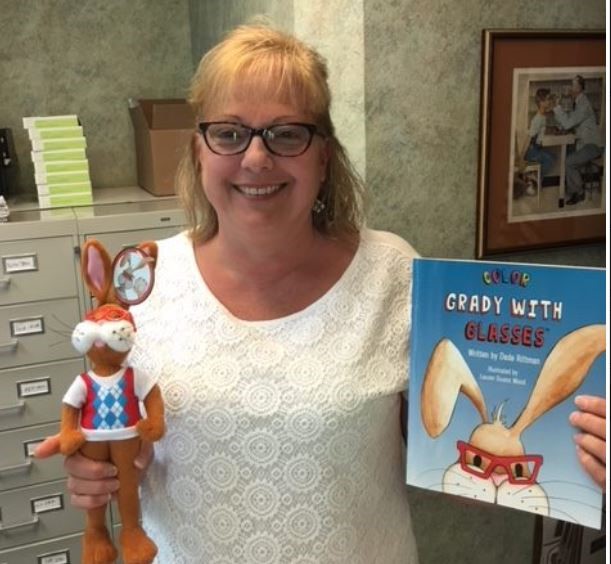
first-pair-of-glassesGrady Gets Glasses, a new program offered by Bissell Eye Care provides a book written by a retired school teacher and local author, Dede Rittman, to young children who receive their first pair of glasses. It talks about the importance of being able to see better and how glasses will help.

For parents of young children, learning your child needs glasses may be a bit overwhelming at first, but you’ll be amazed at the difference in their ability to see clearly and function better. All of the doctors at Bissell Eye Care have young children, so we are accustomed to working with kids of all ages. You may recall a while back, Dr. Long shared her own story about her son’s vision deficit.

Here are some things to consider when choosing your child’s frames. There are more and more options for glasses for young kids, but keep in mind you need to find frames that fit small faces. Different brands offer warranties, for both the frames and the lenses, so be sure to ask. There are three criteria when shopping for frames… FIT, FUNCTION, and FASHION in that order.

Fit is crucial. Glasses need to fit your child today and not size up for future growth. Glasses that fit well stay put, encouraging your child to look through the appropriate part of the lens. They are more comfortable, which encourages compliance, and honestly, they look more attractive. In small children, bigger is definitely not better when it comes to frames. Bigger frames mean bigger lenses that can cause the frames to slide down their nose. Frames that fit well don’t move even while laying down or rough play.

Function. Frame types vary, but the three basic types are wire, flexible, and plastic. The fit is a huge factor in function because glasses that fit well function well. Age and activity of the child go hand in hand when choosing a frame. If you have an infant or an active toddler that needs glasses, you will likely want something flexible and as close to indestructible as you can get, like Miraflex. An older child active in sports may also need a second pair of glasses that are sports goggles. A child who requires an exact bifocal line may do much better wearing a wire frame with nose pads because it gives you the best adjustability.

Fashion is the last on to consider. Glasses that fit and function well for your child are the most important thing, but they will still look adorable in properly fit glasses. Having concerns about your child’s appearance is expected. Be sure not to get caught up in the fashion of the frames if it is to the detriment of fit and function.

With school shopping just around the corner, make sure an eye checkup is on your TO DO list before school starts. Call our offices at 724-443-6767 or 724-226-0444 to schedule your appointment.

About the author: John D. Bissell, owner of Bissell Eye Care and Tri-State Low Vision Services, offers comprehensive eye examinations for the entire family, ocular disease detection and treatment, eye glasses, sun glasses, active wear, contact lenses, and low vision examinations for those with significant vision loss. He has undergone specialized training for treatment of low vision by the International Academy of Low Vision Specialists utilizing customized telescopic eyeglasses, prisms and telescopic implants for patients who qualify. The practice accepts most types of vision and health insurance plans.
HALLOWEEN COSTUME TIPS

As the leaves start to turn and the days get shorter, it becomes time to finalize your costume for Halloween. Are you ready for some Halloween parties? Costumes have gotten more complex as the years have gone by. There are a few things to keep in mind this year as you put the final touches on your costume.

Decorative or cosmetic contact lenses were introduced to the market a few years back and have gained popularity. While many people look at them as a prop or something that will simply change your eye color, remember that contact lenses are considered a medical device requiring a prescription. Places that sell decorative lenses without a prescription may give you few or no instructions on how to clean and care for your lenses. Failure to use the proper solution to keep contact lenses clean and moist can lead to infections. If you do choose to use them it is best to consult your eye doctor and even stop in for a quick visit and be sure that they fit properly.

Make up can be another unthought-of hazard to your eyes. Halloween is the one time of year where people can really become creative with makeup. Often when people put their Halloween face on, you are getting closer to your eyes than you normally would. While many people may not realize the danger to this, cosmetic makeup that is meant for the eye is tested and FDA approved. These types of makeup are less likely to injure the eye if it is accidently exposed. If you are planning using facial makeup be sure that it is hypoallergenic and safe to use near your eyes before you apply!

If using some type of mask, make sure you or your children are able to clearly see. Obstructive views can cause a trip hazard for young and old alike. Be sure that you costume allows you to adequately see, with large enough eye holes. Use approved makeup and contacts to create the best costume this year. Wishing you a safe and Happy Halloween!

About the author: John D. Bissell, owner of Bissell Eye Care and Tri-State Low Vision Services, offers comprehensive eye examinations for the entire family, ocular disease detection and treatment, eye glasses, sun glasses, active wear, contact lenses, and low vision examinations for those with significant vision loss. He has undergone specialized training for treatment of low vision by the International Academy of Low Vision Specialists utilizing customized telescopic eyeglasses, prisms and telescopic implants for patients who qualify. The practice accepts most types of vision and health insurance plans.

BACK TO SCHOOL

It’s getting to be that time of year. Have you been bombarded with all of the health forms and documents that need filled out for your little one to either go back to school, or to start a new adventure in attending school for the first time? With all of the hustle and bustle in buying new clothes, school supplies, getting immunizations, and reviewing schedules, something as simple as your child’s eyesight can be overlooked.

Children often start their first few years of school without having an eye exam by an optometrist. While you can tell when your child is sick it is nearly impossible to determine when there is a problem that could be affecting their vision.

With August being Children’s Eye Health and Safety Month, we want to remind parents the importance of scheduling routine eye exams for children starting at the age of three. There is no better time to schedule your child’s checkup than before they start back to school and after school schedules and activities become hectic.

There are some signs to watch for that could indicate your child is having trouble seeing:

  • Wandering or crossed eyes.
  • Squinting or turning their head in an unusual manner while watching TV.
  • Disinterest in reading or focusing on things in the distance.
  • Or if there is a family history of childhood vision problems.

By having routine eye visits, eye doctors can monitor your child’s vision and eye health. This will help to detect any problems with your children’s eyes that could affect their vision long term. If their vision deteriorates, you may also see a decline in your child’s grades as struggling to see may set them at a disadvantage when it comes to watching and understanding what is being taught.

We want to stress the importance of eye safety. As school starts back, fall sports are in full swing. With high school sports become faster paced and highly competitive, more injuries are occurring. Eye injuries are often top of the list. By having your children wear the proper eye protection you can help reduce the chances of sustaining an eye injury, an injury that could leave them with a permanent vision loss.

Remember, as fall approaches it is important to have a regular eye exam done for children three and older and to have your children use the proper, approved eye protection as they participate in fall sports.

About the author: John D. Bissell, owner of Bissell Eye Care and Tri-State Low Vision Services, offers comprehensive eye examinations for the entire family, ocular disease detection and treatment, eye glasses, sun glasses, active wear, contact lenses, and low vision examinations for those with significant vision loss. He has undergone specialized training for treatment of low vision by the International Academy of Low Vision Specialists utilizing customized telescopic eyeglasses, prisms and telescopic implants for patients who qualify. The practice accepts most types of vision and health insurance plans.

SUMMERTIME FUN

Towel, swim suit, flip flops, a cooler full of drinks, a bag of snacks, and sunscreen are common items to grab as you run out the door to the neighborhood pool, waterpark, or beach. With the sun blazing down there is nothing better than taking a dip in the water to cool off while you kick back and relax and enjoy the summer. Did you notice the one important item left of this list? Your sunglasses.
Eye care is essential as you head out this summer to take that dip and cool off in the summer sun. The Ultra Violet rays of the sun, or UV rays, can harm more than burning your skin. UV rays can also have a negative effect on your eyes. By wearing the proper eye protection, you can help reduce the short term and long term effects of UV exposure to your eyes.

The short term exposure to high amounts of UV rays can be similar to your skin becoming sunburned. This is referred to as photo keratitis, and is considered a sunburn of the eye. Photo keratitis can be painful and is usually accompanied with symptoms such as, red eyes, the feeling of foreign object in your eyes, gritty feeling in the eyes, excessive tearing and sensitivity to light. These symptoms are usually temporary and rarely result in permanent damage.

Long term effects of high exposure to UV rays can include a greater risk of developing cataracts or developing macular degeneration in the later years of life. Wearing a hat with a wider brim and proper sunglasses can help to reduce your exposure to these damage causing rays of the sun.

With sunglasses coming in all shapes and sizes, it is important to insure that your sunglasses have the following features to help block out the most UV rays possible:

  • Screen out 75-90 percent of visible light.
  • Block out 99-100 percent of UV-A and UV-B radiation.
  • Have gray lenses to aid in proper color recognition.

If you spend a large amount of time outdoors consider wrap around style of glasses. This style blocks out the most light possible granting the most protection. Also, if you are involved in outdoor work or sports, be sure to have sunglasses that are impact resistant to prevent eye injuries from broken glasses entering the eye.

Remember as you grab your outdoor gear and get ready to hit up the pool, beach or spend time outdoors, to grab your sunglasses and eye protection. Don’t forget…the kids need sunglasses too. Prevention is the easiest way to help ensure that your vision lasts well into the future, keeping your head up and you moving forward.

About the author: John D. Bissell, owner of Bissell Eye Care and Tri-State Low Vision Services, offers comprehensive eye examinations for the entire family, ocular disease detection and treatment, eye glasses, sun glasses, active wear, contact lenses, and low vision examinations for those with significant vision loss. He has undergone specialized training for treatment of low vision by the International Academy of Low Vision Specialists utilizing customized telescopic eyeglasses, prisms and telescopic implants for patients who qualify. The practice accepts most types of vision and health insurance plans.

A Little Boy With His Hands Over His Eyes Sitting In Front Of His Computer

WARNING SIGNS OF VISION PROBLEMS IN YOUNG CHILDREN

A Little Boy With His Hands Over His Eyes Sitting In Front Of His Computer

With most schools being back in session, it is safe to say another summer has come and gone. September brings about the onslaught of a busy school schedule – homework, extracurricular activities and fall sports.

Studies have shown that seeing clearly has been directly linked to successful learning of children, especially at a young age. Visual learning is critical in early childhood education, where the foundation of educational building blocks occur. Having a yearly eye exam by an optometrist offers parents the peace of mind, knowing they have equipped their child with the best tools to be successful in school!

Older children and adults are able to notice when vision may change. Letters and words go from crystal clear, to slightly blurry, to not able to clearly see the chalk board (or white board) anymore. As your kids grow and move from elementary school, to middle and high school, it becomes easier for them to notice a difference their vision.

If your children are in preschool, kindergarten or elementary school, it may be more difficult for them to notice changes in vision, and communicate that to you. For this reason it is especially important for you to watch for the signs that they are struggling to see.

Some things to look for in young children are:

  • Saying their eyes are tired.
  • Seem to see better during the day than at night.
  • Clumsy, knocking things over of tripping often (while this may just also be the awkward growing stage it may be linked to their inability to see clearly).
  • Holding objects close to their face in order to see.
  • Excess rubbing of their eyes.
  • Tilting or turning their head.
  • Covering one eye when looking at things close up.
  • Misaligned eyes or squinting.
  • • Complaining of headaches.

As parents, we try to do everything we can to help our children be as successful as possible. By looking for signs such as these, you can be proactive in providing them the best opportunity to experience the love of learning.

Yearly eye exams starting as early as preschool could help to make a difference and provide a clear future for your children, and also help in the detection of early stages of eye diseases. Early detection is key in being able to treat and manage eye diseases!

About the author: John D. Bissell, owner of Bissell Eye Care and Tri-State Low Vision Services, offers comprehensive eye examinations for the entire family, ocular disease detection and treatment, eye glasses, sun glasses, active wear, contact lenses, and low vision examinations for those with significant vision loss. He has undergone specialized training for treatment of low vision by the International Academy of Low Vision Specialists utilizing customized telescopic eyeglasses, prisms and telescopic implants for patients who qualify. The practice accepts most types of vision and health insurance plans.

children's eye exam

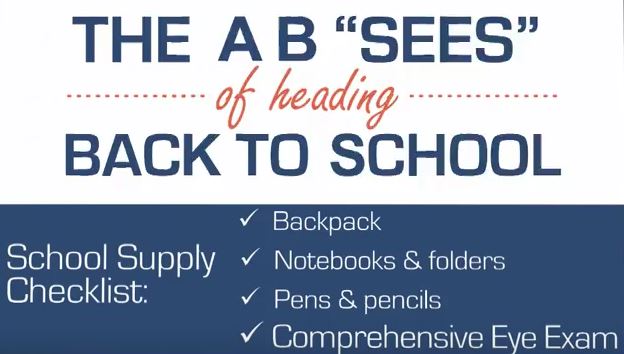
THE AB – ‘SEES’ OF BACK TO SCHOOL

children's eye exam
Children’s eye exams before the start of school can make a difference all year long!

It’s been a great summer, but kids and parents are gearing up for a new school year.  Whether it’s the first time attending preschool or kindergarten, it’s important to make Eye Exams a Back-to-School Tradition.

According to the American Optometric Association, 49% of parents have not had an eye exam on their children who are under six years of age, by an optometrist.  A comprehensive eye exam is different that the eye screenings done by your pediatrician and/or school nurse.

Although a child may have 20/20 vision, they may experience a vision problem that could impact their ability to learn.  Even if there are no complaints over the summer about blurry vision or headaches, children still need to have frequent eye exams. Just like their bodies are rapidly growing, children’s eyes are changing, as well.

Having clear vision is an essential part of the school experience, because so much of learning is visual. An undiagnosed eye problem could result in an academic setback in just a few short months. Some behavior problems could be linked to vision issues.  These students may seem uninterested or unfocused in school when in actuality they simply cannot see clearly.

Eye issues such as strabismus (misaligned eyes), astigmatism or amblyopia (lazy eye) are also detectable through an eye exam. For some eye conditions, vision can be permanently affected if the problem is not corrected. Regular exams mean earlier diagnosis and earlier treatment.

Myopia, or nearsightedness, is a common condition in children, which often develops around the age of 6 or 7. This condition results when the cornea is curved too much or when the eye is longer than normal. When light comes into the eye, it is focused in front of the retina instead of directly on the retina and the child’s vision is blurred.

Nearsightedness can worsen rapidly, especially between the ages of 11 and 13, which means that an eye prescription can change dramatically over a short period of time. Changing eyesight is not a reason for worry, and vision tends to stabilize in the later teenage years and early twenties. During the growing years, it is important to make regular eye appointments with your child’s eye doctor. Making comprehensive eye exams a part of your back-to-school tradition guarantees that your children’s eyes are examined at least once every year.

Even a small change in vision can cause eye strain, headaches or blurred vision, which can be very distracting while in school. Staying consistent with eye exams will help your children to have clear vision and be able to concentrate and perform to the best of their ability.  Start your child on the right track to learning with clear vision.  From the doctors and staff at Bissell Eye Care, we wish you the best in the upcoming school year!

About the author: John D. Bissell, owner of Bissell Eye Care and Tri-State Low Vision Services, offers comprehensive eye examinations for the entire family, ocular disease detection and treatment, eye glasses, sun glasses, active wear, contact lenses, and low vision examinations for those with significant vision loss. He has undergone specialized training for treatment of low vision by the International Academy of Low Vision Specialists utilizing customized telescopic eyeglasses, prisms and telescopic implants for patients who qualify. The practice accepts most types of vision and health insurance plans.

THROUGH A CHILD’S EYES

Being a parent myself I understand the joy of seeing your child grow and having all of their firsts.  Their first crawl, walk, words, real food etc.  For Baby Piper’s parents, having had their child fit for glasses allows her to see them clearly for the first time.  They will always remember the way their child’s face lit up as she saw them clearly for the first time EVER!

As parents we want the best for our children.  We record every moment we can and cherish the memories we will make with them.  With all of these memories and “firsts” many parents find it difficult to take their children for routine eye exams until their children are in grade school.  Being proactive can help your child see better which can lead to better overall development and growth.

There are over 23 million children who experience vision problems.  As a parents you know how important it is to have routine doctor’s appointments as your child grows to ensure proper health and development.  Eye doctor’s appointments are often over looked leaving over 86% of children not have their first eye exam until they enter the first grade.  Taking into account that 10% of children between ages 0 and 4 have vision problems this leaves many children with difficulty seeing throughout the early years of their lives.

Another benefit to routine eye doctor’s appointments as your children grow up is that 7-12% of children have eye problems that can lead to permanent loss of vision if not detected early.  Did you know that 95% of those problems are completely correctable with early detection?

Remember as your experience all of your “firsts” with your young ones that you remember the importance of eye health.  Having a yearly checkup can change the way that your child looks at the world and can help them to see their “firsts” as clearly as you do!

About the author: John D. Bissell, owner of Bissell Eye Care and Tri-State Low Vision Services, offers comprehensive eye examinations for the entire family, ocular disease detection and treatment, eye glasses, sun glasses, active wear, contact lenses, and low vision examinations for those with significant vision loss. He has undergone specialized training for treatment of low vision by the International Academy of Low Vision Specialists utilizing customized telescopic eyeglasses, prisms and telescopic implants for patients who qualify. The practice accepts most types of vision and health insurance plans.

HALLOWEEN COSTUME SAFETY

Happy group of children in costumes during Halloween party playing around the table with pumpkins and bottle of potion

There’s a nip in the air, pumpkin patches are in full swing and children’s Halloween costumes are being planned. We wanted to offer a few tips to ensure a safe and enjoyable holiday for you and your family.

Does your costume block your vision?

Masks, wigs and eye patches may make an outfit complete, but make sure these accessories don’t significantly obstruct your field of view. Some masks are very dangerous for children because they block their side vision and can cause a trip hazard. A better, safer option is to decorate your child’s face with face paint or makeup.

Use FDA approved makeup

If you decide to disguise your child with makeup instead of a mask, use hypo-allergenic options and keep it away from the eyes. Make sure that any color additives to the face paint are FDA approved (check the Summary of Additives on the FDA website). When applying make-up near or around the eye, stay away from the lid margin, or lash line—the area where you would normally apply eye liner. If you are applying make-up very close to the eye, use only products approved for use in that area such as an eye-liner or eye shadow. Do not use blush or lip-liner to create a “red” effect. It is a good idea to carry a damp towel or washcloth in case the makeup begins to run while trick-or-treating.

Don’t allow sharp objects to be used as props

Some costumes don’t seem complete without swords or wands. Elementary and nursery schools are very strict in prohibiting these props for school parties. Sharp, pointed props endanger your child’s eyes as well as the eyes of other children. If your child must carry a sword, find a belt carrier or scabbard where the sword can stay safely nestled while the kids roam the neighborhood. Buy or construct only accessories made of soft or flexible materials.

Avoid decorative contact lenses

Don’t buy or wear decorative contact lenses that have not been prescribed by an eye doctor. The decorative lenses make the wearer’s eyes appear to glow in the dark, create the illusion of vertical “cat eyes,” or change the wearer’s eye color. These lenses are particularly popular for teens.

Despite the fact that it’s illegal to sell decorative contact lenses without a valid prescription, FDA says the lenses are sold on the Internet and in retail shops and salons. Decorative lenses from unlicensed manufacturers may be made from inferior plastic or may contain toxic dyes. In addition, untrained individuals may not follow proper hygiene in inserting or removing the devices. Eye infections related to improper wearing and handling of contact lenses can rapidly develop into corneal ulcers, which can cause permanent blindness.

Make sure costumes are reflective

If the costume your child chooses is not made of reflective material, sew on reflective fabric strips or use stick-on strips of reflective tape. You want your child to be seen, especially crossing streets in the dark. Place reflective material on the front, back and sides of your child’s costume.

Be informed…be safe….and have a Happy Halloween.

About the author: John D. Bissell, owner of Bissell Eye Care and Tri-State Low Vision Services, offers comprehensive eye examinations for the entire family, ocular disease detection and treatment, eye glasses, sun glasses, active wear, contact lenses, and low vision examinations for those with significant vision loss. He has undergone specialized training for treatment of low vision by the International Academy of Low Vision Specialists utilizing customized telescopic eyeglasses, prisms and telescopic implants for patients who qualify. The practice accepts most types of vision and health insurance plans.