
CONTACTS OR GLASSES, WHAT’S YOUR BEST FIT?

Contacts or glasses? This is a question that often presents itself after an eye exam, especially the first eye exam that determines that you need help to see clearly. While there is no scientific answer in most cases as to which option will suite you best, there are some personal factors that may cause you to lean one way or the other.

Whether you choose to wear eyeglasses or contacts mostly depends on your personality and personal preferences. Factors such as lifestyle, comfort, budget, convenience and aesthetics should play a role in your choice. When making the choice, remember that one is not necessarily better than the other, each has its own list of pros and cons.

First off we want to stress that glasses are a necessity whether you choose to have contacts or just glasses. While contact users wear their contacts majority of the time, your eye will often become tired or dry. This will cause discomfort and require you to remove your contacts and wear the glasses.

Contact lenses have many advantages over glasses. Contacts sit directly on your eye, so your vision, especially your peripheral vision, is unobstructed. You can also participate in sports and activities without the fear of your glasses falling off or getting in the way.

Listed below are some advantages and disadvantages of contact lenses.

Advantages

  • Contacts don’t get in the way when playing sports.
  • Contacts typically aren’t affected by weather conditions and won’t fog up in cold weather.
  • Contacts won’t clash with what you are wearing.

Disadvantages

  • Some people have difficulty applying contact lenses to their eye.
  • Some types of contacts require lens care and cleaning each day.
  • Contacts reduce the amount of oxygen reaching the eye and can increase dry eye symptoms.

That being said, eyeglasses also offer many benefits over contact lenses. They require little cleaning and less maintenance. You also do not need to touch your eye to wear glasses which reduces the chance of you developing an eye infection. Glasses are also cheaper than contact lenses in the long run, as they do not need to be replaced nearly as often as contacts.

Listed below are some advantages and disadvantages of glasses.

Advantages

  • Reduces the need to touch your eye, reducing the chances of infection or eye irritation.
  • Eyeglasses are cheaper over the long run and don’t need replaced unless you break them.
  • Glasses provide some protection from wind, dust and debris.

Disadvantages

  • Eyeglasses sit about a half inch from your eye, which distorts peripheral vision.
  • Frames can have constant pressure on your nose and head. This can lead to headaches.
  • Some people do mot like the way that glasses look and feel that it takes away from facial features.

Due to the advances in contact lenses, most people have the ability to wear them successfully and prefer them over glasses as a primary form of vision correction. The decision as whether to wear glasses or contacts, and when to wear them is usually a matter of personal preference. It is important to remember that if you do choose contacts, it is important to have an up to date pair of glasses to wear in case you need to stop wearing contact lenses due to irritation or infection.

About the author: John D. Bissell, owner of Bissell Eye Care and Tri-State Low Vision Services, offers comprehensive eye examinations for the entire family, ocular disease detection and treatment, eye glasses, sun glasses, active wear, contact lenses, and low vision examinations for those with significant vision loss. He has undergone specialized training for treatment of low vision by the International Academy of Low Vision Specialists utilizing customized telescopic eyeglasses, prisms and telescopic implants for patients who qualify. The practice accepts most types of vision and health insurance plans.
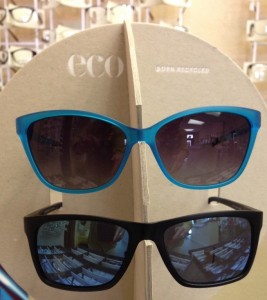
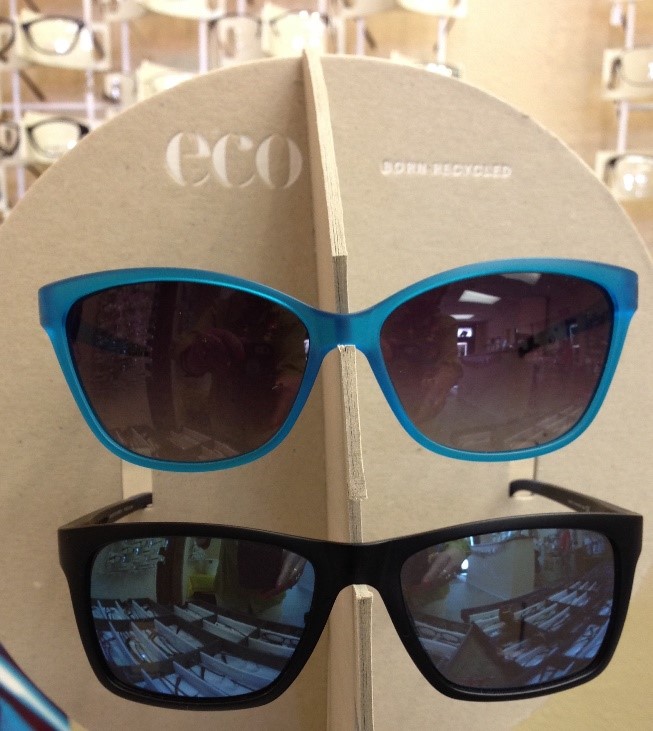
eyeglass frames, Bissell Eye Care

DOES THE FRAME FIT?

eyeglass frames, Bissell Eye Care
What style of eyeglass frames are best for you?

If you are like most people when needing new glasses, you have tried on frame after frame, looking for the one that fits your face just right. It can be very overwhelming as you look at the wall of frames, trying to decide which frame you like best.

There are some ways that you can easily narrow the selection from hundreds of frames down to a select few, which will help you to find a pair that compliment your facial features.

The first part of choosing a set of eyeglass frames is to consider the shape and size of your face. Every face has a shape, round, oval, square, diamond or even heart-shaped.

Determining your facial shape will help you to narrow down the types of frames will best compliment your look.

  • Round: Square or rectangular frames often tend to be wider than a round face. This can help your face to appear slimmer and longer.
  • Oval: These often have a strong bridge. Avoid frames that are overlarge and cover up more than half of your face as it can throw off the symmetry of your face.
  • Square: You want to look for frames that sit high on the bridge of your nose. Oval or round glasses will add a thinner appearance. Avoid boxy eyeglass frames which will make your face appear squarer.
  • Diamond: You want to look for frames that sweep up and or are wider than then the cheekbones. You want to find frames that will accentuate your cheek bones.
  • Heart shaped: Ideal frames are low-set templets and bottom heavy frame lines. Round eyeglasses or square eyeglasses with curved edges will help draw attention away from a broad forehead.

When looking for eyeglass frames remember that in most cases opposites attract. You want to find a balance to your face. If you find frames that are the same shape as your head they can often throw the balance off.

The next thing to consider is what type of lifestyle you lead. Are you physically active, a gamer, or looking to make a fashion statement? You need to find frames that are flexible if you are active, enhance your gaming experience if you’re a gamer, and look stylish and sophisticated if you are looking to make a fashion statement.

At Bissell Eye Care, our trained staff are always available to help you select that perfect frame that best fits your face and lifestyle.

About the author: John D. Bissell, owner of Bissell Eye Care and Tri-State Low Vision Services, offers comprehensive eye examinations for the entire family, ocular disease detection and treatment, eye glasses, sun glasses, active wear, contact lenses, and low vision examinations for those with significant vision loss. He has undergone specialized training for treatment of low vision by the International Academy of Low Vision Specialists utilizing customized telescopic eyeglasses, prisms and telescopic implants for patients who qualify. The practice accepts most types of vision and health insurance plans.
color blindness

SEEING IN COLOR

color blindness
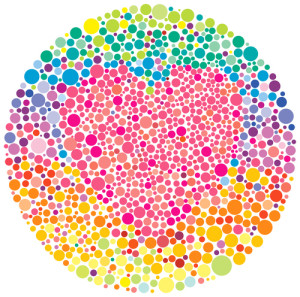
Have you inherited one of the three main types of color blindness?

For many people being, able to walk along a crowded downtown street, look up at the streetlight, and be able to see if the light is red, yellow, or green, is a common occurrence that we rarely think twice about. There are many people, however, who have never experienced this. They are color blind or are color blind to some degree.

While color blindness is most common in men, affecting as many as 8% of men, it can also occur in women. They experience a much lower percent, with as little as .5% of women being color blind.

The reason that men are much more susceptible to suffering from color blindness is that gene responsible for color blindness is on the X chromosome. With males only having one X chromosome, if there is any deficiency they will begin to lose the ability to see colors. Women, have two X chromosomes. Because of this, women have the advantage that if one X chromosome is deficient, the other is able to overcome that gene allowing them to see in color.

The most common types of color blindness are inherited. Color blindness can range greatly in the degree of colors which are able to be seen. Some people can see darker colors easier than light, such as a dark red vs. a light red, with the light red being more difficult to distinguish.

There are three main categories that people who are color blind fall into.

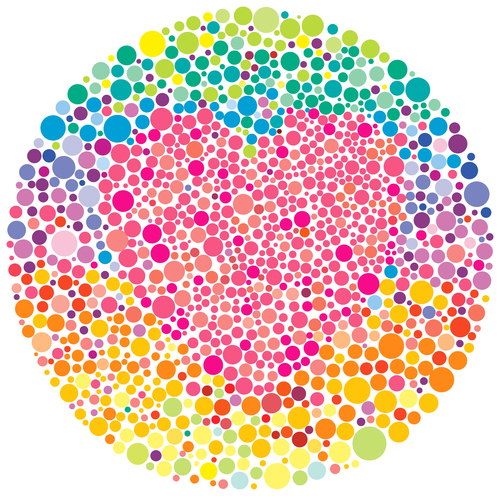
  • Red-Green Color Blindness. The most common type of color blindness. It is caused by the loss or limited function of red cone or green cone photo pigments. People with red-green color blindness struggle to distinguish red and green colors, seeing them as different colors or even black.
  • Blue-Yellow Color Blindness. This color loss is rarer than red-green color blindness. The blue-cone photo pigments are either missing or have limited function. This form of color blindness affects the ability to distinguish yellow, and often shows yellow and red as pink. Blue can also appear as green and yellows as violet or light gray. 
  • Complete Color Blindness. People who suffer from complete color blindness see no colors at all. They may also have the clearness of their vision affected in people who suffer from complete color blindness.

There are many tests that your eye doctor can perform to determine if you are in fact color blind. If so, to determine what category of color blindness that you fall into. It is important to have children checked at a young age as many times they do not know that they are color blind. Children that are born with difficulty seeing colors do not know the difference of what life is like with all colors being portrayed as they should be. Because color blindness is hereditary, it is especially important if one parent is color blind to have regular checkups for the entire family.

There is currently no cure for color blindness, however people with red-green color blindness may be able to use a special set of lenses to help them see colors more accurately. These lenses are typically only to be used outdoors under bright light conditions.

About the author: John D. Bissell, owner of Bissell Eye Care and Tri-State Low Vision Services, offers comprehensive eye examinations for the entire family, ocular disease detection and treatment, eye glasses, sun glasses, active wear, contact lenses, and low vision examinations for those with significant vision loss. He has undergone specialized training for treatment of low vision by the International Academy of Low Vision Specialists utilizing customized telescopic eyeglasses, prisms and telescopic implants for patients who qualify. The practice accepts most types of vision and health insurance plans.
WHEN IS TOO EARLY FOR A CHILD’S FIRST EYE EXAM?

Did you know that Bissell Eye Care provides eye examinations for children as young as 6 months of age? For children under the age of one we do not charge for the examination.

According to the American Optometric Association (AOA), “infants should have their first comprehensive eye at 6 months of age. Experts say 5 -10 % of preschoolers and 25 % of school-aged children have vision problems.  Early identification of a child’s vision problem is crucial because, if left untreated, some childhood vision problems can cause permanent vision loss. Children then should have additional eye exams at age 3, and just before they enter the first grade — at about age 5 or 6.”

Here are some tips for eye exams for young children.

  • Schedule the appointment during a time when your child is alert and happy taking into account napping and eating times.
  • A case history will be conducted to determine birth history, birth weight, medical issues and any allergies.
  • Be sure to note any delayed motor development, failure to maintain eye contact, poor eye tracking, frequent eye rubbing or blinking.

Making a child comfortable with puppets and the use of our “Special Lights” allow us to have fun with children as we look for the following things:

  • How the eye tracks and turns
  • High Refractive Error – meaning significant far or near sightedness
  • Overall Eye Health

For young children who can’t read letters yet, we use of shapes and colors.  No matter what age, regular eye exams are important.  Don’t let your children fall behind in preschool or school as a result of a vision problem.

About the author:  John D.  Bissell, owner of Bissell Eye Care and Tri-State Low Vision Services, offers comprehensive eye examinations for the entire family, ocular disease detection and treatment, eye glasses, sun glasses, active wear, contact lenses, and low vision examinations for those with significant vision loss. He has undergone specialized training for treatment of low vision by the International Academy of Low Vision Specialists utilizing customized telescopic eyeglasses, prisms and telescopic implants for patients who qualify.  The practice accepts most types of vision and health insurance plans.

IS YOUR CHILD READY FOR CONTACTS

Children are beginning to wear glasses at a younger age than ever before.  Increased cases of overuse and eyestrain needing visual correction are being realized with the high demand and usage of technology gadgets, iPads and tablets, computers and cell phones that are used by young children.

Competitive sports add a different component in the need to see distance, increased chance of eye injury from glasses in contact sports and difficulty in seeing during inclement weather.  These factors are prompting the switch to contact lenses.

The Contact Lenses in Pediatrics (CLIP) study that was conducted found that children as young as 8 years old are capable of properly inserting, removing and caring for contact lenses and had no increased risk of contact lens-related eye problems compared with teenagers enrolled in the study.

Contact lenses have changed in their makeup and offer a variety of brands to choose from.  New materials allow for oxygen to flow to the eye and provide higher water content in lenses that add comfort in wearing them.

Cost can be another factor to consider.  Daily lenses can run as little as $2 per day.   They are worn once and then discarded.  There is no need for sterilization and storage.

Children ages 8-12 make up 40% of new contact wearers.  It’s not surprising that the switch to contacts may occur during those awkward pre-teen years where kids want to fit in and they feel glasses make them stand out in the crowd.

Children who are ready for contacts must take responsibility for their care and understand the importance of having clean hands when putting contact lenses in or taking them out.  Because it takes effort in learning how to wear and care for contact lenses, children must be willing to learn.

Bissell Eye Care works with families through the use of trial lenses to find the right fit to meet your needs.  Once we have identified the correct brand for you, then we order the contacts.  Young and old alike enjoy the freedom that contact lenses offer.

About the author:  John D.  Bissell, owner of Bissell Eye Care and Tri-State Low Vision Services, offers comprehensive eye examinations for the entire family, ocular disease detection and treatment, eye glasses, sun glasses, active wear, contact lenses, and low vision examinations for those with significant vision loss. He has undergone specialized training for treatment of low vision by the International Academy of Low Vision Specialists utilizing customized telescopic eyeglasses, prisms and telescopic implants for patients who qualify.  The practice accepts most types of vision and health insurance plans.

bissell-sized

BISSELL EYE CARE EXPANDS LOCATIONS

bissell-sizedAs a high school student, Dr. John Bissell always knew he wanted to be an optometrist.  He job shadowed under Dr. Roger Johnson and learned first-hand what owning your own practice meant.   In April 2010, Dr. Bissell had an opportunity to purchase his first practice in Bakerstown.

During Dr. Bissell’s early years in private practice, Dr. Johnson continued to serve as a mentor.  Bissell Eye Care has quickly grown over the past four years to become a premiere eye care center serving the northern Pittsburgh suburbs.

The time has come for Dr. Johnson to retire and the mentor is passing the torch to the mentee as Dr. Bissell expands his practice.  Dr. Bissell has purchased Dr. Johnson’s practice and is now practicing out of both Bakerstown and Natrona Heights office located at 1629 Union Ave, Natrona Heights, PA 15065, phone (724) 226-0444.

Dr. Johnson will continue to see patients a couple of days a week in the Natrona Heights office until he helps Dr. Bissell with the transition of the practice.  Patients will receive the same great service that both doctors have delivered over the years.  We look forward to serving the northern Pittsburgh suburbs and now the Alle-Kiski Valley for years to come.

About the author:  John D.  Bissell, owner of Bissell Eye Care and Tri-State Low Vision Services, offers comprehensive eye examinations for the entire family, ocular disease detection and treatment, eye glasses, sun glasses, active wear, contact lenses, and low vision examinations for those with significant vision loss. He has undergone specialized training for treatment of low vision by the International Academy of Low Vision Specialists utilizing customized telescopic eyeglasses, prisms and telescopic implants for patients who qualify.  The practice accepts most types of vision and health insurance plans.

Guess Frames

TIPS ON CHOOSING EYEGLASS FRAMES

Guess FramesIt’s time to update your look here are some tips on choosing the best eyeglass frames for your facial features and body makeup.  Don’t be overwhelmed with the amount of eyeglass frames and styles to choose from.    Our technicians are trained to help you select the best fit for your face and body make up from the many brands of eye glass frames featured in our showroom.

Cosmopolitan Magazine recently highlighted how celebrities are choosing the right style to fit their facial features.  Glasses become a focal point, being one of the first things noticed about you, so it’s important to choose eyeglasses that flatter you and are consistent with the image you want to portray.

These are things we consider in helping you make your selection:

Prescription — Some prescriptions such as bifocals may require a maximum/minimum depth or thickness of glass or height.  This may eliminate some types of frames.

Body scale — choose glasses that are in keeping with your body scale and the size of your facial features. For example, if you have a small body scale then choose frames with a small to medium-thick frame.  Likewise you want to be sure if you have a rounder face, the frames don’t look too small.

Lifestyle — consider where you will wear the glasses. Will they be practical for the activity or event? For example: will they stay on for your sporting activity or should you invest in protective sportswear? If you are in outside sales and are in and out of the car multiple times a day, transition lenses may not be the best option.

Your coloring — choose glasses that are in your best color range and that will work with the clothes you intend to wear them with.

Style personality — And finally, do the glasses reflect your personality and complete the image you wish to project? For example, if you favor dramatic, statement clothes and accessories you will be best with statement eyeglasses as well. Go for bold colors, exaggerated design details and heavy-looking frames rather than frameless or light-looking glasses.

So now that we’ve got you thinking about what you may want your next pair of frames to look like, stop in, browse our showroom and see the new selections for spring fashion!

About the author:  John D.  Bissell, owner of Bissell Eye Care and Tri-State Low Vision Services, offers comprehensive eye examinations for the entire family, ocular disease detection and treatment, eye glasses, sun glasses, active wear, contact lenses, and low vision examinations for those with significant vision loss. He has undergone specialized training for treatment of low vision by the International Academy of Low Vision Specialists utilizing customized telescopic eyeglasses, prisms and telescopic implants for patients who qualify.  The practice accepts most types of vision and health insurance plans.

DIGITAL EYE STRAIN

Do your eyes hurt after a day at the office?

Think about all the screens you use every day – desktop, laptop, tablets, ipads, and smart phones.  “Digital Eye Strain” is the level of eye discomfort that occurs for many users.

Symptoms included are dry eyes, blurry vision, fatigue and neck and shoulder cramping. In a recent survey released by the Vision Council, a trade group for makers of eye care products, warned of serious long-term eye risk, including macular degeneration and cataracts.

Because of intense staring, we don’t blink as much when using screens and therefore don’t spread tears across the eyes, causing dryness.  A solution is to blink every 10 seconds or so.  People using a computer daily could stare at the screen 6-10 hours a day.

Here are some prevention tips from organizations such as Prevent Blindness, the National Eye Institute, and Get Eye Smart:

Make changes to your computer screen, such as:

  • Place the screen 20-26 inches away from your eyes and a little below eye level.
  • Regularly clean off dust and fingerprints from the screen. Smudges on the screen can reduce contrast and increase problems with glare and reflections.
  • Choose screens that tilt and swivel.
  • Consider using a glare filter over your screen.

In addition to promoting cardiovascular health, stepping away from computer screens periodically will help prevent digital eye strain.

Glasses can be tinted and regular eye exams should be done to determine if you may need a prescription change, or if the amount of time you’re spending at your desk is leading to tired or dry eyes.

About the author:  John D. Bissell, OD is the owner of Bissell Eye Care and Tri-State Low Vision Services.    Bissell Eye Care offers comprehensive eye examinations for the entire family, ocular disease detection and treatment, eye glasses, sun glasses, active wear, contact lenses, and low vision examinations for those with significant vision loss. The practice accepts most types of vision and health insurance plans.

About the author:  John D.  Bissell, owner of Bissell Eye Care and Tri-State Low Vision Services, offers comprehensive eye examinations for the entire family, ocular disease detection and treatment, eye glasses, sun glasses, active wear, contact lenses, and low vision examinations for those with significant vision loss. He has undergone specialized training for treatment of low vision by the International Academy of Low Vision Specialists utilizing customized telescopic eyeglasses, prisms and telescopic implants for patients who qualify.  The practice accepts most types of vision and health insurance plans.

Eye Injuries and Snowball Fights

Avoid eye injuries from snowball fights. Pittsburgh has seen a good dose of winter already.  We’ve encountered delays and school closings due to the arctic temperatures. But those same winter conditions are ripe for eye injuries received as a result of a good snowball fight.

The fact is that children and adults will always enjoy a good romp in the snow, making snow forts, snow angels sledding and throwing snowballs. So, please play it safe and avoid eye injuries.  Never aim for the head and do not use snowballs that contain chunks of ice or other debris.

During the winter season, emergency room doctors see a number of injuries related to sports like skiing, snowboarding, snow tubing, and sledding. Regular eyeglasses and contact lenses do not offer adequate protection from sports-related eye injuries. We recommend the use of protective eye wear for winter sports, including downhill skiing, snowboarding, and snow tubing.  The lenses are made with polycarbonate lenses, so they’re impact resistant and good for all sports.

On a sunny day on the ski slopes, the snow can create sun glare that is harmful to your eyes.  In addition to tinted goggles for skiing, it’s good to have a pair of sunglasses on hand for hanging out in the lodge. Ski goggles help to protect your eyes from wind and ice particles, as well as minimize injury during a fall.

Cold-related injuries common to winter and snow sports that related to cold and wet conditions include:

•           Blisters on toes, heels and feet caused by the friction of wet socks and badly fitting footwear can cause blisters on

•           Sprains and strains and soft tissue injuries due to less elasticity in ligaments causing injuries in knees, shoulders and wrists due to falls while skiing, snowboarding or ice skating.

•           Hypothermia occurs when the body’s temperature falls below 35°C. Symptoms include: shivering, drowsiness and lack of coordination. The person may lie down to rest, lapse into unconsciousness and die if not treated quickly.

•           Frostbite – this occurs when the tissues of the skin freeze. Ice crystals in and around skin cells block the movement of blood through the fine blood vessels (capillaries), which means the skin is deprived of oxygen and nutrients and dies.  We’ve seen some of that on the news recently.

•           Sunburn – ultraviolet radiation is present, even in cold and cloudy conditions. This, and the reflections off the snow, can cause sunburn to exposed skin. What many people may think is ‘windburn’ is actually sunburn.

•           Snow blindness – this is sunburn of the cornea of the eye, caused by ultraviolet radiation. Symptoms include painful, watery eyes and temporary blurring of vision equipment.

Most cold related injuries can be prevented with planning, adequate preparation and proper equipment.

About the author:  John D.  Bissell, owner of Bissell Eye Care and Tri-State Low Vision Services, offers comprehensive eye examinations for the entire family, ocular disease detection and treatment, eye glasses, sun glasses, active wear, contact lenses, and low vision examinations for those with significant vision loss. He has undergone specialized training for treatment of low vision by the International Academy of Low Vision Specialists utilizing customized telescopic eyeglasses, prisms and telescopic implants for patients who qualify.  The practice accepts most types of vision and health insurance plans.
 

Eye Injury Emergency Tips

According to the American Academy of Ophthalmology, approximately 44% of eye injuries occur in the home.  Wearing the proper eye protection can help to prevent eye injuries.  However, should an eye injury occur notify your optometrist and seek medical attention immediately.

For Chemical Burns:

  • Immediately flush the eye with water by holding the eye under a faucet or shower.  Or pour the water into the eye using a clean container while keeping the eye open as wide as possible while flushing.
  • DO NOT use an eye cup or bandage the eye.
  • Seek immediate medical treatment.

Specks In the Eye:

  • DO NOT rub the eye.
  • Try washing the speck out with an eyewash.
  • Lift the upper eyelid outward and down over the lower lid.
  • If the speck remains – bandage the eye and seek medical attention.

Blows to the Eye:

  • Apply a cold compress or ice without putting pressure on the eye.
  • Internal eye damage symptoms include – pain, reduced vision or discoloration and emergency medical care should be sought.

Cuts and Punctures:

  • DO NOT wash out the eye with water.
  • DO NOT attempt to remove an object that is stuck in the eye.
  • Cover the eye with a shield – the bottom half of a paper cup can be used in a pinch and seek emergency medical care at once.

Know and apply first aid accordingly.  By acting quickly and with the appropriate treatment during an emergency may save your sight.  Treat all eye injuries as potential emergencies, and never hesitate to contact or see an eye doctor immediately. Don’t take risks with your eyesight. Remember, you have only one pair of eyes.

About the author:  John D.  Bissell, owner of Bissell Eye Care and Tri-State Low Vision Services, offers comprehensive eye examinations for the entire family, ocular disease detection and treatment, eye glasses, sun glasses, active wear, contact lenses, and low vision examinations for those with significant vision loss. He has undergone specialized training for treatment of low vision by the International Academy of Low Vision Specialists utilizing customized telescopic eyeglasses, prisms and telescopic implants for patients who qualify.  The practice accepts most types of vision and health insurance plans.