


How Cataracts Affect Your Eyesight
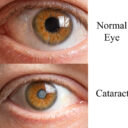
A cataract is the clouding of the eye’s natural lens. This clouding prevents light from passing clearly through the eye, causing blurred or dim vision. Cataracts most commonly develop with aging, but they can also be linked to diabetes, metabolic conditions, eye injuries, or long-term use of certain medications, such as steroids.
Cataracts usually form slowly over time. As they progress, they can interfere with everyday activities like reading, driving, watching television, and recognizing faces.
Common Types of Cataracts
There are three main types of cataracts, each affecting the lens in a different way:
- Subcapsular Cataracts
These cataracts form at the back of the lens and are more common in people with diabetes or those who take high doses of steroid medications. They often affect reading vision and cause glare sensitivity. - Nuclear Cataracts
This type develops in the center of the lens and is most commonly related to aging. Nuclear cataracts may initially cause improved near vision, followed by gradual worsening of both distance and near vision. - Cortical Cataracts
Cortical cataracts begin along the outer edges of the lens and progress inward in a spoke-like pattern. They can cause glare, light sensitivity, and difficulty with contrast and depth perception.
When Cataract Surgery Isn’t the Final Step
Cataract surgery is one of the most successful procedures for restoring vision. However, for some patients, surgery alone may not fully correct vision problems.
Individuals with other eye conditions—such as macular degeneration, glaucoma, or diabetic retinopathy—may still experience reduced visual function even after the cloudy lens has been removed. In these cases, a standard glasses prescription may not provide enough improvement for daily tasks.
Dr. John Bissell, a low vision specialist, trained through the International Academy of Low Vision Specialists, offers cataract co-management and post-surgical low vision care for patients who need additional visual support after surgery. The goal is to help you make the most of your remaining vision so you can function more comfortably and independently.
Services may include:
- Personalized low vision evaluations
- Functional vision assessments for real-world tasks
- Optical and digital magnifiers for reading and near work
- Custom lighting recommendations
- Contrast enhancement strategies for home and work environments
These tools and techniques can greatly improve your ability to read, move safely, and perform everyday activities. To learn more, schedule a low vision consultation with Dr. Bissell by calling 724-443-6767 or 724-226-0444.
About Bissell Eye Care: John D. Bissell, OD, is the owner of Bissell Eye Care, proudly serving the Northern Pittsburgh and Alle-Kiski Valley regions. Dr. Bissell has received advanced training through the International Academy of Low Vision Specialists, enabling him to help patients living with vision impairment and low vision challenges. With two convenient office locations and evening appointments available, Bissell Eye Care offers comprehensive eye exams for the entire family—starting as young as six months. Our services include ocular disease detection and treatment, prescription eyeglasses and sunglasses, specialty activewear eyewear, contact lenses, and dedicated low vision evaluations for those with significant vision impairment and vision loss. We accept most vision and health insurance plans. To learn more, visit bisselleyecare.com or call our Bakerstown office at 724-443-6767 or our Natrona Heights office at 724-226-0444.