COMBATING CATARACTS

Have you noticed that your vision has become cloudy, or that you have trouble seeing in dark settings? These are signs of cataracts. Cataracts are the leading cause of vision loss in the United States; however, vision loss due to cataracts is reversible!

A cataract is a clouding of the eye’s lens which blocks or changes the light that passes into the eye. Cataract surgery is one of the most common types of eye surgery with a 95% success rate. Recent studies have also shown that cataract surgery patients have a significantly reduced rate of bone fractures from falls.

Some of the signs of cataracts are:
• Blurred vision, double vision, a sense of film over the eyes or ghost images.
• Reading, working or driving in low light is difficult.
• Changing your prescription for your eyes often and the changes may not seem to help.
• A milky or yellowish spot in the pupil.
• Halos around lights.
• Sensitivity to light.

If you have these symptoms it may be time to talk to your doctor. Cataracts are caused by natural aging. Old, dead cells build up in the lens of your eyes, causing them to become cloudy. As light passes through the lens, your sight becomes distorted causing your vision to be degraded. Cataracts often develop slowly over a period of years before they are formed enough for an individual to notice them.

If you are diagnosed with cataracts there is good news. This is one form of vision loss that is reversible. Surgeons are able to remove the deteriorated lens and replace it with an artificial lens called an intraocular lens. Annually over 3 million Americans undergo surgery to correct cataracts with a 95% success. The surgery is short and lasts only about 20-25 minutes and most people are able to return to a normal, clearer life in a short amount of time.

There is no way to prevent cataracts other than living a healthy lifestyle. You can help to avoid the progression of cataracts by avoiding smoking, reducing exposure to UV rays by wearing sunglasses, eating a healthy balanced diet and wearing proper eye protection to avoid eye injuries.

About the author: John D. Bissell, owner of Bissell Eye Care and Tri-State Low Vision Services, offers comprehensive eye examinations for the entire family, ocular disease detection and treatment, eye glasses, sun glasses, active wear, contact lenses, and low vision examinations for those with significant vision loss. He has undergone specialized training for treatment of low vision by the International Academy of Low Vision Specialists utilizing customized telescopic eyeglasses, prisms and telescopic implants for patients who qualify. The practice accepts most types of vision and health insurance plans.
SEEING SPOTS?

Have you ever experienced a spot in your field of vision? This is often referred to as eye floaters. In most cases these floaters will appear in your field of vision when you look at something bright such as a white screen or the sky. These are spots that you can see and appear to float as you look around. Eye floaters can be present in one or both eyes.

Floaters are caused by strands, deposits, or liquid pockets developing on the vitreous humor, or the back part of the eye. This is the part of the eye that the light going to the retina passes through. It is a jelly like material that occupies the back two-thirds of the eye.

When the light is blocked by these strands, deposits, or liquid pockets, it casts a small shadow onto the surface of the retina, and the shadows that result are seen as floaters. They are usually black or gray in color. These shadows appear to move as the eye moves, left, right, up and down. This is why patients often say that they see a dot or spot floating in their field of vision.

Floaters are most commonly experienced as we age. About 50% of people who are age 60 have floaters and most people over the age of 70 experience some sort of floater. While many people notice them at first, they may find that after a few months they are less noticeable as the brain and eye begin to ignore or get used to them being there.

While floaters are common, and most people will experience them, it is important to get your regular check up with your eye doctor. In some rare cases a floater can be linked to eye tumors including lymphoma and leukemia. These are however extremely rare. If you see a shower of floaters and spots, especially if they are accompanied by flashes of light, you should seek medical attention immediately from an eye care professional.

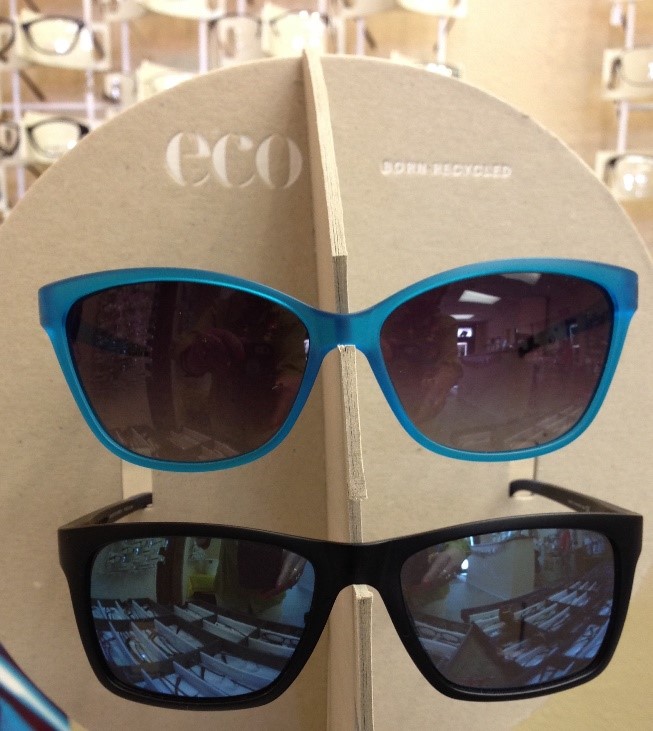
Be sure to maintain your routine visit to your optometrist and tell them if you notice any changes in your eyesight, such as floaters. Grab those sunglasses, get out and enjoy summer!

About the author: John D. Bissell, owner of Bissell Eye Care and Tri-State Low Vision Services, offers comprehensive eye examinations for the entire family, ocular disease detection and treatment, eye glasses, sun glasses, active wear, contact lenses, and low vision examinations for those with significant vision loss. He has undergone specialized training for treatment of low vision by the International Academy of Low Vision Specialists utilizing customized telescopic eyeglasses, prisms and telescopic implants for patients who qualify. The practice accepts most types of vision and health insurance plans.
Dr. John Bissell, Allergic Eye Conjuntivitis

COMBATING ALLERGY SEASON

Dr. John Bissell, Allergic Eye Conjuntivitis
Allergy Season is Upon Us – Learn the Facts

Hopefully the last snow is behind us for 2016. As spring unfolds the plants began to bloom, birds begin to chirp and the grass begins to grow. For those with allergies this may be a challenging time as their nose begins to run and their eyes become itchy red and watery and they just feel miserable.

Having allergies can also lead to problems with eye infections such as conjunctivitis, or pink eye. There are two different types of conjunctivitis. Allergic conjunctivitis caused by allergens is not contagious and is easily treatable. Non-allergic conjunctivitis, which is caused by viruses or bacteria entering the eye, can spread from person to person with ease and requires antibiotic treatment.

Conjunctivitis, often referred to as pink eye, is the inflammation of the conjunctiva, the tissue that lines the inside of the eyelid and eyeball which helps to keep the eye moist. It is important to have a proper diagnosis by your optometrist as the treatments will be different based on the type of conjunctivitis you have. The non-allergic conjunctivitis is highly contagious. Symptoms usually are worse beginning about three to five days after the eye infection begins.

Are you experiencing some of these symptoms?

  • Redness in the white of the eye or inner eyelid
  • Itchy eyes
  • Swelling of the eyelid
  • Blurred vision
  • Increased amount of tears

Allergy-associated pink eye may disappear completely when the allergy is treated or when the allergen is removed. You might consider using eye drops containing antihistamines to ease symptoms of the allergic reaction. Eye drops for allergies are available over-the-counter or by prescription from your eye doctor.

In some cases if the infection is severe, your doctor may prescribe you steroids. The best course of action when in doubt is to consult your eye doctor for the proper diagnosis and treatment.

About the author: John D. Bissell, owner of Bissell Eye Care and Tri-State Low Vision Services, offers comprehensive eye examinations for the entire family, ocular disease detection and treatment, eye glasses, sun glasses, active wear, contact lenses, and low vision examinations for those with significant vision loss. He has undergone specialized training for treatment of low vision by the International Academy of Low Vision Specialists utilizing customized telescopic eyeglasses, prisms and telescopic implants for patients who qualify. The practice accepts most types of vision and health insurance plans.
SPRINGING BACK INTO SPORTS!

Woman and man mountain runners taking a selfie.

Spring is a time to get out and enjoy the outdoors. Many times this means getting involved in spring sports.  As you grab your lacrosse gear, you baseball bat or other sports gear, remember that it is also important to grab your eye protection!

With about 90% of sport related eye injuries being preventable, it is time to take action. Making sure that you have the proper eye protection is key to keeping your eyes safe from foreign objects entering the eye. Having proper eye protection can help to save your vision and prevent unplanned trips to the doctor or emergency room saving you both time and money.

Many people do not want to spend the money on eye protection or may not feel that it is fashionable. Think about the alternatives. Wearing eye protection can cost as little as $40-50 and can save thousands of dollars in an emergency room visit, not to mention help to avoid permanent damage. As safety becomes more and more important in sports, many eye wear companies are finding ways to make safety glasses fashionable and trendy. These safety glasses come in different styles and colors allowing you the ability to pick something that fits your taste.

For people who have prescription glasses, did you know that you can get the eye protection with your prescription allowing you to see as clearly as if you were wearing your normal eye wear? Eye protection is made with materials that are designed not to break or shatter. Normal eye wear is not designed to withstand the impact of a baseball or other type of object and may cause more harm than good in certain situations.

If you do find that you or one of your kids has had an accident and is suffering from a black eye, vision problems, or pain be sure to contact an eye doctor immediately. Quick response could help to reduce the long term effects of a serious injury of the eye. Have a safe spring and get out there and enjoy the outdoors!

About the author: John D. Bissell, owner of Bissell Eye Care and Tri-State Low Vision Services, offers comprehensive eye examinations for the entire family, ocular disease detection and treatment, eye glasses, sun glasses, active wear, contact lenses, and low vision examinations for those with significant vision loss. He has undergone specialized training for treatment of low vision by the International Academy of Low Vision Specialists utilizing customized telescopic eyeglasses, prisms and telescopic implants for patients who qualify. The practice accepts most types of vision and health insurance plans.

ENJOYING THE OUTDOORS

Gardener strimming and strimmer

As spring appears and everything begins to bloom it becomes that time of year when construction, spring cleaning, and landscaping start. Many people take the time to knock out a spring project or two in order to spruce up around the house and make it look nicer.

As you step outdoors remember the eye protection. Eye protection from not only foreign debris entering the eye but also from the sun. Your eyes, much like your skin, are sensitive to the UV Rays that are left off by the sun. Make sure that you have the proper eye protection to help prevent you from landing in the doctor’s office.

We often get excited when the temperatures jump above 50 and the sun starts to shine through the clouds. It’s the first sign of spring and it gives us a chance to work around the house, dust off the work gloves and bask in the warm spring air. I urge people as they step outdoors, whether it is to trim the shrubbery or maybe repaint the shed – grab those safety glasses. While regular glasses can help to prevent anything from entering the eye they do not stop objects from getting around the top, bottom or sides of the glasses. That is why when you are selecting your eye protection you choose a pair of glasses that are more form fitting to your face to reduce the possibility of injury.

The next thing to pay attention to is the sun. We have talked about snow blindness in previous blogs. We want to stress that this can happen even in the absence of snow. It is most common when there is a reflective surface, such as snow or water, where the UV rays can be reflected up into your eyes increasing the level of exposure to the sun. Don’t forget when you decide to get out and enjoy the warm weather to grab a pair of sunglasses with proper UV protection.

If you do suffer from an eye injury, whether it be a foreign object in the eye or the effects of the sun, it is important to seek medical attention. A foreign object in the eye can be painful and in some cases can cause permanent damage to your eye sight. By seeking proper medical help you can help minimize permanent injury.

About the author: John D. Bissell, owner of Bissell Eye Care and Tri-State Low Vision Services, offers comprehensive eye examinations for the entire family, ocular disease detection and treatment, eye glasses, sun glasses, active wear, contact lenses, and low vision examinations for those with significant vision loss. He has undergone specialized training for treatment of low vision by the International Academy of Low Vision Specialists utilizing customized telescopic eyeglasses, prisms and telescopic implants for patients who qualify. The practice accepts most types of vision and health insurance plans.

WORKPLACE EYE SAFETY

March is National Workplace Eye Wellness month. While there are many jobs with a higher probability of eye injury, there are just as many occupations that people may not think about which can also be hard on your eyes.

When we think of jobs that can be dangerous to your eyes, the most common images that come to mind are those such as, contractors, construction workers, laborers, metal workers etc. We also want to stress that there are also many white collar jobs that can have negative effects on your eyes. Jobs that require spending a lot of time in front of a computer or where you are exposed to high levels of light. These occupations can include: computer programmers, call center workers and pilots to name a few.

Workplace eye safety is focused on the overall health of your eyes. Foreign debris entering the eye is the most obvious injury. Less common injuries often go overlooked. We want to take the time to shed some light on various types of career paths to help you to prevent discomfort and eye strain when you are at work.

Fortunately in today’s workplace, safety is often the number one concern in the construction trades. Companies require you to wear the proper safety glasses and provide them to employees for these types of jobs where there is a possible risk of having debris get into your eyes. Be sure to wear them correctly and replace them if they become damaged. If you do happen to have a piece of foreign debris enter your eye, seek medical attention immediately to help reduce the chances worsening the eye injury.

Many people who work at a computer all day are those who will most commonly experience eye strain. This occurs when your eyes become very tired or irritated from focusing on one thing such as a computer screen, or TV for a very long period of time. To help reduce eye strain, give your eyes a break every now and then, take some time to look away and by adding a short walk when you’re taking a break is also good exercise.

The last type of eye injury that we want to discuss is damage from the sun. As we have discussed when we talk about snow blindness, long term effects from increased sun exposure include the development of glaucoma or cataracts. You may be at an increased risk for this type of injury if you are a pilot, fisherman, boat captain or crewmember, lifeguard, etc. It is important that if you have a job with increased exposure to the sun that you get proper eye protection that blocks out as much of the UV rays as possible. This will help reduce the chances of long term damage to your eyes.

Whatever you job is, be sure that you take the time to take care of your eyes. Preventing excessive eye strain, wearing the proper safety glasses or sun glasses is imperative to help keep your eyes healthy and happy.

About the author: John D. Bissell, owner of Bissell Eye Care and Tri-State Low Vision Services, offers comprehensive eye examinations for the entire family, ocular disease detection and treatment, eye glasses, sun glasses, active wear, contact lenses, and low vision examinations for those with significant vision loss. He has undergone specialized training for treatment of low vision by the International Academy of Low Vision Specialists utilizing customized telescopic eyeglasses, prisms and telescopic implants for patients who qualify. The practice accepts most types of vision and health insurance plans.

ALL ABOUT EYES FOR KIDS

Did you know that your eye works like a camera that transmits pictures to the brain? Your brain processes what you are seeing. The light passes through the lens of your eye and is recorded in the retina in the back of your eye.

Your retina has two cells called rods and cones. The rods see black and white and the cones see color. They work together to turn the pictures you see with your eyes into electronic messages for the brain. Sometimes people can’t see all the colors and that is called color blindness. There is a blind spot on your retina which is not sensitive to light because there are no rods or cones there. It is the spot where the optic nerve is joined on to the retina. The optic nerve carries the electronical messages to the brain.
Dr. Cheri Wiggs has a fun video that explains to kids how their eyes work. Answering questions like, “Why is it harder to see colors at night?” or “What happens with your eyes when you go to sleep?”

Ask a Scientist: Eyes at Night video produced by National Eye Institute, NIH

Eyebrows and eyelashes help to keep the dust sweat from getting into your eyes. Tear glands located in the upper eye help to keep your eye clean and moist.

Our eyes are very important and we need to take care of them. Staring at a computer screen too long without a break can cause your eyes to become dry and sore. Be sure to take breaks often to give your eyes a rest.

Many of you play sports. Protective eye wear should be part of your uniform when you suit up. These glasses will help to prevent permanent injury should you get hit in the face with a baseball, hockey puck, soft ball or soccer ball.

Having an annual eye exam will alert your parents to any changes in your eyesight that may affect your ability to play sports or do well in school. If you begin to experience headaches or can’t see the board as clearly, tell your parents. Your eyes are important so we need to do everything possible to take care of them.

About the author: John D. Bissell, owner of Bissell Eye Care and Tri-State Low Vision Services, offers comprehensive eye examinations for the entire family, ocular disease detection and treatment, eye glasses, sun glasses, active wear, contact lenses, and low vision examinations for those with significant vision loss. He has undergone specialized training for treatment of low vision by the International Academy of Low Vision Specialists utilizing customized telescopic eyeglasses, prisms and telescopic implants for patients who qualify. The practice accepts most types of vision and health insurance plans.

LIVING WITH AGE-RELATED MACULAR DEGENERATION

February is National Age-Related Macular Degeneration (AMD) awareness month. We want to make sure that you know what side effects to be on the lookout for. While there is not cure for Macular Degeneration early detection is key to slowing down vision loss and keeping your sight.

Macular degeneration is one of the leading causes of vision loss. It is caused by the deterioration of the central portion of the retina. The central portion of the retina, known as the macula, is responsible for focusing vision for the eye, allowing us to read, recognize faces or colors, drive and do many day-to-day activities.

While there is no cure for this disease, there are treatments to help slow it down. It is important to maintain yearly eye exams for early detection. AMD is very difficult to notice until you have already lost a large portion of your vision.

Lifestyle changes can help lower your risk of developing AMD. Some lifestyle changes might include proper exercise and diet, avoiding smoking, and protecting your eyes from the UV rays of the sun. People that run a higher risk of developing AMD are people who have a family history, race, Caucasians are more likely to develop the disease than African American or Hispanic heritage, and smokers.

There are three stages of AMD:

  1. Early AMD: At this stage most people do not experience vision loss. The presence of medium-sized drusen (yellow deposits beneath the retina), is usually an early sign you eye doctor looks for.
  2. Intermediate AMD: This is where vision loss may start to be noticed, however it may not be enough to be noticeable. Specific tests will look for pigment changes in the retina and larger drusen deposits.
  3. Late AMD: At this stage vision loss has become noticeable.

Remember that early detection and treatment is key to help save your vision. Be sure to tell your eye doctor if anyone in your family has or had Macular Degeneration. Take charge of your health and see clearly with routine eye exams.

About the author: John D. Bissell, owner of Bissell Eye Care and Tri-State Low Vision Services, offers comprehensive eye examinations for the entire family, ocular disease detection and treatment, eye glasses, sun glasses, active wear, contact lenses, and low vision examinations for those with significant vision loss. He has undergone specialized training for treatment of low vision by the International Academy of Low Vision Specialists utilizing customized telescopic eyeglasses, prisms and telescopic implants for patients who qualify. The practice accepts most types of vision and health insurance plans.

WINTER WONDERLAND!

Man and woman in warm clothing and ski goggles

It is easy to make sure that you have the essentials; warm gloves, hats, a warm coat, good snow boots and even hand warmers for many of us. There is one piece of winter clothing that many people tend to overlook – eye gear. Having the proper eye gear can help to reduce the chances of snow blindness.

Snow blindness, also known as Photo keratitis, is when the cornea becomes inflamed from exposure to the harmful UV rays of the sun. The reason this condition is referred to as snow blindness is due to the reflection of the sun’s rays off of the snow. It is most common in people partaking in snow sports such as skiing, snowboarding or mountain climbing. Snow blindness can also be experienced by people enjoying the beautiful winter scenery with the lack the proper eye protection or use no eye protection at all.

Some of the symptoms include bloodshot eyes, uncontrollable eyelid twitching, eye pain and increased tearing or watering of the eyes. Many times these symptoms will not immediately present themselves. Like your skin becoming burned by the sun on that summer vacation at the beach, you will often begin to experience symptoms of snow blindness hours after the damage has been done. If you find that you experience these symptoms, get out of the sunlight. The best course of action to help speed up the recovery is to stay inside in a darker environment, cover your eyes with a cloth or material to block out light from getting to your eyes, and, most importantly, remove your contacts. Full recovery can take anywhere from 1-3 days depending on the severity of damage done. If symptoms persist, it is important to seek medical treatment to help reduce the chances of permanent damage. Repeated suffering from snow blindness can also increase your risk of permanent damage to your eyes and can reduce your ability to see.

PREVENTION! The best way to reduce the chances of suffering from snow blindness is to make sure that you have the proper sunglasses, snow goggles, or glacier goggles.

Sunglasses: If you choose to use sunglasses make sure that they have high UV protection. Wrap around style with full eye coverage are the best to prevent light from getting around the glasses to your eyes. Also be sure to get polarized, dark, mirror-coated sunglasses for best protection.

Glacier Goggles: Glacier goggles or glacier glasses are specifically designed for people who partake in the outdoor activities that would lead to snow blindness. They are usually darker than most sunglasses or goggles and come with mirrored and polarized lenses. The glacier sunglasses often have added plastic or other material that helps to block the sun from getting around the glasses to your face.

Snow Goggles: While many snow goggles help to keep snow out of your eyes and do help block out the sunlight, most often they do not provide great protection from the sun. While we all look for the best deal and go with a cheaper product, this is one of those things that you might want to consider spending a little more to get a pair of goggles that will properly protect your eyes.

So this year as you slide your feet into the warm boots, throw on your winter jacket, and get dressed to go outdoors, don’t forget to grab the eye gear that you need to keep your eyes protected.

About the author: John D. Bissell, owner of Bissell Eye Care and Tri-State Low Vision Services, offers comprehensive eye examinations for the entire family, ocular disease detection and treatment, eye glasses, sun glasses, active wear, contact lenses, and low vision examinations for those with significant vision loss. He has undergone specialized training for treatment of low vision by the International Academy of Low Vision Specialists utilizing customized telescopic eyeglasses, prisms and telescopic implants for patients who qualify. The practice accepts most types of vision and health insurance plans.

NEW YEAR’S RESOLUTIONS

new years resolutions

January is Glaucoma Awareness Month. By educating people of what this disease is, how it can negatively affect your everyday way of life, and how early detection is key to slowing or even stopping the progression, we can help to reduce the number of people who will lose their vision from it.

There are over 3 million people in the United States alone who have Glaucoma with roughly 50% unaware that they have the disease. It is the leading cause of preventable blindness, without early detection any damage done is permanent, and cannot be reversed.

At this point you may be asking yourself, what does this disease do? Or what are the signs so I can help to better protect myself? Glaucoma is a group of diseases that damage the optic nerve. This nerve is like the cable that runs from your digital cable or satellite box to your TV. It takes what the eye is seeing and gives that information to the brain effectively allowing you to see.

Glaucoma is often referred to as “the sneak thief of sight”. There is no pain associated with the disease. Because people are not experiencing any symptoms, the disease will slowly degrade your vision. As this happens, your vision is degraded and the optic nerve is permanently damaged. A person can often experience as much as a 40% vision loss before they even begin to notice that their vision is degrading.

Those that are highest risk for developing Glaucoma are individuals over the age of 60, people who are severely nearsighted, and those who have family members that have already been diagnosed. If you are diagnosed with Glaucoma, it is important for your family to know, as it increases their risk of developing the disease. Also, people of African, Asian, and Hispanic descent are at a higher risk than those of Caucasian descent.

Early detection is essential for this disease. I’m sure that by now, you have picked up on our urges to maintain annual eye exams in our past blogs, and this disease is one of the reasons why. By detecting this disease early you can take steps can slow or even stop the progression of vision loss. Having an annual eye exam is one New Year’s Resolution you’ll want to keep.

About the author: John D. Bissell, owner of Bissell Eye Care and Tri-State Low Vision Services, offers comprehensive eye examinations for the entire family, ocular disease detection and treatment, eye glasses, sun glasses, active wear, contact lenses, and low vision examinations for those with significant vision loss. He has undergone specialized training for treatment of low vision by the International Academy of Low Vision Specialists utilizing customized telescopic eyeglasses, prisms and telescopic implants for patients who qualify. The practice accepts most types of vision and health insurance plans.