
Eye-Safety-in-Sports

WATCH THE BALL

Eye-Safety-in-SportsWith the school buses back on the road, it is easy to see that school is back in session. If your children are like many, this also means that fall sports have started back up again. Players suit up with the proper uniform, but having the right eyewear will also help your kids keep their eye on the ball, resulting in a great fall sports season.

From soccer, football, lacrosse, fall baseball and other contact sports, each year 42,000 athletes suffer eye injuries that result in a visit to their eye doctor or emergency room. Many of these injuries are preventable with the proper eye protection.

Many eye injuries from contact sports occur when impact from a ball or another player can lead to several different types of injuries. The injuries most commonly seen are corneal abrasions, fracturing of the orbital bone (eye socket), or swollen and detached retinas.

While eye injuries are more common in contact sports, they are not limited to these activities. Many students suffer damage to their eyes from not having the proper eye protection from the sun. Activities such as marching band, cheerleading, or even running cross country, tend to have the students outside in the sun for prolonged periods of time. The UV rays of the sun can sun burn an eye much like it can skin. This can result in a range of problems from discomfort and dry eye, to permanent loss of sight in extreme cases.

Now the good news! In most cases, the proper eye protection can prevent your children from having to endure these injuries. Spectators should also take precautions, especially with using sunglasses with UV protection.

Polycarbonate safety goggles offer great protection from injuries in sports such as basketball, racquetball, tennis and soccer. When looking for goggles, be sure they fit properly and that they are labeled ASTM F803 approved. These are the goggles that have been tested and are approved for impact sports.

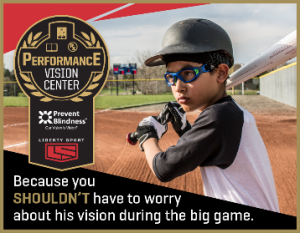
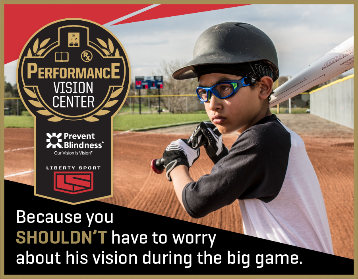
If your child plays hockey or baseball, a helmet with a protective face shield will offer the most protection from a wild pitch, a flying puck or even a stick. Make sure the helmet fits properly and does not move around on their head or fall off. It is also important to have the shield fit snugly to your child’s face and chin.

For activities such as marching band, cheerleading, or cross country, be sure that your children are sporting a pair of sunglasses that have UV protection. Because these activities are not considered high impact contact sports, regular sunglasses with UV protection will help to prevent damage from the sun.

As your kids suit up this fall, be sure that their uniform includes the proper eye protection. Wishing you all a successful fall sporting season!

About the author: John D. Bissell, owner of Bissell Eye Care and Tri-State Low Vision Services, offers comprehensive eye examinations for the entire family, ocular disease detection and treatment, eye glasses, sun glasses, active wear, contact lenses, and low vision examinations for those with significant vision loss. He has undergone specialized training for treatment of low vision by the International Academy of Low Vision Specialists utilizing customized telescopic eyeglasses, prisms and telescopic implants for patients who qualify. The practice accepts most types of vision and health insurance plans.

SHORTER DAYS AND LONGER NIGHTS

As the leaves begin to change and the beautiful colors start to appear, it also becomes apparent that days are growing shorter and the nights are getting longer. For some Americans this means that they may struggle to see – particularly at night.

If you find you are becoming afraid to hit the road after dark because you struggle to see, now is the time to let your eye doctor know. The answer may be as simple as a pair of glasses, or it may mean that you need to get your cataracts taken care of. In any case, it is important to speak with your eye doctor to make sure there isn’t a more serious underlying issue.

Cataracts are one of the leading causes of night vision problems. As you age, cells grow and die behind your pupil. When the debris from dead cells builds up, it starts to cloud your vision. While cataracts are not painful they do make it difficult to see, especially at night. Cataracts are easily treatable and once removed you will find your night vision improves but also your vision in general may change.

A lack of Vitamin A may also be a reason for struggling with night vision. Vitamin A is found in carrots and leafy vegetables. It helps to keep the retina, the back of your eye where images are focused, healthy. Many Americans get enough vitamin A in their regular diet – that’s one of the reasons we always talk about a well-balanced diet. However, those with health problems such as celiac, gastric bypass or Crohn’s disease, may have problems absorbing the nutrients they need.

If you have recently been on a beach vacation, you might feel as though your vision is worse at night. This is more than likely correct as sustained bright sunlight can worsen night vision for up to two days. One way to avoid this is to wear sunglasses with UV protection. The wrap around style is best.

Regardless of why you suffer night vision loss, it is always a good idea to consult your eye doctor. While some forms of night vision loss may be permanent, there are several kinds that are treatable. If you do have difficulty seeing at night, be sure to clean your car windows and headlights before heading out for a night drive. As the leaves begin to fall, also remember the pavement becomes slippery when wet so give yourself extra room between you and the vehicle in front of you.

If you have questions about night driving or any other vision related issue, give our office a call at 724-443-6767 or 724-226-0444.

About the author: John D. Bissell, owner of Bissell Eye Care and Tri-State Low Vision Services, offers comprehensive eye examinations for the entire family, ocular disease detection and treatment, eye glasses, sun glasses, active wear, contact lenses, and low vision examinations for those with significant vision loss. He has undergone specialized training for treatment of low vision by the International Academy of Low Vision Specialists utilizing customized telescopic eyeglasses, prisms and telescopic implants for patients who qualify. The practice accepts most types of vision and health insurance plans.
ARE YOU READY FOR SCHOOL?

Back to school concept with school items and elements. vector banner design

As the first day of school rapidly approaches it is time for the annual back to school shopping for clothes, backpacks, pencils, pens and book covers. This is also a great time to schedule your kids’ annual eye exams. Did you know until the end of September 2017 we have a back to school sale – buy one pair and get a second pair 50% off? This sale isn’t limited just to your kids.

August is children’s eye health and safety month. As a good rule of thumb you should have your children’s eyes examined by an eye care professional during their well visits starting around the age of three, and also before the start of each school year. If your children struggle to see, it may inhibit their ability to learn as they head back to school this year.

Your children’s eye doctor can help to ensure that they are seeing clearly. These exams look into the back of the eye for overall eye health, but are also able to detect things such as:

  • Ptosis (drooping of the eyelid)
  • Color deficiency (color blindness)
  • Amblyopia (lazy eye)
  • Strabismus (cross eyes)

Early detection of vision problems can make a big difference when it comes to your child’s ability to learn. If they suffer to see, they will more than likely suffer to learn as many people learn by sight.

Keeping your children’s eyes safe is another part of maintaining healthy vision. Did you know that eye injuries are the leading cause of vision loss in children? There are a few basic rules that you should follow to help ensure that your child is not one of the 42,000 sports related eye injuries that occur each year.

  • All children should wear protective eye gear while participating in sports or physical activities.
  • Be sure to purchase age appropriate toys and avoid those toys which have sharp or pointy edges.

Give your kids the best chance of success this year by scheduling a comprehensive eye exam. Make sure that your children are able to see clearly. Protecting their ability to see will help them to have the best chance of success as they head back to school this year!

About the author: John D. Bissell, owner of Bissell Eye Care and Tri-State Low Vision Services, offers comprehensive eye examinations for the entire family, ocular disease detection and treatment, eye glasses, sun glasses, active wear, contact lenses, and low vision examinations for those with significant vision loss. He has undergone specialized training for treatment of low vision by the International Academy of Low Vision Specialists utilizing customized telescopic eyeglasses, prisms and telescopic implants for patients who qualify. The practice accepts most types of vision and health insurance plans.
THE SOLAR ECLIPSE

With the solar eclipse fast approaching, we see many news articles and TV interviews about the dangers of looking directly at the eclipse. As a child growing up, your parents more than likely than not told you to never look directly into the sun. Something that you probably ignored and still tried, just to be left seeing spots. On August 21, 2017, the United States will experience a solar eclipse and if you try to look at it, this too can leave you seeing spots; or in some cases, damage your retina.

A total solar eclipse happens when the sun is blocked from view by the moon. While it is much more common to see a partial solar eclipse, a total solar eclipse is much rarer. Here in Pennsylvania, we will see a partial eclipse, while southern states will see a full solar eclipse.

It is no surprise when we say that looking directly into the sun without proper eye protection can cause serious eye damage, even leading to vision loss. There are however safe ways to view a solar eclipse.

The safest way to look at the sun is by using solar-viewing glasses, eclipse glasses, or personal solar filters. All three of these are names for the same product. According to the safety recommendations from NASA, the lenses of these glasses are made from special filters that are hundreds of thousands of times darker than your UV protection sunglasses. The lenses on these solar-viewing glasses are so dark that you are not able to see anything other than the surface of the sun.

When you jump online to get your pair of glasses, beware, as NASA has changed the standards for glasses that are safe to use for viewing the sun. The new standard of ISO 12312-2 will ensure that you get the eye protection that you need. Some of the manufacturers that meet this standard are Rainbow Symphony, American Paper Optics, and Thousand Oaks Optical.

We want to stress that homemade filters or ordinary sunglasses, even sunglasses that are very dark, are not safe for looking at the sun, or an eclipse of the sun. If you plan on using binoculars or other magnifying devices, be sure to get the proper filter for them. Simply using solar-viewing glasses on them is not enough. The increased magnification can damage the lens of your solar-glasses and leave them less effective.

Be sure to protect your eyes on August 21, as you prepare to look at the moon as it crosses paths with the sun. While this rare occurrence is something to marvel, be sure to enjoy it with the proper eye protection so you don’t damage your eyes.

About the author: John D. Bissell, owner of Bissell Eye Care and Tri-State Low Vision Services, offers comprehensive eye examinations for the entire family, ocular disease detection and treatment, eye glasses, sun glasses, active wear, contact lenses, and low vision examinations for those with significant vision loss. He has undergone specialized training for treatment of low vision by the International Academy of Low Vision Specialists utilizing customized telescopic eyeglasses, prisms and telescopic implants for patients who qualify. The practice accepts most types of vision and health insurance plans.

EYE EXAMS FOR KIDS

Attentive boy is looking in special apparatus, checking his sight. Portrait

As parents, it is easy to know when your child is sick or needs to be taken to the doctor. It is often more difficult for your child to know and tell you when they aren’t seeing as clearly as they should be. This is especially true with infants and toddlers.

Unlike adults that have had regular exams, children who have never had an exam do not have a baseline to measure their vision from. The world is new and exciting to them and they may not notice that what they are seeing is not as clear as they should be. As a parent, you can help to ensure they are experiencing life to its fullest by scheduling routine eye exams.

According to the American Optometric Association, infants should have their first eye exam at 6 months of age. Children should then receive their next eye exam at the age of 3 and then again at age 5-6, before they enter kindergarten.

As your children age, it is recommended that they receive a comprehensive eye exam every two years if no vision correction is required and every year if vision correction is required. While pre-schools and elementary schools do provide free eye screenings, they are not nearly as involved as a screening by your optometrist.

School exams check the basics, using the Seeing Eye Chart but do not look into the eye to see if there are any other issues that need to be corrected before permanent damage occurs. Often these screenings are inaccurate and can miss important eye issues because they are always not done by eye doctors but by school nurses or medical assistants not trained to pick up advanced eye issues. Reading a chart or looking into a machine is not a proper assessment of the visual function of the eye. An eye doctor can see if a nonverbal or young child needs glasses by dilating them and using a special scope that shines light into their eyes to read their glasses prescription.

As children grow they use their vision to develop skills such as:

  • Eye teaming (binocularity) skills.
  • Focusing skills.
  • Peripheral awareness.
  • Eye movement skills.
  • Eye/hand coordination.

It is important to give your child the proper start as you get ready to send them on their first day of school. If they have trouble seeing they will struggle to learn. At a young age we learn from what we see, from how we see other people interact and what the teacher writes on the board. If your child does not have the ability to see clearly, they are already starting out a few steps behind.

As parents, we would do anything to be able to help our children to be the best they can be. Vision is often one area where children may not know that something isn’t right. If they have poor vision they most times won’t feel pain or discomfort, they will simply just struggle to see in clarity. For this reason, they may not tell you that they are having trouble as blurry vision may have become “normal” to them.

As you complete your back to school to do list, be sure to schedule your child’s eye exam.

About the author: John D. Bissell, owner of Bissell Eye Care and Tri-State Low Vision Services, offers comprehensive eye examinations for the entire family, ocular disease detection and treatment, eye glasses, sun glasses, active wear, contact lenses, and low vision examinations for those with significant vision loss. He has undergone specialized training for treatment of low vision by the International Academy of Low Vision Specialists utilizing customized telescopic eyeglasses, prisms and telescopic implants for patients who qualify. The practice accepts most types of vision and health insurance plans.

THE RIGHT ACTIVEWEAR

As you head out the door this summer, whether it is to go mountain biking or to the lake to go fishing, having the right type of eye protection or activewear is essential. Eye protection can vary greatly in design and function depending on what type of activities you are to take part in. One of the most important factors to take into consideration when choosing eye protection is if it needs to be designed to protect against impact, the sun, or possibly both.

Eye protection has a large range of options. If you are using the right eye protection for the wrong activity, you may find that your protection is not going to work as you had hoped, and may actually cause more problems. As a new season of school sports kicks up, be sure to suit up with the right eyewear.

The most important part of determining what type of eye protection you need is to identify what you will be protecting your eyes from. For someone who is going to grab the mountain bike and hit to trails, you are looking for something that is designed for impact resistance. Having glasses on that can break and enter the eye, or cause damage to areas around the eye would not be your best option.

The two main categories to look at when you are choosing eyewear is whether your activity is going to have any chance of impact. If there is, you want to choose safety glasses. These differ from regular glasses as they are required to meet a higher standard of impact resistance than regular eye glasses. This standard is required for both the lens and the frame.

Safety glasses are becoming more stylish and can even be special ordered with your prescription in them if need be. Regular glasses, if impacted, may not stand up to the impact which can lead to injury from broken glass or broken frames.

If you’re more up to grabbing your fishing gear and heading to your favorite lake or stream, you are looking to protect your eyes from the sun. In this case impact resistance is not as important as blocking out the UV rays that can damage the eye or even leave your eyes sunburned.

The most effective form of sunglasses are those which have UV protection. Wraparound sunglasses have the most coverage for your face and will help to block out light that can enter around the sides of normal sunglasses. If you are concerned about being able to see, sunglasses like many safety glasses can be made with your prescription to allow you to see clearly through them.

As you step out the door this summer, know that your eye protection has a specific design and function. Using the wrong eyewear for the activity you are going to partake in may leave you more vulnerable and unprotected. If you are unsure which type of eye protection to use, consult your optometrist or the staff at Bissell Eye Care and they will be able to guide you in the right direction!

About the author: John D. Bissell, owner of Bissell Eye Care and Tri-State Low Vision Services, offers comprehensive eye examinations for the entire family, ocular disease detection and treatment, eye glasses, sun glasses, active wear, contact lenses, and low vision examinations for those with significant vision loss. He has undergone specialized training for treatment of low vision by the International Academy of Low Vision Specialists utilizing customized telescopic eyeglasses, prisms and telescopic implants for patients who qualify. The practice accepts most types of vision and health insurance plans.

WHAT’S IN YOUR GARDEN?

With spring quickly turning to summer, the annual duties of weeding and watering the gardening have started.  For many people this also means a change in their diet as fresh vegetables are more readily available, and free!  A proper diet is not only good for your overall health, but can help to keep your eyes healthy and sharp well into the future.

While there are foods that you should eat that you cannot grow in a garden, there are several vegetables that you can grow that are good for your eyes.  

When deciding your next meal, there are factors to take into account.  Foods that contain a range of vitamins, nutrients, and minerals are known as antioxidants that will help your body to destroy oxidants.

Eating foods with a range of antioxidants may help to prevent several eye conditions such as:

  • Poor night vision
  • Dry eyes
  • Cataracts
  • Age-related macular degeneration
  • Glaucoma

Your eyes need several different types of antioxidants in order to fend off oxidants and stay healthy.

Some of these foods include:

  • Lutein
  • Zeaxanthin
  • Vitamins A, C, E
  • Zinc
  • Omega-3 Fatty Acids
  • Beta-carotene

Your diet should also include foods such as fish, eggs, and nuts, which you would buy from the store.  But if you have a green thumb personality and enjoy having a garden, there are foods you can grow to help your eye sight.

  • Spinach
  • Kale
  • Collards
  • Carrots
  • Tomatoes

The best way to eat is by doing what is called “following the rainbow.” Eating fruits and vegetables that vary in color offer many different vitamins that will help the health of you and your vision. When growing your garden, keep in mind that all vegetables provide nutrients for your body. The ones listed above are vegetables that are found to contain high amounts of antioxidants and nutrients. Happy gardening!

About the author: John D. Bissell, owner of Bissell Eye Care and Tri-State Low Vision Services, offers comprehensive eye examinations for the entire family, ocular disease detection and treatment, eye glasses, sun glasses, active wear, contact lenses, and low vision examinations for those with significant vision loss. He has undergone specialized training for treatment of low vision by the International Academy of Low Vision Specialists utilizing customized telescopic eyeglasses, prisms and telescopic implants for patients who qualify. The practice accepts most types of vision and health insurance plans.

BLOCKING OUT UV

As summer is finally underway, and temperatures reach up into the 90’s, many of us will find ourselves at annual pool parties, on the way to the beach, or just soaking up the sun’s rays outside. While sun exposure is encouraged, as it provides a good source of vitamin D, overdoing it can cause more harm than good if you fail to use the proper protection.

July is National UV Safety month and it is a great time to spread information and awareness about UV safety. UV radiation is the leading cause of skin cancer in the United States and is also responsible for eye damage, including cataracts and macular degeneration, which are the primary causes of vision loss among seniors.

There are some characteristics that make people more susceptible than others. Individuals with light colored eyes, blue or green, are generally at a larger risk from UV exposure than those who have darker eye colors.

There are some ways that you can help to prevent UV Damage.

  • Put on your sunglasses. The most effective type of sunglasses block out 99-100% of UV and are the wrap around type. This style helps to prevent UV rays from entering around the sides of the glasses.
  • Find the shade. Avoiding the sun when the UV rays are at the most intense, between the hours of 10 am to 3 pm, will lower the amount of UV you are exposed to.
  • Grab the cap. Wearing a hat will also help to limit exposure not only to your eyes but also to your face, scalp and neck depending on the type of hat you choose.

Remember that more than your skin can get burned by the UV rays. This is referred to as photokeratitis or sun burned eyes.
Symptoms of sun burned eyes are:

  • Eye pain
  • Burning sensation
  • Swollen eyes or lids
  • Watery eyes
  • Blurred vision
  • Sensitivity to light
  • Headaches
  • A gritty feeling
  • Red eyes.

These symptoms are usually temporary and will generally resolve themselves in 24-48 hours. If you find your symptoms are prolonged, contact your eye doctor immediately.

When the pool bag is packed and the sun screen is applied, don’t forget to grab your sunglasses as you head outdoors this summer. Proper UV protection will help to prevent your eyes from being burned by the sun but will also help to reduce the chances of eye troubles years down the road!

About the author: John D. Bissell, owner of Bissell Eye Care and Tri-State Low Vision Services, offers comprehensive eye examinations for the entire family, ocular disease detection and treatment, eye glasses, sun glasses, active wear, contact lenses, and low vision examinations for those with significant vision loss. He has undergone specialized training for treatment of low vision by the International Academy of Low Vision Specialists utilizing customized telescopic eyeglasses, prisms and telescopic implants for patients who qualify. The practice accepts most types of vision and health insurance plans.

SPRINGTIME ALLERGIES!

Happy face kid smile.Close up portrait joy child outdoors. Little boy playful smiling holding dandelions on eyes as eyeglasses. Joyful childhood, summer day. Background green grass

Allergies occur when your body becomes overly sensitive to something in the environment that typically causes no problems for most people. An allergic reaction may occur when that “something” that you are allergic to comes into contact with your eyes. In many cases, the “something” you are allergic to is airborne, such as pollen.

There are many different medications that have proven to be effective in fighting allergies, whether its spring, summer or fall allergies. If you cannot find a medication that helps you in combating the symptoms, it may be time to consult your eye doctor, as some eye diseases carry similar symptoms as allergies and will not improve with allergy treatment.

Seasonal allergic conjunctivitis, or SAC, is one of the most common types of eye allergy. Depending on the type of pollen that is in the air, people who suffer from SAC experience symptoms in spring, summer or fall.

Some of the most common symptoms are:

  • Itching
  • Redness
  • Burning
  • Clear watery discharge

People who have SAC may also notice dark circles under the eyes. These symptoms are often accompanied with a runny nose, sneezing, or nasal congestion.

As we stated earlier, there are several different types of medication that you can use to combat the symptoms of SAC.

There are also methods to combat your allergies that do not require medication.

  • Stay indoors at times when pollen counts are high.
  • Keep windows closed and use air-conditioning as much as possible.
  • Avoid using fans in windows as this tends to pull pollen into the house.
  • Wear glasses or sunglasses when outdoors to reduce the chances of getting pollen in your eyes.
  • Avoid rubbing your eyes when they feel itchy or watery.

Be sure to consult your eye doctor if you are using over the counter medications such as eye drops. Prolonged use of some eye drops may actually cause your condition to worsen and cause damage to your eyes. The proper treatment and avoiding pollen when it is at its highest will help to reduce your symptoms this allergy season.

About the author: John D. Bissell, owner of Bissell Eye Care and Tri-State Low Vision Services, offers comprehensive eye examinations for the entire family, ocular disease detection and treatment, eye glasses, sun glasses, active wear, contact lenses, and low vision examinations for those with significant vision loss. He has undergone specialized training for treatment of low vision by the International Academy of Low Vision Specialists utilizing customized telescopic eyeglasses, prisms and telescopic implants for patients who qualify. The practice accepts most types of vision and health insurance plans.

EXTREME SPORTS REQUIRE CLARITY

For many Americans, spring cleaning is not only a time to clean, but time to pull the fun toys out of storage. Toys such as the pair of jet skis neatly tucked away in the back of the garage or the four-wheeler that is out in the shed. While most thrill seekers take safety precautions when riding these vehicles, eye protection is often forgotten.

With all the excitement these high intensity motorsports deliver, most can’t wait to hop on and go, whether on water or through the woods. While many people remember the big ticket safety items such as the helmet or life vests, they often forgo eye protection, as part of their standard safety equipment.

The thrill of blazing down the trails on your four-wheeler, or skimming up one of our 3 rivers sitting atop a high-power jet ski, is what makes summer so appealing. You get ready for the season by taking care of your toys and doing such things as changing the oil or putting a new set of tires. But are you making sure you are ready to get out and get going with proper safety equipment?

Walking down the ramp to the dock, you throw on a life vest, jump on the Jet Ski and you take off full throttle down the river. What could go wrong? With your life vest on you are fully confident that you will float back to the surface if you are thrown off. But what if you aren’t thrown off? Can’t get hurt, right? There you are, cruising down the river and bam, catch a bug or piece of debris from the river in the face, even worse, a direct shot into the eye. While having a bug fly into your eye is bad enough, compound that with you traveling at 40+ mph.

This scenario is played out every year, and many times it ends with the rider taking a trip to the emergency room or to see their eye doctor. The impact of the bug to your eye can cause damage that can permanently affect your vision. A simple pair of sunglasses or goggles will not only help to prevent a bug from entering your eye, but will also help to reduce dry eye from the wind you experience at high speed. Sunglasses will also protect your eyes from the UV rays of the sun as they reflect off the water.

Off to camp you go as you back your four-wheeler off of the trailer and throw on your helmet, riding pants, boots, and t-shirt. Down the trail into the woods, hitting familiar trails throughout Western PA. Your goggles fog up so you take them off. It is all too easy to not think twice about taking them off as you can now see clearly again. That’s when it hits you, the branch you didn’t see hanging down over the trail.

Unfortunately this time you don’t have goggles on and it hits your face giving you an orbital fracture, or a fracture of the bone surrounding your eye. Some riders may experience a scratched cornea. Without safety goggles there is nothing to absorb the impact of the branch and you take the brunt of the impact. This fun weekend just took a turn down a wrong path as you now are faced with having to go to the emergency room.

Having the right eye protection when you are enjoying the outdoors, whether it is over the river or through the woods, can help to keep you safe as you enjoy your summer. Proper eye protection when using high octane personal vehicles can reduce the chances of injury from a foreign object impact, wind causing dry eye and UV rays from the sun. Be sure you sport up with the right eye protection. If you are unsure, give our office a call. At Bissell Eye Care, we carry a variety of sports eye wear. Summer is right around the corner. Make it a safe one.

About the author: John D. Bissell, owner of Bissell Eye Care and Tri-State Low Vision Services, offers comprehensive eye examinations for the entire family, ocular disease detection and treatment, eye glasses, sun glasses, active wear, contact lenses, and low vision examinations for those with significant vision loss. He has undergone specialized training for treatment of low vision by the International Academy of Low Vision Specialists utilizing customized telescopic eyeglasses, prisms and telescopic implants for patients who qualify. The practice accepts most types of vision and health insurance plans.