4 TIPS TO SPOT VISION PROBLEMS IN KIDS

As we march into spring, many families are participating in kindergarten or preschool orientation. Young children are excited about taking the next step in school, but one of the most important yet overlooked necessities in their success is healthy vision.

If your child has been in preschool, chances are they may have had a vision screening. These are performed in most preschool and elementary schools. Many vision screenings test only for distance visual acuity. While the ability to see clearly in the distance is important, it does not indicate how well the eyes focus up close or work together. A screening does not give any information about the health of your child’s eyes. That’s why it’s important to have an annual comprehensive eye exam by an optometrist or ophthalmologist.

As older school aged children near the last half of the school year, standardized testing and spring exams are coming into play. Eye strain and/or vision problems may manifest themselves and as parents, you may notice a change in your child’s demeanor.

A child’s eyes and vision grow from year-to-year and as they progress through school, the demands of learning require visual work involving reading, writing, computers and the ability to see chalkboards/smartboards. If their eyes aren’t up to the task, a child may feel tired, have trouble concentrating, and have problems in school.

Particularly in young children, it’s difficult for them to tell you they are having difficulty seeing something. But sometimes parents will notice signs that their child may have a vision problem. For instance, your child may squint, or hold reading material very close to their face.

Here are four signs that could point to possible vision problems in kids.

  1. Short attention span. Does your child seem to quickly lose interest in games, projects or activities that require using their eyes for an extended period of time?
  2. Losing their place when reading. For young children sometimes allowing a finger to follow the words will help train their eyes. Do you notice as your child reads (aloud or silently), they may have difficulty seeing to keep track of where they are on the page? It may also take them a long time to read a page.
  3. Avoiding reading and other close activities. Do you see a push back when your child is reading? Because of difficulty in seeing, they may choose to avoid reading, drawing, playing games or doing other projects that require focusing up close.
  4. Turning their head to the side. Does your child seem to tip their head or turn their head sideways to look at something in front of them? They can see better, but this may be a sign of an astigmatism or a refractive error.

Success in school is closely tied to eye health. That’s why it is so important for kids to have a comprehensive annual eye exam with an optometrist or ophthalmologist who is properly trained to assess vision in school-aged children. The earlier a vision problem is found and treated, the better off your child will be—in and out of school. As you register your child for the next school year, be sure to put a comprehensive eye exam on your check off list. For questions regarding eye health contact our office at 724-443-6767 or 724-226-0444.

About the author: John D. Bissell, owner of Bissell Eye Care and Tri-State Low Vision Services, offers comprehensive eye examinations for the entire family, ocular disease detection and treatment, eye glasses, sun glasses, active wear, contact lenses, and low vision examinations for those with significant vision loss. He has undergone specialized training for treatment of low vision by the International Academy of Low Vision Specialists utilizing customized telescopic eyeglasses, prisms and telescopic implants for patients who qualify. The practice accepts most types of vision and health insurance plans.

CO-MANAGED CARE

Just as you may have a team of doctors managing a heart or diabetic condition, so too can you have a team of eye care professionals managing your eye care.  Co-management is the process of eye care professionals working as a team to provide a patient’s care. In most cases, this occurs when an optometrist such as the doctors at Bissell Eye Care provide the initial evaluation and care after the surgery with an ophthalmologist performing the surgical procedure. Often the optometrist has been the patient’s trusted eye care provider for years. This is especially valuable to patients as they have established a doctor patient relationship with our office over the years.

Co-managed care provides an additional check and balance between the patient and surgeon, with an optometrist assisting the patient’s questions and concerns.

LASIK/Cataracts Co-Management

In LASIK, “co-management” is the term commonly used to describe a situation when an optometrist provides pre-op and post-op care with an ophthalmologist providing surgery. For example, an optometrist will provide the initial LASIK, All-Laser Lasik, PRK, LASEK or any other refractive surgery evaluation, and then care for the patient after the surgery.

Some factors Bissell Eye Care will take into account to determine which surgery may be right for you:

  • An overall health assessment will be conducted to determine if any systemic diseases are present that may impair your ability to heal such as autoimmune or immunodeficiency diseases.
  • Corneal health including dry eye disease, thin corneas, irregular corneas, or corneal diseases such as keratoconus are considered.
  • Stability is determined by your eyeglass prescription.
  • Analysis of your retinal health ensures there is no other ocular disease present that would prevent you from achieving 20/20 vision after laser vision correction.
  • Candidacy for some refractive surgeries may be limited due to lifestyle and occupation.

Patient Benefits for co-managed care:

  • Familiarity with your optometrist and the convenience of pre- and post-operative follow-up.
  • A central hub of patient care coordination.
  • Often less costly depending on copays and insurance deductibles.

Bissell Eye Care has working arrangements with eye surgeons and specialized eye care doctors to provide many of the surgical services such as cataract surgery, laser surgery, refractive surgery, retinal detachments, retinal tears and hemorrhages. You can be assured that your eyes will be comprehensively managed by the best eye care professionals.

About the author: John D. Bissell, owner of Bissell Eye Care and Tri-State Low Vision Services, offers comprehensive eye examinations for the entire family, ocular disease detection and treatment, eye glasses, sun glasses, active wear, contact lenses, and low vision examinations for those with significant vision loss. He has undergone specialized training for treatment of low vision by the International Academy of Low Vision Specialists utilizing customized telescopic eyeglasses, prisms and telescopic implants for patients who qualify. The practice accepts most types of vision and health insurance plans.

EYE STRAIN AND TECHNOLOGY

Has the extreme cold of the winter kept you and your kids indoors more than usual? If so, you have probably realized that they are spending more time on their smart phones, iPad, computers, or on their gaming systems, keeping themselves occupied while trying to combat cabin fever.

New studies show that this increased of use of technology could be causing eye strain for your kids. This eye strain can cause your children to experience things such as headaches or blurry vision.

If your children are like many, they use their iPad on long car trips, a smartboard at school, and seemed to have grown an appendage out of their hand that looks an awful lot like an iPhone. This is just everyday life for them. But as parents, we need to limit their time on the screens.

Some of the symptoms to watch out for in your kids that point to eye strain are:

  • Blurry vision
  • Double vision
  • Headaches
  • Dry, sore eyes

It is important to teach your children how to take a break from technology. Here are a few ways to help ease eye strain.

  • Make time for other activities. Exercise is obviously one of the best activities for your children to do; however, simply spending time away from the screen is important, whether it’s going for a walk or cleaning their room. Board games for some family time are a great alternative.
  • Proper distance. Your child should not be right up against the screen. If you find they are constantly sitting close to the TV or have their phone/iPad in their face it might be an indicator that they are having trouble seeing.
  • Blink often. When children, even teens, stare at a screen for long periods of time they have a tendency to blink less often. This can cause the eyes to dry out and may cause discomfort and pain. Be sure to remind them that even when they are intently focused on the screen that it is important to blink.
  • Look away. A good rule of thumb is the 20-20-20 rule…for every 20 min of use you should be looking away from the screen for at least 20 seconds and focus on an object that is 20 feet away. This gives your eyes a chance for a break so that they are able to focus better.

As with anything else, the key to vision health is moderation. While playing on the iPad will not immediately hurt your child’s vision or cause discomfort, prolonged over usage will lead to eye discomfort and may lead to eye difficulties.

About the author: John D. Bissell, owner of Bissell Eye Care and Tri-State Low Vision Services, offers comprehensive eye examinations for the entire family, ocular disease detection and treatment, eye glasses, sun glasses, active wear, contact lenses, and low vision examinations for those with significant vision loss. He has undergone specialized training for treatment of low vision by the International Academy of Low Vision Specialists utilizing customized telescopic eyeglasses, prisms and telescopic implants for patients who qualify. The practice accepts most types of vision and health insurance plans.
OCT a

COMPREHENSIVE ASSESSMENT OF OCULAR HEALTH

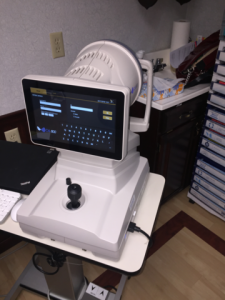
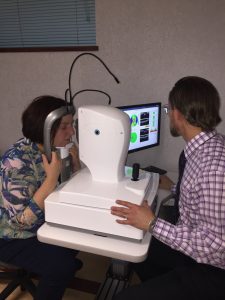
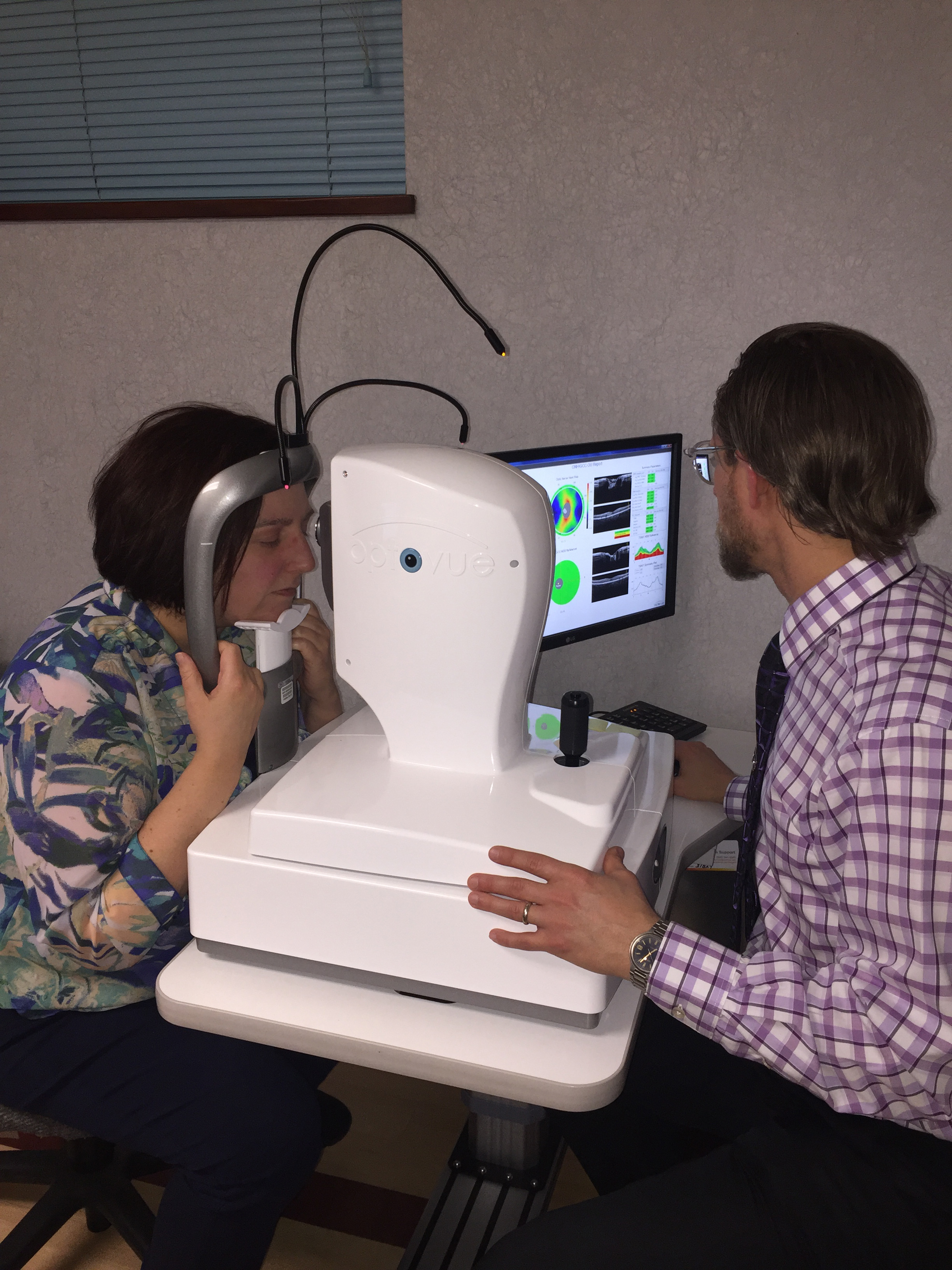
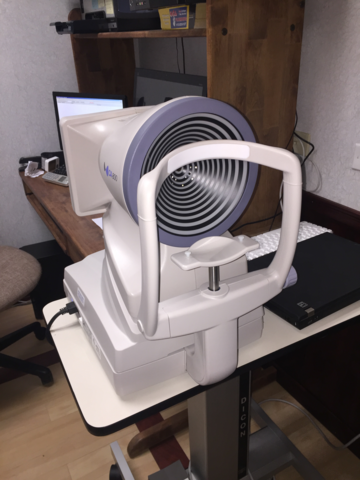
OCT aAs technology continues to improve, we are better able to look at the human eye with the Optovue OCT machine. OCT Angiography (OCTA) is a quick non-invasive piece of equipment which performs a test, allowing your eye doctor to see retinal vessels during your annual eye exam. OCTA is the only non-invasive way to visualize the vascular structure of your retina.

During this test the structure of your eyes are examined- from the front, or anterior segment, to the back, or retina. OCT is used to aid in diagnosing disease and managing your ocular health. These metrics along with a high-resolution image and symmetry analysis help to determine if you are displaying the early signs of retinal disease or glaucoma.

The machine allows us to look at the eye in a similar manner as an MRI. It takes a piece by piece view of the eye. Our optometrists then look at this imagery and are able to determine the health of your eyes, or if there are any concerns that need to be further addressed.

So what does this mean for you, the patient? These scans are able to detect early vascular changes in diabetic patients and early signs of glaucoma. We cannot stress the importance of early detection of eye diseases enough. Early detection can help to prevent further loss of vision. As we have talked about before, you can lose a significant amount of your vision without you noticing.

Bissell Eye Care continues to invest in the most up to date technology and equipment in order to best serve our patients. We are one of a handful of optometry practices in the Pittsburgh region to offer screenings with the Optovue OTC Angiography machine. By using this technology, we are able to better facilitate the diagnosis and management of eye diseases, many of which may lead to permanent blindness.

About the author: John D. Bissell, owner of Bissell Eye Care and Tri-State Low Vision Services, offers comprehensive eye examinations for the entire family, ocular disease detection and treatment, eye glasses, sun glasses, active wear, contact lenses, and low vision examinations for those with significant vision loss. He has undergone specialized training for treatment of low vision by the International Academy of Low Vision Specialists utilizing customized telescopic eyeglasses, prisms and telescopic implants for patients who qualify. The practice accepts most types of vision and health insurance plans.

WINTER WEATHER EYECARE

Mother and children skiing in the mountains. Active mom and three kids with safety helmet, goggles and poles. Ski lesson for young children. Winter sport and snow fun for family. Child learning to ski

If you live in the Northeast, then you are well aware that this year is off to a blistering start. Erie has been buried in blizzard conditions with multiple feet of snow. Pittsburgh is shivering in the deep freeze. With December having temperatures near zero and wind chills below zero, many people find it a struggle to get bundled up to fight the cold.

For those who enjoy the outdoor sports associated with colder weather such as snow skiing, boarding, sled riding, riding snow mobiles or even ice fishing, it is important to have the right clothes to keep you warm and comfy as you brave the freezing temperatures.

Did you know that your eyes can get sunburned in the winter? Snow and ice reflect up to 80% of the sun’s ultraviolet (UV) rays. When you are out on the slopes, or sliding down the big hill in your yard, UV rays are hitting you from every angle.
UV exposure can cause a painful condition called photokeratitis, or “snow blindness.” While you can get snow blindness any time of the year it is most common in the winter due the amount of UV rays that are reflected off of the snow and ice.

Protecting your eyes during the winter months can also help to prevent:

  • Wrinkles around the eyes
  • Age-related macular degeneration
  • Cataracts

Exposure to extreme cold can also affect your eyes. Some of the symptoms of extreme cold exposure often include eye pain and blurred vision. The cornea, or the front of your eye, can freeze if temperatures are cold enough and your eyes are not protected.

So the question is, “Do you have the right eye protection to get through the winter?” Eye protection can range from sunglasses that have UV protection to protective goggles that not only protect your eyes from the UV rays but also can help to block out wind and cold.

Which type of eyewear is right for you? To answer that question, first you need to look at what type of outdoor activities are you planning on doing. If you are involved in an active sport such as snow skiing, snow tubing, or sled riding, goggles will help to protect from the sun, cold and even from debris getting into your eye. If you are out shoveling the driveway or grabbing the snow shoes to go for a walk through the woods, sunglasses may be your best bet.

In any case it is important to make sure that your eye protection has UV protection. Having the right gear this winter can help to keep you and your kids outside, playing in the snow and enjoying everything winter has to offer.

About the author: John D. Bissell, owner of Bissell Eye Care and Tri-State Low Vision Services, offers comprehensive eye examinations for the entire family, ocular disease detection and treatment, eye glasses, sun glasses, active wear, contact lenses, and low vision examinations for those with significant vision loss. He has undergone specialized training for treatment of low vision by the International Academy of Low Vision Specialists utilizing customized telescopic eyeglasses, prisms and telescopic implants for patients who qualify. The practice accepts most types of vision and health insurance plans.

NEW YEAR’S RESOLUTIONS

Are you ready for the New Year? During the holiday season many people take the opportunity to reflect on the year that has past, focus on new goals and make New Year’s Resolutions. Weight loss, financial freedom, healthy habits are among the top resolutions people make.

Resolutions for better health often include, eating better, exercising, or cutting down on sugar intake. While many people have resolutions to improve their health, they tend to not include an annual medical physical, 6 month dental visits and an annual eye exam.

With the New Year in full swing there is no better time to schedule your eye exam. You or your children may receive an annual vision screening at work or school. What people don’t realize is that a vision screening is much less comprehensive than an eye exam.

Vision screenings usually only take a few minutes and are often performed by volunteers, not by a certified optometrist. Vision screenings are typically designed to detect major vision problems. What many people do not realize is that an eye screening is ineffective at detecting subtle vision problems or overall health diseases, which if left untreated can rob you of your vision or lead to ongoing health problems.

Eye exams that are performed by an optometrist are designed to not only evaluate your visual acuity, but also to check the overall health of your eye. During a comprehensive eye exam, the optometrist will also check for signs of eye problems such as glaucoma, cataracts, macular degeneration and detached retina.

As an added health bonus, your optometrist can also detect early signs of health problems such as diabetes, high blood pressure and stroke risk; all based on the appearance of the delicate blood vessels and other structures within the eye.

As the New Year brings about resolve to change, consider your body’s overall health. Scheduling annual visits to not only your optometrist, but also to your medical doctor for a yearly physical can help to keep your body in top shape and provide early detection of any medical conditions before they become serious problems. Early detection is key to obtaining the best chance of treatment providing a positive outcome. Wishing you the best in 2018.

About the author: John D. Bissell, owner of Bissell Eye Care and Tri-State Low Vision Services, offers comprehensive eye examinations for the entire family, ocular disease detection and treatment, eye glasses, sun glasses, active wear, contact lenses, and low vision examinations for those with significant vision loss. He has undergone specialized training for treatment of low vision by the International Academy of Low Vision Specialists utilizing customized telescopic eyeglasses, prisms and telescopic implants for patients who qualify. The practice accepts most types of vision and health insurance plans.
BALANCE CHECK ON FLEXIBLE SPENDING ACCOUNT BENEFITS

It’s that time of year. Have you checked the balance in your Flexible Spending Accounts (FSAs)? This pretax medical deduction can help you to spend less on your health care while experiencing the maximum tax benefit. There is a catch-you must use monies within the current calendar year to reap the rewards. By spending all of the money in your account before the year-end deadline, you ensure you are getting the most bang for your buck.

FSAs are pre-tax monies that are placed in an account and are available for use only on approved medical expenses. They differ from a health savings account, HSA, in that the money contributed can only be used for that calendar year. In other words the FSA accounts are use it or lose it. As the year quickly draws to a close the question becomes, have you used it? Being proactive in checking your balance allows you time to react before the year ends.

In October 2016, the IRS released its inflation adjustments which raised the limits for healthcare FSAs. In 2017, the annual FSA contribution limit is increasing by $50 from the previous year. Employees with this employer-sponsored benefit account can contribute a maximum of $2,600. While there are no exceptions that allow that money to be directly paid back to you, there are more options than you might expect as to how to spend the extra money. If you have monitored the amount spent during the year, you have an idea what is left to spend down as December quickly approaches.

There are two cases where you can get a little extra time to spend that money.

  1.  A rollover option. This allows you to move up to $500 to next year’s balance.
  2.  Grace period. Because most plans fall on the calendar year, this option allows you to use the moneys for up to 2 ½ months past the end of the year. Why is this? Because, during the first few months of the year your account has accrued little funds.

Most FSA accounts come with a debit card and usually have one or the other of these two options but CANNOT have both. However, if you are required to submit a claim, be sure to watch the claim windows in which you can ask for reimbursement.

How to spend FSA accounts?

If you have a high balance left in your account, don’t despair. The list of things that you can spend the money on however is pretty large, leaving many surprised what they can purchase using their FSA account. To get a full listing of what you’re allowed to spend FSA money on, visit an online FSA store. These stores only sell items that qualify approved purchases using your FSA account.

Some out-of-the ordinary expenses you can pay for using your FSA account also include:

  • Eye Exams, Eyewear and Contact Lenses
  • Chiropractor visits
  • Artificial teeth or limbs
  • Qualified service animals, such as a guide dog, including food and grooming costs
  • Travel that was required for medical treatment.

You may also use the FSA for expenses such as hearing, vision, and dental services even if you don’t have insurance for those services.

Keep track of your FSA account throughout the year. Spending in moderation throughout the year will also help to reduce the scramble to use money that you have left as the year comes to an end. Despite the hassle of having to make sure all the money is spent, FSA accounts are a good way to avoid paying taxes on money that is used for medical expenses.

About the author: John D. Bissell, owner of Bissell Eye Care and Tri-State Low Vision Services, offers comprehensive eye examinations for the entire family, ocular disease detection and treatment, eye glasses, sun glasses, active wear, contact lenses, and low vision examinations for those with significant vision loss. He has undergone specialized training for treatment of low vision by the International Academy of Low Vision Specialists utilizing customized telescopic eyeglasses, prisms and telescopic implants for patients who qualify. The practice accepts most types of vision and health insurance plans.
DIABETIC AWARENESS

November is Diabetes Awareness Month and we would like to talk about how this disease can affect your eyes. Diabetic eye disease is comprised of a group of eye conditions that affect people with diabetes. These conditions include diabetic retinopathy, cataracts, glaucoma, and diabetic macular edema or DME.

If you or a loved one suffer from diabetes, it is important to maintain annual eye exams to help prevent vision loss. It is even more important for those who suffer from diabetes to take their medication as prescribed, stay physically active and maintain a healthy diet. This will help to delay or even prevent vision loss from diabetes.

Diabetics should be aware of a few eye diseases that can affect people with diabetes.

  • Diabetic retinopathy. Diabetic retinopathy affects blood vessels in the retina which lines the back of the eye. It is one of the most common causes of vision loss among people with diabetes.
  • Diabetic macular edema or DME. This is an accumulation of fluid due to leaking blood vessels in the macula – part of the retina that controls our most detailed vision abilities.

Diabetic eye disease can also include cataracts and glaucoma. While these are not limited to individuals who have diabetes, it is more common for diabetics.

  • Cataracts. This is a clouding of the eye’s lens. Adults who have diabetes are 2-5 times more likely to develop cataracts at an earlier age than those without diabetes.
  • Glaucoma. For adults, having diabetes doubles the risk of glaucoma. This occurs when the optic nerve that connects your eyes to you brain is damaged.

Of all the diseases that diabetic eye disease is comprised of, a cataract is the only one that is reversible. A simple surgery can remove the cataract from the eye allowing for clear, normal vision. With all of the other diseases, once the damage is done there is no reversing it.

There is good news! Early detection and treatment can help to reduce the risk of blindness. Early detection is key to preventing damage to the eye that is irreversible. If you are diabetic let your optometrist know and be sure to maintain your annual visits and exams.

About the author: John D. Bissell, owner of Bissell Eye Care and Tri-State Low Vision Services, offers comprehensive eye examinations for the entire family, ocular disease detection and treatment, eye glasses, sun glasses, active wear, contact lenses, and low vision examinations for those with significant vision loss. He has undergone specialized training for treatment of low vision by the International Academy of Low Vision Specialists utilizing customized telescopic eyeglasses, prisms and telescopic implants for patients who qualify. The practice accepts most types of vision and health insurance plans.
HALLOWEEN COSTUME TIPS

Happy group of children in costumes during Halloween party playing around the table with pumpkins and bottle of potion

With shorter days upon us, the leaves changing, and the temperature getting cooler, it has become time to prepare for Halloween. This popular holiday can be an exciting and fun time for kids and adults alike.  Be sure as you choose your costume this year that you use the right makeup and avoid over the counter colored contact lenses.

When helping your kids choose their costume, or planning your own costume for the upcoming Halloween party, keep an eye out for possible safety concerns. Avoid trip hazards, and have a clear vision from underneath any masks you may wear.

After you have picked your costume, it comes time to plan out what, if any, kind of makeup you will be using. Keep in mind that you and your kids will most likely be walking a lot, or maybe showing off those new moves on the dance floor for indoor parties. This means that you are probably going to be sweating. As you sweat, makeup that you have on your face can run into your eyes. This can cause eye irritation, be painful and sometimes lead to infection. Be sure to use makeup on your face that is water based and oil free.

Not only are water based makeups easier to remove at the end of the night, they are safer, especially for the young ones. Oil based makeup can also clog pores, leaving your skin around your eyes irritated.

Another popular accessory to Halloween costumes are colored contact lenses. “Decorative” contacts can be found in all shapes and sizes, ranging from unique colors to shapes that look similar to cat or snake eyes. While these contacts look cool, it is important to have them properly fitted by your optometrist.

They will measure your eye and give you a prescription for decorative contacts that contain an expiration date. It is important to make sure that the contact properly fits your eye and that you purchase them from a licensed store that requires a prescription to purchase. Getting the wrong size contact can cause damage to your eye or even suction to your eye. This will not only cause discomfort and pain but may also lead to serious permanent damage.

As you browse the racks at your local Halloween store, or scroll through the pages of costumes on the internet, be sure to get the right makeup, allowing for easy removal. If you plan on using decorative contacts, don’t wait until the last minute to contact your optometrist about getting fitted for them.  Have a safe and happy Halloween!

About the author: John D. Bissell, owner of Bissell Eye Care and Tri-State Low Vision Services, offers comprehensive eye examinations for the entire family, ocular disease detection and treatment, eye glasses, sun glasses, active wear, contact lenses, and low vision examinations for those with significant vision loss. He has undergone specialized training for treatment of low vision by the International Academy of Low Vision Specialists utilizing customized telescopic eyeglasses, prisms and telescopic implants for patients who qualify. The practice accepts most types of vision and health insurance plans.
BEYOND THE GARDEN

For many, summertime means taking care of the garden. It also means less trips to the grocery store as you are able to find your favorite vegetables just a few steps from your back door.  This ease of access along with a free price tag often lead to many of us eating healthier throughout the summer.

As winter quickly approaches it is important to keep up the healthy diet that many of you enjoy during the summer months. A proper diet can help to reduce the chances of certain eye diseases.

Having a diet full of vitamins and nutrients is not only good for overall health, but in some cases, may help to prevent issues associated with vision loss. Nutrients that are linked with eye health are Vitamins C and E, B12, B9, B6, carotenoids, beta carotene, lutein and zeaxanthin.

Antioxidants are important in your diet as they help to deter build-up of waste products in the retina, reducing your risk for age related macular degeneration, or AMD for short. Vitamin B6 and Folate, or Vitamin B9, help to lower the blood chemical homocysteine, which helps to lower your risk for AMD.  Antioxidants also help to prevent protein from linking which can cause cataracts.

Some foods that contain eye-healthy nutrients are:

  • Dark green vegetables such as spinach and kale for lutein and vitamin E.
  • Yellow and orange fruits and vegetables for beta carotene and zeaxanthin.
  • Fruits and vegetables for vitamins C and E.
  • Fish for omega 3 fatty acids.
  • Citrus fruits, dried beans, green leafy vegetables, mushrooms and nuts for folic acid.
  • Dairy products, eggs, meat, and poultry for vitamin B12.

Avoid selecting carbohydrates such as white rice, white bread and pasta. These foods have a high glycemic index which means they are broken down rapidly into blood glucose or sugar. Choose breads and pasta made from whole grains and brown rice.

Keeping a healthy diet will not only help to improve your overall health, but also will help you to see clearly into the future. Choose foods that are high in vitamins and nutrients, even if that means going to the store to get them, until next year’s gardening season begins.

About the author: John D. Bissell, owner of Bissell Eye Care and Tri-State Low Vision Services, offers comprehensive eye examinations for the entire family, ocular disease detection and treatment, eye glasses, sun glasses, active wear, contact lenses, and low vision examinations for those with significant vision loss. He has undergone specialized training for treatment of low vision by the International Academy of Low Vision Specialists utilizing customized telescopic eyeglasses, prisms and telescopic implants for patients who qualify. The practice accepts most types of vision and health insurance plans.