A Little Boy With His Hands Over His Eyes Sitting In Front Of His Computer

WARNING SIGNS OF VISION PROBLEMS IN YOUNG CHILDREN

A Little Boy With His Hands Over His Eyes Sitting In Front Of His Computer

With most schools being back in session, it is safe to say another summer has come and gone. September brings about the onslaught of a busy school schedule – homework, extracurricular activities and fall sports.

Studies have shown that seeing clearly has been directly linked to successful learning of children, especially at a young age. Visual learning is critical in early childhood education, where the foundation of educational building blocks occur. Having a yearly eye exam by an optometrist offers parents the peace of mind, knowing they have equipped their child with the best tools to be successful in school!

Older children and adults are able to notice when vision may change. Letters and words go from crystal clear, to slightly blurry, to not able to clearly see the chalk board (or white board) anymore. As your kids grow and move from elementary school, to middle and high school, it becomes easier for them to notice a difference their vision.

If your children are in preschool, kindergarten or elementary school, it may be more difficult for them to notice changes in vision, and communicate that to you. For this reason it is especially important for you to watch for the signs that they are struggling to see.

Some things to look for in young children are:

  • Saying their eyes are tired.
  • Seem to see better during the day than at night.
  • Clumsy, knocking things over of tripping often (while this may just also be the awkward growing stage it may be linked to their inability to see clearly).
  • Holding objects close to their face in order to see.
  • Excess rubbing of their eyes.
  • Tilting or turning their head.
  • Covering one eye when looking at things close up.
  • Misaligned eyes or squinting.
  • • Complaining of headaches.

As parents, we try to do everything we can to help our children be as successful as possible. By looking for signs such as these, you can be proactive in providing them the best opportunity to experience the love of learning.

Yearly eye exams starting as early as preschool could help to make a difference and provide a clear future for your children, and also help in the detection of early stages of eye diseases. Early detection is key in being able to treat and manage eye diseases!

About the author: John D. Bissell, owner of Bissell Eye Care and Tri-State Low Vision Services, offers comprehensive eye examinations for the entire family, ocular disease detection and treatment, eye glasses, sun glasses, active wear, contact lenses, and low vision examinations for those with significant vision loss. He has undergone specialized training for treatment of low vision by the International Academy of Low Vision Specialists utilizing customized telescopic eyeglasses, prisms and telescopic implants for patients who qualify. The practice accepts most types of vision and health insurance plans.

FALL SPORTS AND EYE INJURIES

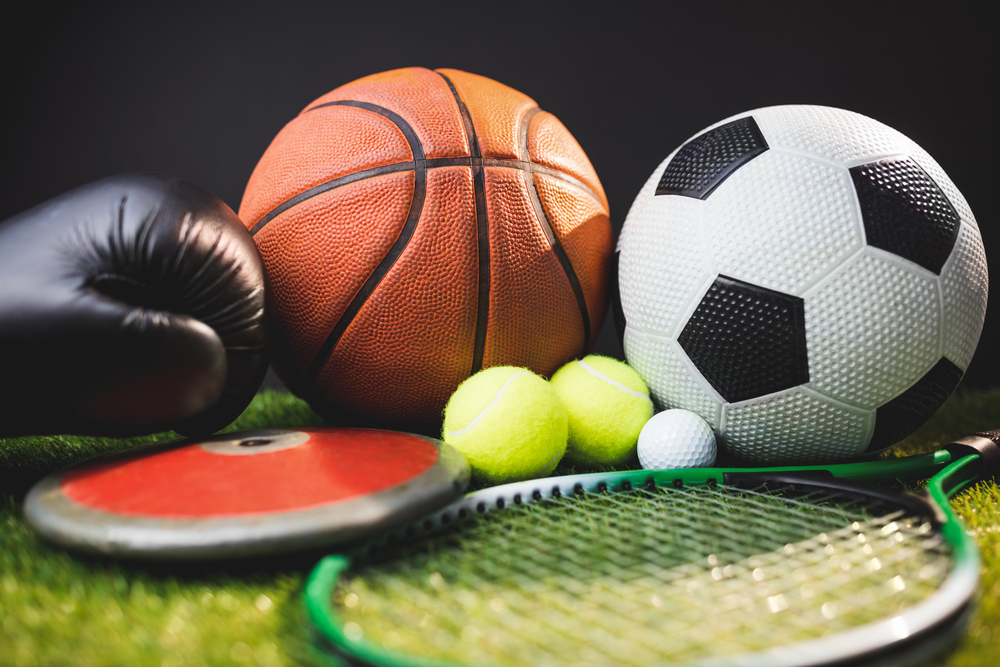
Whether it is a sanctioned school sport, or simply a pickup game at the local park, it is important to keep you and your kids safe. Sporting eye injuries account for nearly 40,000 injuries every year, and 90% of those are preventable. When you strap on the sports gear, make sure protective eye wear is part of your uniform.

Various sports fall into one of three different categories: low risk, high risk, and very high risk. Depending on the risk level of your sport, it will dictate which protective eye wear you need.

Low risk sports include sports which do not use a ball, pick, stick, racquet, or bat and do not involve body contact. Some examples of low impact sports are track and field, cycling, gymnastics, swimming.

Medium risk sports are sports that use a ball, pick, bat, stick, or racquet and or involve some body contact. Some sports that are considered high risk include baseball, basketball, hockey, racquet sports, fencing, water polo, lacrosse, and football.

High risk sports involve body contact. Some sports included in this category are boxing, wrestling, and contact martial arts.

Blunt force trauma, penetrating injuries and radiation injury are among the most common types of injuries that are sustained during sporting activity.

Blunt force trauma occurs when something hits a person in the eye, or around the eye. This is one of the most common types of injuries for sports. Some of the most common types of blunt force trauma injuries include an orbital blowout (a fracture of the bone surrounding the eye its self) a ruptured globe (broken eyeball), detached retina (damage to the retina which is responsible for helping you to see) or bruising of the eye or eyelid (a black eye).

Penetrating injuries are when something cuts into your eye. These injuries are much less common. The most common type of penetrating injuries occur when the glasses that you are wearing break and a piece of the glass enters your eye. Other injuries can occur when someone inadvertently pokes you in the eye with their finger, or something such as a fishing hook gets caught in your eye. These cuts can range in the severity and depth depending on how invasive the foreign object is.

Radiation injuries are when the eye is exposed to ultraviolet light for long periods of time. This injury is often seen in sports where the sunlight reflects off of a surface such as snow skiing, water skiing or other water and snow sports.

While not every injury is preventable, taking the proper precaution and wearing the proper eye wear will minimize the risk. Have questions about which protective eye wear is best for you? Give our office at call at 742-443-6767 or 724-226-0444.

About the author: John D. Bissell, owner of Bissell Eye Care and Tri-State Low Vision Services, offers comprehensive eye examinations for the entire family, ocular disease detection and treatment, eye glasses, sun glasses, active wear, contact lenses, and low vision examinations for those with significant vision loss. He has undergone specialized training for treatment of low vision by the International Academy of Low Vision Specialists utilizing customized telescopic eyeglasses, prisms and telescopic implants for patients who qualify. The practice accepts most types of vision and health insurance plans.

children's eye exam

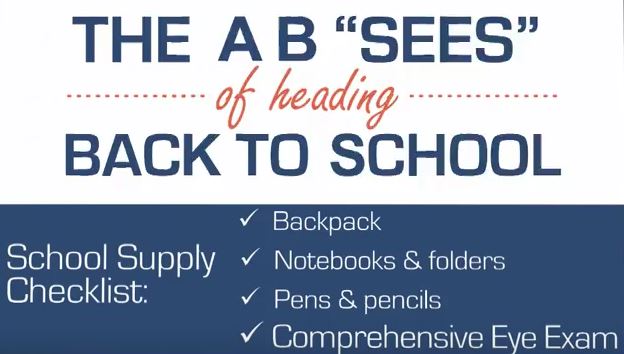
THE AB – ‘SEES’ OF BACK TO SCHOOL

children's eye exam
Children’s eye exams before the start of school can make a difference all year long!

It’s been a great summer, but kids and parents are gearing up for a new school year.  Whether it’s the first time attending preschool or kindergarten, it’s important to make Eye Exams a Back-to-School Tradition.

According to the American Optometric Association, 49% of parents have not had an eye exam on their children who are under six years of age, by an optometrist.  A comprehensive eye exam is different that the eye screenings done by your pediatrician and/or school nurse.

Although a child may have 20/20 vision, they may experience a vision problem that could impact their ability to learn.  Even if there are no complaints over the summer about blurry vision or headaches, children still need to have frequent eye exams. Just like their bodies are rapidly growing, children’s eyes are changing, as well.

Having clear vision is an essential part of the school experience, because so much of learning is visual. An undiagnosed eye problem could result in an academic setback in just a few short months. Some behavior problems could be linked to vision issues.  These students may seem uninterested or unfocused in school when in actuality they simply cannot see clearly.

Eye issues such as strabismus (misaligned eyes), astigmatism or amblyopia (lazy eye) are also detectable through an eye exam. For some eye conditions, vision can be permanently affected if the problem is not corrected. Regular exams mean earlier diagnosis and earlier treatment.

Myopia, or nearsightedness, is a common condition in children, which often develops around the age of 6 or 7. This condition results when the cornea is curved too much or when the eye is longer than normal. When light comes into the eye, it is focused in front of the retina instead of directly on the retina and the child’s vision is blurred.

Nearsightedness can worsen rapidly, especially between the ages of 11 and 13, which means that an eye prescription can change dramatically over a short period of time. Changing eyesight is not a reason for worry, and vision tends to stabilize in the later teenage years and early twenties. During the growing years, it is important to make regular eye appointments with your child’s eye doctor. Making comprehensive eye exams a part of your back-to-school tradition guarantees that your children’s eyes are examined at least once every year.

Even a small change in vision can cause eye strain, headaches or blurred vision, which can be very distracting while in school. Staying consistent with eye exams will help your children to have clear vision and be able to concentrate and perform to the best of their ability.  Start your child on the right track to learning with clear vision.  From the doctors and staff at Bissell Eye Care, we wish you the best in the upcoming school year!

About the author: John D. Bissell, owner of Bissell Eye Care and Tri-State Low Vision Services, offers comprehensive eye examinations for the entire family, ocular disease detection and treatment, eye glasses, sun glasses, active wear, contact lenses, and low vision examinations for those with significant vision loss. He has undergone specialized training for treatment of low vision by the International Academy of Low Vision Specialists utilizing customized telescopic eyeglasses, prisms and telescopic implants for patients who qualify. The practice accepts most types of vision and health insurance plans.

BIONIC EYE BRINGS SIGHT

Prostheses come in many forms; limbs, cochlear implants, dental implants and now the bionic eye is making its mark and a difference.

A visual prosthesis, often referred to as a bionic eye, is an experimental visual device intended to restore functional vision in those suffering from partial or total blindness. In 1983, Joao Lobo Antunes, a Portuguese doctor, implanted a bionic eye in a person born blind. Many devices have been developed, usually modeled on the cochlear implant or bionic ear devices, a type of neural prosthesis in use since the mid-1980s. The idea of using electrical current (e.g., electrically stimulating the retina or the visual cortex).

The entire system runs on a battery pack that is housed with the video processing unit. When the camera captures an image — of, say, a tree — the image is in the form of light and dark pixels. It sends this image to the video processor, which converts the tree-shaped pattern of pixels into a series of electrical pulses that represent “light” and “dark.” The processor sends these pulses to a radio transmitter on the glasses, which then transmits the pulses in radio form to a receiver implanted underneath the subject’s skin. The receiver is directly connected via a wire to the electrode array implanted at the back of the eye, and it sends the pulses down the wire.

The electrical signals generated by the stimulated electrodes then travel as neural signals to the visual center of the brain by way of the normal pathways used by healthy eyes — the optic nerves. In macular degeneration and retinitis pigmentosa, the optical neural pathways are not damaged. The brain, in turn, interprets these signals as a tree and tells the subject, “You’re seeing a tree.”

Just as muscles need retraining following an accident or surgery; it takes some training for patients to actually see a tree. At first, they see mostly light and dark spots. But, they learn to interpret what the brain is showing them, and they eventually perceive that pattern of light and dark as a tree.

There have been two versions of the system created, each version containing substantially more electrodes to enable patients to perceive shapes and detect movement.  Researchers are already planning a third version that has a thousand electrodes on the retinal implant, which they believe could allow for facial-recognition capabilities.   Until then, we believe patients prefer seeing outlines and shapes, right now than nothing at all.

Click here to view a video on how a bionic eye helped a man with impaired vision.  The article is provided by Gillian Mohney with ABC NEWS: “Bionic Eye Helps Man See After Decade of Impaired Vision” 

About the author: John D. Bissell, owner of Bissell Eye Care and Tri-State Low Vision Services, offers comprehensive eye examinations for the entire family, ocular disease detection and treatment, eye glasses, sun glasses, active wear, contact lenses, and low vision examinations for those with significant vision loss. He has undergone specialized training for treatment of low vision by the International Academy of Low Vision Specialists utilizing customized telescopic eyeglasses, prisms and telescopic implants for patients who qualify. The practice accepts most types of vision and health insurance plans.