


Stargardt Disease in Children – Causes, Symptoms, and Low Vision Treatment Options
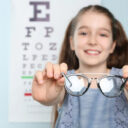
Has your child or teenager complained about blurry vision? Do they notice dark or blank spots when looking at a computer screen or reading a book? Maybe they struggle to recognize faces or see colors clearly. If this sounds familiar, your child may have a condition called Stargardt disease.
What Is Stargardt Disease?
Stargardt disease is an inherited form of macular degeneration, often called juvenile macular degeneration. It is a congenital condition that typically affects children and adolescents, most commonly appearing between the ages of 6 and 12, although it may be present at birth.
The disease affects the macula, the part of the retina responsible for sharp, central vision. When the macula is damaged, the eye cannot properly process light, leading to reduced visual clarity. Young patients often struggle with central vision, color recognition, reading, and seeing clearly in low-light environments.
Treatment for Stargardt Disease
Currently, there is no cure for Stargardt disease. However, low vision glasses and assistive devices can help patients make the most of their remaining vision.
Devices such as handheld magnifiers and telescopic lenses can enlarge images and text, making everyday tasks easier. Some low vision aids can be worn over glasses and are especially helpful for schoolwork, computer use, and smartphones. These tools allow children to read, write, and study more comfortably.
How Stargardt Disease Causes Low Vision
Damage to the macula interferes with how visual information is sent from the eye to the brain. As a result, the brain cannot clearly interpret what the eyes see.
Common symptoms include:
- Blurry or distorted vision
- Dark or blank spots in central vision
- Light sensitivity
- Difficulty seeing colors and contrast
Vision loss often progresses rapidly at first and then stabilizes. Any vision loss can be challenging, but for children and young adults, it can feel especially overwhelming. We understand the emotional impact this condition can have and are committed to helping your child adapt and thrive.
How We Can Help
Stargardt disease can affect many areas of a child’s life, including schoolwork, sports, and learning to drive. Our goal is to help your child remain independent and successful in school, activities, and daily life.
Through personalized low vision evaluation with Dr. Bissell, a low vision specialist, he can recommend specialized devices that can enhance your child’s functional vision and help them continue doing the things they enjoy.
A Better Quality of Life for Your Child
With the right tools, training, and care, children with Stargardt disease can continue to learn, play, and participate fully in life. Dr. Bissell and the staff at Bissell Eye Care are here to provide guidance, solutions, and ongoing support to help your child achieve the best possible quality of life.
About Bissell Eye Care: John D. Bissell, OD, is the owner of Bissell Eye Care, proudly serving the Northern Pittsburgh and Alle-Kiski Valley regions. Dr. Bissell has received advanced training through the International Academy of Low Vision Specialists, enabling him to help patients living with vision impairment and low vision challenges. With two convenient office locations and evening appointments available, Bissell Eye Care offers comprehensive eye exams for the entire family—starting as young as six months. Our services include ocular disease detection and treatment, prescription eyeglasses and sunglasses, specialty activewear eyewear, contact lenses, and dedicated low vision evaluations for those with significant vision impairment and vision loss. We accept most vision and health insurance plans. To learn more, visit bisselleyecare.com or call our Bakerstown office at 724-443-6767 or our Natrona Heights office at 724-226-0444.