
Dry Eyes and Healthy Aging

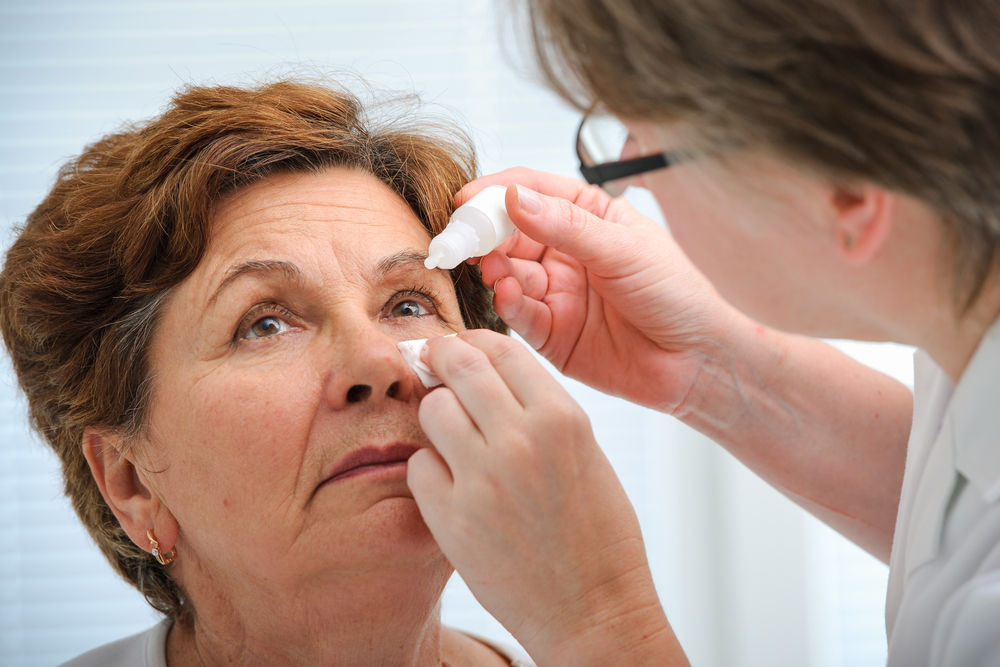
Eye drops for dry eyes

We’re rolling into another season of the year as summer winds down and the nights are getting dark earlier. September is National Healthy Ageing Month and we want to point out some advantages of annual exams and health visits. When it comes to your vision many diseases can be slowed down, stopped, or even reversed if caught early. Having routine screenings helps to give a baseline for your doctor to better be able to notice changes in your eyes.

If your eyes aren’t giving you any discomfort, they may become a second thought. However, a condition called dry eye can become unpleasant, painful and create a gritty feeling as well as blurred vision. Based on data from the National Health and Wellness Survey, 6.8 percent of the United States adult population (approximately 16.4 million people) have been diagnosed with Dry Eye Disease with women more likely to develop dry eyes after menopause.

Tears are made up of three layers. The layer closest to the cornea is a thin mucus that helps tears adhere to the surface. The middle layer contains the watery portion of the tears. The outer layer is composed of fatty oils. A proper mix helps maintain healthy tears, which coat and lubricate the eyes, nourish cells, wash away dust and other irritants to ward off infection and keep the surface smooth so you can see clearly.

Certain medical conditions can impact our tear function, triggering dry eye — among them, systemic autoimmune diseases (such as rheumatoid arthritis and lupus), as well as diabetes, strokes and thyroid problems. Antihistamines, decongestants, blood pressure medications, antidepressants, and anti-anxiety medication, and hormone replacement therapy to relieve symptoms of menopause can also lead to dry eyes.
If you suffer from dry eyes, these tips can help alleviate dry eye symptoms:

  • Take a tech break – using the 20 20 20 rule. Look away from the screen every 20 minutes, focusing on something 20 feet in the distance for at least 20 seconds.
  • Increase moisture in your environment with the use of a humidifier.
  • Protect your eyes from nature’s elements with wrap-around frames to protect from wind, frigid temps and bright sunlight.
  • Limit contact usage by switching to daily disposable lenses or wear glasses
  • Over-the-counter eye drops may provide some relief but prescription artificial tears may add relief if over the counter options don’t work.
  • Clean eyelids regularly with a mild cleanser or eyelid scrub such as Ocusoft.

Vision loss is not always noticeable immediately. Many times an individual can lose a significant amount of vision before it becomes noticeable. When vision loss is detected early, the person stands a much greater chance of being able to slow down or even prevent their vision loss.

Medical screenings are important too. Annual physicals, bloodwork, and regular cancer screenings can be a pivotal point of identifying a problem and taking the proper steps to treat it. These screenings also provide peace of mind that you are as healthy as you can be.

Diet and exercise also play in role in healthy aging. It’s easy to come home from a long day at the office, run through the take out window and grab a quick bite. Taking time to plan and cook meals on the weekend allows for better eating habits and healthier food all around.

Put regular exercise into your routine that will help shed some unwanted pounds. Take a walk at lunch or right after work if you can. As we grow older, gone are the responsibilities of running kids to their various activities. Make taking care of yourself the priority and put exercise into your calendar.

While we, at Bissell Eye Care, focus on vision and helping our patients to see to the best of their ability, we want to stress that importance of not just routine eye appointments, but all suggested medical appointments and screenings. As we age it becomes more important than ever to take care of yourself. The quality of our lives as we age, will depend on what we do today.

About Bissell Eye Care: John D. Bissell, OD owns and operates Bissell Eye Care servicing Northern Pittsburgh and Alle-Kiski Valley regions. With two locations to treat patients, we offer evening and Saturday appointments. Bissell Eye Care provides comprehensive eye examinations for the entire family beginning as early as 6 months, ocular disease detection and treatment, eyeglasses, sunglasses, activewear, contact lenses, and low vision examinations for those with significant vision loss. We accept most types of vision and health insurance plans. For more information, visit bisselleyecare.com or call our Bakerstown Office at 724-443-6767 or Natrona Heights office at 724-226-0444.

IS SCREEN TIME CREATING DIGITAL EYE STRAIN IN CHILDREN?

You’ve probably felt it before after a long day looking at your computer screen or spending too much time on your smart phone – digital eye strain. Perhaps your child received a new electronic device for Christmas and now they seem glued to the new tablet or phone. Did you know that your kids could be dealing with digital eye strain too?

Between school and home, kids are using tablets, smartphones, computers, and other digital devices at an alarming rate. In fact, they’re probably getting more digital device time than you are. All that computer usage at school along with hours of video games, surfing social media on smartphones and watching television could be damaging the eyes of your children.

EYE STRAIN IS TOUGH ON DEVELOPING EYES IN YOUNG CHILDREN

Eye strain is bad for the eyes, but it’s particularly tough on the eyes of a child because they are still developing. When kids deal with eye strain, they may deal with symptoms like blurry vision, problems shifting their focus to items in the distance, eye fatigue, back and neck pain, headaches, and eye dryness.

Kids often make the mistake of holding their smartphone or tablet too close to their eyes. Doing this often can result in digital eye strain. To reduce strain on the eyes, a screen should be an arm’s length away from the eyes.

Not knowing the difference, children are more likely to deal with digital eye strain because they’re often unaware that they’re having problems. Kids may not realize how much time they spend looking at a screen. They lack the ability to know when to take a break from the screen which can result in eye strain and dry eyes. Since children usually think that everyone sees the same way they do, their vision problems are often left undetected and untreated.

Too much screen time can result in digital eyestrain, which can include burning, itchy, or tired eyes. Headaches, fatigue, blurred or double vision, loss of focus, and head and neck pain are other threats for children using screens too often and too long.

TIPS TO PREVENT EYE STRAIN

  • Monitor Screen Time. Since spending a lot of time looking at digital screens can be tough on a child’s eyes, it’s important to limit digital device time to prevent eye strain.
  • Exercise. Get kids outside regularly. They’re less likely to develop nearsightedness if they spend more time playing outside. When your kids do use digital devices, ensure they’re taking regular breaks.
  • Take Breaks. Every 20 minutes, teach your child to look away at their screen at something that’s about 20 feet away. Ask your child to remember to blink. This gives the eyes a break and reduces the risk of digital eye strain.
  • Ergonomics. Screen positioning. Make sure the screen on your child’s desktop or laptop computer is slightly below eye level. Looking up at a screen opens eyes wider and dries them out quicker.
  • Sleep. Not getting enough shut-eye leads to tired, sore eyes. The American Association of Pediatrics (AAP) recommends children not sleep with devices in their bedrooms, including TVs, computers, and smartphones. In addition, the AAP recommends avoiding exposure to screens for 1 hour before going to bed. Using devices past bedtime, especially for violent video games or shows, can interfere with sleep. Studies also suggest the blue light given off by screens might also make it difficult to sleep.

It’s important to schedule routine eye exams for your kids to ensure their eyes are healthy and developing as they should. Regular eye care now can ensure your child has healthy vision for life. For questions or concerns regarding your child’s eye health, or to schedule an appointment, call our offices at 724-443-6767 or 724-226-0444.

About the author: John D. Bissell, owner of Bissell Eye Care and Tri-State Low Vision Services, offers comprehensive eye examinations for the entire family, ocular disease detection and treatment, eye glasses, sun glasses, active wear, contact lenses, and low vision examinations for those with significant vision loss. He has undergone specialized training for treatment of low vision by the International Academy of Low Vision Specialists utilizing customized telescopic eyeglasses, prisms and telescopic implants for patients who qualify. The practice accepts most types of vision and health insurance plans.

EYE STRAIN AND TECHNOLOGY

Has the extreme cold of the winter kept you and your kids indoors more than usual? If so, you have probably realized that they are spending more time on their smart phones, iPad, computers, or on their gaming systems, keeping themselves occupied while trying to combat cabin fever.

New studies show that this increased of use of technology could be causing eye strain for your kids. This eye strain can cause your children to experience things such as headaches or blurry vision.

If your children are like many, they use their iPad on long car trips, a smartboard at school, and seemed to have grown an appendage out of their hand that looks an awful lot like an iPhone. This is just everyday life for them. But as parents, we need to limit their time on the screens.

Some of the symptoms to watch out for in your kids that point to eye strain are:

  • Blurry vision
  • Double vision
  • Headaches
  • Dry, sore eyes

It is important to teach your children how to take a break from technology. Here are a few ways to help ease eye strain.

  • Make time for other activities. Exercise is obviously one of the best activities for your children to do; however, simply spending time away from the screen is important, whether it’s going for a walk or cleaning their room. Board games for some family time are a great alternative.
  • Proper distance. Your child should not be right up against the screen. If you find they are constantly sitting close to the TV or have their phone/iPad in their face it might be an indicator that they are having trouble seeing.
  • Blink often. When children, even teens, stare at a screen for long periods of time they have a tendency to blink less often. This can cause the eyes to dry out and may cause discomfort and pain. Be sure to remind them that even when they are intently focused on the screen that it is important to blink.
  • Look away. A good rule of thumb is the 20-20-20 rule…for every 20 min of use you should be looking away from the screen for at least 20 seconds and focus on an object that is 20 feet away. This gives your eyes a chance for a break so that they are able to focus better.

As with anything else, the key to vision health is moderation. While playing on the iPad will not immediately hurt your child’s vision or cause discomfort, prolonged over usage will lead to eye discomfort and may lead to eye difficulties.

About the author: John D. Bissell, owner of Bissell Eye Care and Tri-State Low Vision Services, offers comprehensive eye examinations for the entire family, ocular disease detection and treatment, eye glasses, sun glasses, active wear, contact lenses, and low vision examinations for those with significant vision loss. He has undergone specialized training for treatment of low vision by the International Academy of Low Vision Specialists utilizing customized telescopic eyeglasses, prisms and telescopic implants for patients who qualify. The practice accepts most types of vision and health insurance plans.

TECHNOLOGY ADDICTION

Group of young hipster friends playing with smartphone with mutual disinterest towards each other – Modern situation of technology interaction in alienated lifestyle – Internet wifi connection

Are you a compulsive phone checker? Did you know the average person checks their phone 27 times a day? Couple that with time spent at work or school on the computer and you could be headed for overload. Let’s not forget to add time spent on a variety of social media channels such as Facebook and Pinterest. Did you know, according to Business Insider, Facebook CEO, Mark Zuckerberg states, “the average Facebook user spends about 40 minutes a day?It’s no wonder we have headaches and our eyes hurt.

Have you ever felt discomfort in your eyes after using you smart phone computer or tablet? This is a growing trend that is being seen as the popularity of these devices rise. While there is no link to long term effect on the eyes with the use of these devices, overuse can lead to short term eye discomfort, tension headaches, dry eye and eye strain.

While these devices have helped to make everyday life easier, they can also cause discomfort and eye pain through their usage. Staring at a small bright screen for long periods of time can have negative short term effects on your eyes. It is especially important to try and limit technology use in young children.

Tension headaches are one of the leading complaints that patients experience when they spend large amounts of time looking at screens close up with high contrast differences. In other words reading dark print on a bright background can cause the muscles in your eyes to spasm. These muscles are located near your temples (the soft spot in between your eye and ear). Many devices developed for reading such as the Kindle or Noble Nook display black text on a gray background. These colors are shown to have less of a strain on the eye causing less irritation to the reader. When using your smart devices, turning down the brightness can help to reduce the strain as well, as your eyes are not forced to focus on bright light with vast differences in colors.

When you look at objects in the distance, your eyes automatically blink more keeping them moist. As you start to focus on objects that are close to you, the eyes blink less and become dry. Your eyes blink less because they are working harder to pick up all of the detail of what you are focusing on.

As you focus on objects closer to you, your eyes not only blink less but have to work harder. The pupils become smaller, and the muscles in the eyes adjust which forces them to work harder. When you spend hours on a hand held device, your eye muscles are forced to work harder which causes stain on your eye muscles. One way to overcome this is by looking away from the screen every so often and allowing your eyes to focus on an object far away. This will cause the eye muscles to relax and reduce the strain that constant focus on objects close up can cause.

Enjoy your technology, but be smart about overuse and long-term effects of eye strain. Monitor young children and be attune if they complain of dry eyes or headaches. Be sure to give your eyes a break every now and lower your brightness on mobile devices. Happy web surfing!

About the author: John D. Bissell, owner of Bissell Eye Care and Tri-State Low Vision Services, offers comprehensive eye examinations for the entire family, ocular disease detection and treatment, eye glasses, sun glasses, active wear, contact lenses, and low vision examinations for those with significant vision loss. He has undergone specialized training for treatment of low vision by the International Academy of Low Vision Specialists utilizing customized telescopic eyeglasses, prisms and telescopic implants for patients who qualify. The practice accepts most types of vision and health insurance plans.

RELIEF FROM COMPUTER EYE STRAIN

Are your eyes tired from working too long at your computer? Do you see your kids rubbing their eyes after staring at a tablet or laptop too long? Additional health problems such as physical fatigue, decreased productivity and increased numbers of work errors, to minor annoyances like eye twitching and red eyes can occur from eye strain.

Eye strain isn’t limited to those in the workforce. With advanced placement classes at school and time spent playing games on the computer, many children suffer from eye strain too. Take these steps to help alleviate the problem.

    1. Schedule a comprehensive eye exam and share with your doctor how much you use the computer at work and at home.
    2. Use proper lighting to help minimize eye strain which can often be caused by excessively bright light either from outdoor sunlight coming in through a window or from harsh interior lighting. The use of drapes or blinds can help to eliminate exterior light and using fewer light bulbs, a desk lamp, floor lamp or fluorescent tubes can help minimize interior lighting.
    3. Minimize glare by installing an anti-glare screen on your monitor and, if possible, paint bright white walls a darker color with a matte finish.
    4. Upgrade your screen by replacing your old tube-style monitor with a flat-panel liquid crystal display (LCD), like those on laptop computers. When choosing a new flat panel display, select a screen with the highest resolution possible. Resolution is related to the “dot pitch” of the display. Generally, displays with a lower dot pitch have sharper images. Choose a display with a dot pitch of .28 mm or smaller.
    5. Adjust your computer display settings for brightness, text size, contrast and color temperature. For Microsoft Windows operating system display settings are found in the Control Panel. Apple users can find them in the Systems Preferences.
    6. Blink more often to moisten your eyes and prevent dryness.
    7. Avoid fatigue by exercising your eyes and looking at a distant object to refocus eye muscles.
    8. Take frequent breaks to not only rest your eyes, but your neck, back and shoulders as well.
    9. Using ergonomic furniture or a stand to hold papers can help to modify your workstation and avoid eye strain.
    10. Consider computer eyewear for extensive computer work. Individuals might benefit from having your eye care professional modify your eyeglasses prescription to create customized computer glasses. This is especially true if you normally wear contact lenses, which may become dry and uncomfortable during sustained computer work.

Experiencing regular eye strain isn’t normal. If you or your family suffer from eye strain, take steps to modify your environment, avoid extensive time infront of a computer screen without taking a break and be sure to have regular eye exams.

About the author: John D. Bissell, owner of Bissell Eye Care and Tri-State Low Vision Services, offers comprehensive eye examinations for the entire family, ocular disease detection and treatment, eye glasses, sun glasses, active wear, contact lenses, and low vision examinations for those with significant vision loss. He has undergone specialized training for treatment of low vision by the International Academy of Low Vision Specialists utilizing customized telescopic eyeglasses, prisms and telescopic implants for patients who qualify. The practice accepts most types of vision and health insurance plans.