
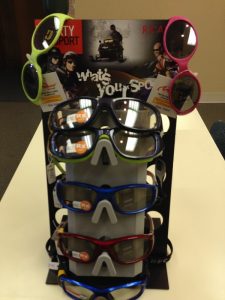
Bissell Eye Care, Sunglasses

ARE YOUR SUNGLASSES REALLY PROTECTING YOUR EYES?

Bissell Eye Care, Sunglasses
We offer a variety of ‘safe’ sunglasses!

As summer approaches it is time to break out those sunglasses and head to the pool or jump in the car to go watch your favorite sporting event. In either case as you rush past the mirror you catch a quick glimpse of yourself and stop taking a moment to ensure that you are up with the newest fashion trends before heading on your way. That’s when it hits you, time for a new pair of sunglasses to help maintain the new fashionable look.

Buying a pair of sunglasses that offer little more than looks and some shade for your eyes can not only fail you at blocking out the proper amount of sunlight, but they can also cause short term and long term damage to your eyes. Bissell Eye Care carries a full line of RXable (either prescription or nonprescription) sunglasses in a variety of styles and colors. Did you know that buying the right pair of sunglasses can help to ensure your vision well into the future?

With May being Ultraviolet Awareness Month, I want my readers to learn the importance of wearing not just any pair of sunglasses but the right pair of sunglasses. Your eyes, just like your skin, are vulnerable to not only the UV rays that are given off by the sun but also by the blue light that the sun produces. Some damages from UV rays and blue light include but are not limited to:

  • Ultraviolet damage can include:
    • Photokeratitis which is often referred to as snow blindness or sunburn of the eye. This is usually a short term but can be very painful.
    • Long term effects of UV exposure can include but are not limited to cataracts, cancer of the eyelids, eye, or surrounding areas and a condition known as Pterygium. Pterygium is a condition where the covering of the white of the eye grows onto the cornea.
  • Blue light damage can include:
    • Blue light has been shown to cause damage to the retina which can lead to macular degeneration which is the leading form of blindness. Macular degeneration can cause difficulty to see at night, read, recognize people and faces and even can cause total loss of vision.

When looking for a new cool pair of shades there are a couple different qualities that you should look for to not only stay fashionable but to also help protect your eyes from both short term and long term damage.

  • Ensure the lens is 99-100% resistant against UV rays.
  • Polarized lenses block out not only direct rays from the sun but also light reflecting off surfaces such as water, snow or reflective metals.
  • Blue light blocking.
  • Photo Chromic lenses adjust with the light and can be a compromise from buying dark lenses allowing you to see well in different level of brightness.
  • Wrap around frames and lenses help to block out the light from all angles providing the best protection for your eyes.

Remember this summer as you grab the keys running out the door to go enjoy the nice weather the effects the sun has on our bodies. It is important to protect not only your skin but also your eyes. If you have any questions about proper eye protection stop in and see us so we can help you ensure you enjoy your summer and seeing all it has to offer!

About the author: John D. Bissell, owner of Bissell Eye Care and Tri-State Low Vision Services, offers comprehensive eye examinations for the entire family, ocular disease detection and treatment, eye glasses, sun glasses, active wear, contact lenses, and low vision examinations for those with significant vision loss. He has undergone specialized training for treatment of low vision by the International Academy of Low Vision Specialists utilizing customized telescopic eyeglasses, prisms and telescopic implants for patients who qualify. The practice accepts most types of vision and health insurance plans.

ALLERGIES AND EYE INFECTIONS

Have your eyes started to water? Do you feel your nose starting to get stuffed up again? It’s that time of the year, the time when the weather gets warmer, you want to get outside and all the plants and trees start to bloom. As spring approaches learn how to help prevent symptoms and avoid eye infections.

Among eye infections associated with allergies, pink eye is one the most common. Pink eye is inflammation of the thin, clear covering of the white of the eye and the inside of the eyelids. While this part of the eye is clear it contains small blood vessels. When an infection occurs these blood vessels dilate, giving the eye the red color. It is more frequently experienced with people who are in close proximity to others such as students, school workers, daycare workers and medical professionals.

Types of Pink Eye

  • Allergic: This form of pink eye may be associated with pollen but can also be flared up by dust or pet dander
  • Bacterial: Bacterial pink eye is caused by bacteria entering the eye. It can cause serious damage to the eye if left untreated.
  • Viral: Caused by a virus similar to the common cold. This is the most contagious form but will usually clear up on its own in a few days without medical treatment.

Treatments

  • Allergic: Allergy medications can often help to prevent or shorten the duration of the infection. It is a common practice to start the medication prior to allergy season or known flare ups.
  • Bacterial: An optometrist appointment is necessary and they will prescribe eye drops.
  • Viral: This form will run its course over several days requiring no medical treatment. Using a cold wet compress will help relieve some of the symptoms do not to share this compress as the viral form is the most contagious.

As we approach spring and allergy season follow these tips to help prevent eye infections.

Prevention

  • Avoid sharing items such as washcloths, tissues, or towels.
  • Avoid rubbing or touching your eyes after covering your mouth to cough or sneeze.
  • Never share contact lenses with anyone.
  • If you experience seasonal allergies consult your doctor on how to minimize symptoms.
  • Remove contacts before using a hot tub, being in water, and even showering.
  • Wash hands frequently, especially in areas of high public traffic (schools, daycares, public places).

If you do experience an infection don’t hesitate to contact the doctors at Bissell Eye Care to confirm if you will need medication to help combat the infection and prevent future eye damage.

About the author: John D. Bissell, owner of Bissell Eye Care and Tri-State Low Vision Services, offers comprehensive eye examinations for the entire family, ocular disease detection and treatment, eye glasses, sun glasses, active wear, contact lenses, and low vision examinations for those with significant vision loss. He has undergone specialized training for treatment of low vision by the International Academy of Low Vision Specialists utilizing customized telescopic eyeglasses, prisms and telescopic implants for patients who qualify. The practice accepts most types of vision and health insurance plans.

ARE BIFOCAL CONTACT LENSES RIGHT FOR YOU?

Do you have a separate pair of glasses for reading; or, do you rely on bifocals in order to see both near and far? Some people find that they struggle to read newspapers, books or menus and must hold them further away to be able to see the print better. If that is the case, it may be time to look at contacts again. Bifocal contact lenses are great for people with active lifestyles that do not want to be chained to their reading glasses.

The perception is that as your vision gets worse you must have bifocals or reading glasses but there may be a better option. There are several different types of contacts that can be used to replace your need for reading glasses or bifocals.

The main vision disorder that multifocal and bifocal lenses are used for is presbyopia – a condition that happens as we age that affects our ability to focus on objects which are near. For instance, if tasks such as threading a needle or reading your favorite book have become nearly impossible without the help of reading glasses, then you may be suffering from this condition. The doctors at Bissell Eye Care can give a proper diagnosis as well as help you find the best treatment options.

Bifocal and multifocal lenses come in both soft and rigid gas permeable materials. They also come in a hybrid form. This means that the contacts have the option to be used and disposed of at set times, and can be daily wear lenses in some cases.

What Is The Difference

Bifocal contact lenses have two different prescriptions in the same lens. They are similar to bifocal glasses where the top half is used for seeing far while the bottom is used for seeing close. A segmented bifocal, and sometimes also referred to as an alternating or translating bifocal, places the near vision prescription in the lower part of the lens. The normal, distance prescription is in the rest of the lens.

How Multifocal Contact Lenses Work

Multifocal contacts have a range of powers in each lens and are designed two different ways.

  1. Simultaneous Vision. This option is set up so your eye looks through both near and far at the same time. Your brain adapts and allows focus on either the near or far prescription depending on the distance of the object.
  2. Alternating Vision. In the alternation set up is more like a bifocal glasses design. It allows your pupil to move up or down as necessary to get the proper focus.

If you’re tired of carrying around two pair of glasses or are always searching for a pair of reading glasses, consider giving bifocal and multifocal contact lenses a try. Patients report feeling “free” of their heavy glasses, and are able to enjoy activities such as sports more easily. Those who once thought they could never benefit from contact lenses now have a second chance.

Remember that as you begin to rely on reading glasses for tasks of everyday living, that there are alternatives to the standard bifocal glasses. As technology continually finds new ways of improving vision patients realize new alternatives to seeing well into the future.

About the author: John D. Bissell, owner of Bissell Eye Care and Tri-State Low Vision Services, offers comprehensive eye examinations for the entire family, ocular disease detection and treatment, eye glasses, sun glasses, active wear, contact lenses, and low vision examinations for those with significant vision loss. He has undergone specialized training for treatment of low vision by the International Academy of Low Vision Specialists utilizing customized telescopic eyeglasses, prisms and telescopic implants for patients who qualify. The practice accepts most types of vision and health insurance plans.

SEEING SPORTS THROUGH DIFFERENT EYES

As the snow melts it becomes time to grab the baseball bat and glove, the tennis racket, lacrosse sticks or the volleyball uniform, brush the dust off of those sneakers and get involved in sports. But one important piece of sports equipment that is often forgotten is eye protection. While a sprained ankle or pulled muscle can bother an athlete for a few weeks or even months, an eye injury can be a life changing event that may last forever.

Each year approximately 13,500 sports eye injuries result in the patient becoming legally blind in the injured eye. While there are many causes for loss of sight, eye injuries are the leading cause of loss of vision in one eye. These injuries can be a result of impact from a ball, bat, racket, elbow, or other equipment. They can also come from fingers or other foreign objects entering the eye. Fortunately, you can reduce eye injury probability greatly by using protective eye gear!

HOW YOU CAN HELP TO PREVENT INJURIES

While wearing eye protection is important, it is equally import to be aware of what is protecting you and your children and what can actually be putting them at an increased risk. Wearing glasses, sunglasses, or other non-ASTM (American Society for Testing and Materials) approved glasses can put you at a higher risk for injury. Eye wear that is not specifically designed to help protect your eye can shatter or break. These shards can enter the eye or the area around the eye and make wearing non-approved eye protection more dangerous than wearing nothing at all. Wearing approved goggles or face masks can help to prevent up to 90% of eye related injuries.

Many teens argue that they will not look “cool” if they use eye protection; however, the optical industry has made great strides in fashion in recent years helping to make eye protection more appealing to the younger generations. It is also important to make sure that you are fitted specifically by an eye care professional to make sure that protective eyewear fit properly and are designed for the sport to be played.

Remember this year as you and your children get ready for another fun filled spring season that you can look fashionable while protecting your eyes, and SEE another great season through!

About the author: John D. Bissell, owner of Bissell Eye Care and Tri-State Low Vision Services, offers comprehensive eye examinations for the entire family, ocular disease detection and treatment, eye glasses, sun glasses, active wear, contact lenses, and low vision examinations for those with significant vision loss. He has undergone specialized training for treatment of low vision by the International Academy of Low Vision Specialists utilizing customized telescopic eyeglasses, prisms and telescopic implants for patients who qualify. The practice accepts most types of vision and health insurance plans.

MACULAR DEGENERATION AND LOW VISION DEFINED

Imagine the area around the center of your vision becoming fuzzy and then that fuzziness continues to worsen until you are unable to see clearly. You no longer can function independently and are unable to perform the tasks of daily living such as reading prescription labels, driving or preparing food. That is what happens to people who have Macular degeneration. You may ask what Macular Degeneration is, how can it be cured, or how can I help prevent it?

What is Macular Degeneration?

Macular degeneration is the irreversible destruction of the central area of the retina, known as the macula. It can cause a patient to lose sharpness in vision making it difficult to see fine details. As the disease progresses it can become increasingly difficult for a person to be able to read drive or even recognize faces. Macular Degeneration is most common in people over the age of 60 and is the leading cause of irreversible blindness and visual impairment in the world. There are two forms of this disease, dry and wet macular degeneration. While dry macular degeneration accounts for 90% of diagnoses, wet macular degeneration accounts for 90% of legal blindness. The wet form is considered advanced macular degeneration and is always preceded by the dry form.

Detection

There are several tests that can be performed by eye care professional that specialize in low vision. A dilated eye exam, including a visual acuity test, are tests that an eye specialist will perform to diagnose dry macular degeneration. If wet macular degeneration is suspected they may also perform fluorescein angiography, where the eye specialist uses a dye to detect blood vessels that are leaking. It is important to be seen and tested regularly by an eye care specialist.
Treatment.

Currently there is no cure for dry macular degeneration. If a patient is in the intermediate stage of macular degeneration, a high dosage formula of zinc and antioxidant vitamins may be used to help delay and or possibly prevent the disease from progressing to the advanced stage. Research into treatment for this disease is hopeful to help find a means of prevention and reversal, but have not been able to find one as of yet!

Prevention

While there is no 100% sure way of preventing this disease, there are measures that you can take to help reduce the risk of developing it. The first course of action is to schedule regular eye exams to help in the early detection of macular degeneration and other diseases such as glaucoma.
Studies show that individuals who exercise, eat leafy green foods eating a balanced diet and who maintain a healthy blood pressure reduce their risk of developing macular degeneration; while smoking can greatly increase your risk of developing this disease.

As a member of the International Academy of Low Vision Specialists (IALVS), Dr. Bissell has undergone extensive training to treat patients with low vision. You have one set of eyes, make it a priority to take care of them. Call our office today to schedule your exam.

About the author: John D. Bissell, owner of Bissell Eye Care and Tri-State Low Vision Services, offers comprehensive eye examinations for the entire family, ocular disease detection and treatment, eye glasses, sun glasses, active wear, contact lenses, and low vision examinations for those with significant vision loss. He has undergone specialized training for treatment of low vision by the International Academy of Low Vision Specialists utilizing customized telescopic eyeglasses, prisms and telescopic implants for patients who qualify. The practice accepts most types of vision and health insurance plans.


MACULAR DEGENERATION, FAITH AND HOPE

Macular degeneration (AMD or ARMD)- is a medical condition which may result in blurred or no vision in the center of the visual field. Diagnosis in Opthalmology.

Many people have a vision loss that is not correctable with typical eyeglasses or contact lenses. They’ve lost some vision and are unable to see well enough to participate in activities that are important to them – activities of daily living such as reading, driving, safely walking down a sidewalk and enjoying a sunset. These people are said to have low vision. Eye diseases like macular degeneration, Stargardt’s Disease, diabetic retinopathy and glaucoma, are among the many causes of low vision. Some people have been told that they are legally blind.

Low Vision Optometrists trained through the International Academy of Low Vision Specialists (IALVS) use telescopic glasses to help improve vision loss. With the use of telescopic glasses, they often are able to improve vision and the lives of those affected with vision loss.

There is a wonderful article in Guidepost magazine of how these glasses worked for a set of twins who suffered from Stargardt’s disease (juvenile macular degeneration) since they were teens. The article “Double Vision” by Karen Young shared the journey that Karen and her twin sister, Sharon had with Stargardt’s disease since they were teenagers.

Their progressive vision loss caused them to change their college and career plans. They remained positive and were sustained by their faith and live very full lives. Both married and have children. A friend told them of a low vision optometrist who prescribed low vision reading glasses. “For the first time in thirty years we could read” says Karen.

As a trained IALVS Optometrist, it is one of the most rewarding experiences to watch someone regain the ability to read a book, watch TV or walk safely down a sidewalk without fear of injury. Low Vision appointments last longer than regular appointments due to the additional time needed to test various telescopic prescription lenses. The glasses are not covered by insurance with costs starting at $500. But, it’s a small price to pay for independence.

These sisters are experiencing a better quality of life and have new goals in mind as a result of their low vision glasses. If you know of someone who suffers from vision loss that isn’t correctable with typical eyeglasses, we may be able to help. To learn more about low vision, visit Tri-State Low Vision – a division of Bissell Eye Care or call 1-855-552-2020.

About the author: John D. Bissell, owner of Bissell Eye Care and Tri-State Low Vision Services, offers comprehensive eye examinations for the entire family, ocular disease detection and treatment, eye glasses, sun glasses, active wear, contact lenses, and low vision examinations for those with significant vision loss. He has undergone specialized training for treatment of low vision by the International Academy of Low Vision Specialists utilizing customized telescopic eyeglasses, prisms and telescopic implants for patients who qualify. The practice accepts most types of vision and health insurance plans.

RELIEF FROM COMPUTER EYE STRAIN

Are your eyes tired from working too long at your computer? Do you see your kids rubbing their eyes after staring at a tablet or laptop too long? Additional health problems such as physical fatigue, decreased productivity and increased numbers of work errors, to minor annoyances like eye twitching and red eyes can occur from eye strain.

Eye strain isn’t limited to those in the workforce. With advanced placement classes at school and time spent playing games on the computer, many children suffer from eye strain too. Take these steps to help alleviate the problem.

    1. Schedule a comprehensive eye exam and share with your doctor how much you use the computer at work and at home.
    2. Use proper lighting to help minimize eye strain which can often be caused by excessively bright light either from outdoor sunlight coming in through a window or from harsh interior lighting. The use of drapes or blinds can help to eliminate exterior light and using fewer light bulbs, a desk lamp, floor lamp or fluorescent tubes can help minimize interior lighting.
    3. Minimize glare by installing an anti-glare screen on your monitor and, if possible, paint bright white walls a darker color with a matte finish.
    4. Upgrade your screen by replacing your old tube-style monitor with a flat-panel liquid crystal display (LCD), like those on laptop computers. When choosing a new flat panel display, select a screen with the highest resolution possible. Resolution is related to the “dot pitch” of the display. Generally, displays with a lower dot pitch have sharper images. Choose a display with a dot pitch of .28 mm or smaller.
    5. Adjust your computer display settings for brightness, text size, contrast and color temperature. For Microsoft Windows operating system display settings are found in the Control Panel. Apple users can find them in the Systems Preferences.
    6. Blink more often to moisten your eyes and prevent dryness.
    7. Avoid fatigue by exercising your eyes and looking at a distant object to refocus eye muscles.
    8. Take frequent breaks to not only rest your eyes, but your neck, back and shoulders as well.
    9. Using ergonomic furniture or a stand to hold papers can help to modify your workstation and avoid eye strain.
    10. Consider computer eyewear for extensive computer work. Individuals might benefit from having your eye care professional modify your eyeglasses prescription to create customized computer glasses. This is especially true if you normally wear contact lenses, which may become dry and uncomfortable during sustained computer work.

Experiencing regular eye strain isn’t normal. If you or your family suffer from eye strain, take steps to modify your environment, avoid extensive time infront of a computer screen without taking a break and be sure to have regular eye exams.

About the author: John D. Bissell, owner of Bissell Eye Care and Tri-State Low Vision Services, offers comprehensive eye examinations for the entire family, ocular disease detection and treatment, eye glasses, sun glasses, active wear, contact lenses, and low vision examinations for those with significant vision loss. He has undergone specialized training for treatment of low vision by the International Academy of Low Vision Specialists utilizing customized telescopic eyeglasses, prisms and telescopic implants for patients who qualify. The practice accepts most types of vision and health insurance plans.

EYE INFECTIONS AND COLD AND FLU SEASON

Woman with watery eyes

Experts are predicting epidemic levels of cold and flu during the upcoming season. It seems like everywhere you turn, someone is sick. For those individuals who received a flu shot your symptoms may not be quite as severe, but we’ve also learned that the flu shot may not be as effective in 2015.

When we think of the flu, things such as body aches, fever, and stomach viruses come to mind but flu season may also bring an unexpected surprise in the form of conjunctivitis most commonly referred to as “pink eye”.

There are three types of conjunctivitis:

1) Bacterial 2) Allergic and 3) Viral Conjunctivitis.

Symptoms that present with conjunctivitis include:

  • Gritty feeling in the eye or both eyes
  • Excessive tearing
  • Itchy or burning sensation
  • Discharge and/or swollen eyelids
  • Pink Discoloration
  • Sensitivity to light

Conjunctivitis is contagious so take these steps to avoid “sharing the joy” with others:

  • Practice good hygiene and teach your children how to properly wash their hands
  • Don’t touch your face with your hands
  • Avoid using cosmetics and eye care items and discard those currently used (particularly mascara) when first diagnosed with conjunctivitis to prevent spreading the infection.
  • Change towels and washcloths daily and avoid sharing with others
  • Avoid wearing contact lenses and dispose of those used at the start of the infection.

Conjunctivitis treatment varies. Topical steroid drops and/or antibiotics based on which type of conjunctivitis you have will be used to treat conjunctivitis. Viral conjunctivitis much like the common cold must run the course and only in severe cases are steroids used.

The best course of action is to schedule an appointment with your optometrist to properly diagnose and treat your infection. At Bissell Eye Care, we also have tests that examine the optic nerve to ensure there’s not an underlying problem that can become more serious.


About the author: John D. Bissell, owner of Bissell Eye Care and Tri-State Low Vision Services, offers comprehensive eye examinations for the entire family, ocular disease detection and treatment, eye glasses, sun glasses, active wear, contact lenses, and low vision examinations for those with significant vision loss. He has undergone specialized training for treatment of low vision by the International Academy of Low Vision Specialists utilizing customized telescopic eyeglasses, prisms and telescopic implants for patients who qualify. The practice accepts most types of vision and health insurance plans.

WHAT YOU SHOULD KNOW ABOUT GLAUCOMA

Did you know over 2.8 million Americans have glaucoma and that number is expected to rise by 50% by the year 2032? Glaucoma is caused by the eye’s failure to maintain the balance of pressure between the internal fluid and the amount of fluid it drains away. High eye pressure caused by this imbalance causes pressure to build up against the optic nerve causing nerve damage.

Damage typically starts in the outside peripheral vision and is often not recognized by patients. A dilated eye exam is necessary to examine the optic nerve. This video from the National Eye Institute explains the importance of regular eye exams and how glaucoma patients are diagnosed and treated.

Treatment generally begins with eye drops. Just as in any other prescribed medication, it’s important to consistently take the drops as prescribed. Since glaucoma symptoms are typically undetected, patients will not realize the damage that can be done without following the prescription.

If your optometrist deems that eye drops aren’t the best course of action, lasers or in extreme cases surgical procedures may be necessary to treat the disease.

Types of glaucoma include:

Chronic (Open Angle) Glaucoma: The most common form. In open angle glaucoma, aqueous fluid drains too slowly and pressure inside the eye builds up. It usually results from aging of the drainage channel, which doesn’t work as well over time. However, younger people can also get this type of glaucoma.

Normal Tension Glaucoma: This is a form of open angle glaucoma not related to high pressure. People with normal tension glaucoma may be unusually sensitive to normal levels of pressure. Reduced blood supply to the optic nerve may also play a role in normal tension glaucoma.

Acute (Angle Closure) Glaucoma: Those of Asian and Native American descent are at higher risk for this form of glaucoma. It occurs when the drainage system of the eye becomes blocked. It causes a sudden rise in pressure, requiring immediate, emergency medical care. The signs are usually serious and may include blurred vision, severe headaches, eye pain, nausea, vomiting or seeing rainbow-like halos around lights.

January is Glaucoma Awareness Month.

If you haven’t scheduled a regular eye exam, now is the time to do so. Call it your New Year’s Resolution to better health. Take action and call our office at 724-443-6767 today!

About the author: John D. Bissell, owner of Bissell Eye Care and Tri-State Low Vision Services, offers comprehensive eye examinations for the entire family, ocular disease detection and treatment, eye glasses, sun glasses, active wear, contact lenses, and low vision examinations for those with significant vision loss. He has undergone specialized training for treatment of low vision by the International Academy of Low Vision Specialists utilizing customized telescopic eyeglasses, prisms and telescopic implants for patients who qualify. The practice accepts most types of vision and health insurance plans.

HAVE YOU SPENT DOWN YOUR FLEXIBLE SPENDING ACCOUNT?

Perhaps you over budgeted for this year’s Flexible Spending Account (FSA) and coming to the end of the year have too much left in the account. Are you taking steps to use up those monies? Depending on your employer and the type of plan you have, left over monies may or may not be eligible to carry over into 2015. So now is the time to act.

Confused on how and what an FSA is? A Flexible Spending Account (FSA) is a tax-favored program offered by employers that allows their employees to pay for eligible out-of-pocket health care and dependent care expenses with pre-tax dollars. By using pre-tax dollars to pay for eligible health care and dependent care expenses, an FSA gives you an immediate discount on these expenses that equals the taxes you would otherwise pay on that money.

In other words, with an FSA, you can both reduce your taxes and get more for your money by saving from 20% to more than 40% of what you would normally pay for out-of-pocket health care and dependent care expenses with after-tax (as opposed to taxed) dollars.

Your participation in any FSA is completely voluntary, and it’s important to remember that unlike other Federal benefits, your FSA election is only effective for one Benefit Period. In other words, you must enroll each year that you choose to participate. If you do not enroll during Open Enrollment in November and December each year, you will not be able to participate in the next Benefit Period, unless you experience a Qualifying Life Event that allows you to make an election outside of Open Enrollment.

The most common type of FSA is used to pay for medical, vision and dental expenses not paid for by insurance; usually deductibles, copayments, and coinsurance for the employee’s health plan. Over-the-counter medical devices, such as bandages, crutches, and eyeglass repair kits are allowable. Generally, allowable items are the same as those allowable for the medical tax deduction, as outlined in IRS publication 502.

Some employers choose to issue a debit card to their employees who participate in the FSA. Participants may use the debit card to pay for their FSA-eligible expenses at the point of sale. Pharmacies and grocery stores who choose to accept the debit card as payment must disallow transactions at point of sale if the participant attempts to pay for items that are not eligible under an FSA. In addition, employers still must require employees to provide itemized receipts for all expenses charged to the debit card.

The key in budgeting and using the FSA account is unless your employer approves carrying monies forward into the next year, these pretax dollars must be spent in the current calendar year. So as the year comes to a close, if you have monies left in your account, consider purchasing a new pair of eye glasses, extra contact lenses, contact solution or some other type of approved medical deduction so you don’t lose monies you’ve put into your account.

About the author: John D. Bissell, owner of Bissell Eye Care and Tri-State Low Vision Services, offers comprehensive eye examinations for the entire family, ocular disease detection and treatment, eye glasses, sun glasses, active wear, contact lenses, and low vision examinations for those with significant vision loss. He has undergone specialized training for treatment of low vision by the International Academy of Low Vision Specialists utilizing customized telescopic eyeglasses, prisms and telescopic implants for patients who qualify. The practice accepts most types of vision and health insurance plans.